Trump set to visit China for talks with Xi: What to expect


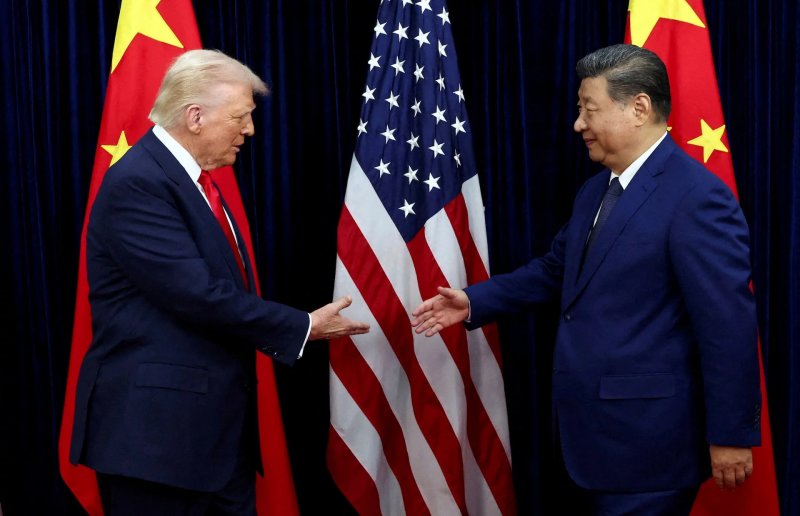
US President Donald Trump is set to begin his visit to China on Wednesday, 13 May. According to the Chinese Foreign Ministry, the visit will last until 15 May, with key talks between Trump and Chinese President Xi Jinping scheduled for 14–15 May. The official programme includes a welcoming ceremony, bilateral meetings, a visit to the Temple of Heaven, and a state banquet.
The trip was originally planned for March but was postponed following the outbreak of conflict involving Iran, which led Washington to revise its schedule. According to Politico, Beijing plans to use the summit to propose a series of lucrative economic agreements to the United States in exchange for concessions on tariffs and other trade restrictions.
Trump, for his part, appears intent on approaching the visit with a strong business focus, reflected in the composition of his delegation. Reports suggest the US president will be accompanied by leading American business executives, particularly from the technology and financial sectors. Among those expected are Elon Musk, Apple CEO Tim Cook, BlackRock CEO Larry Fink, Blackstone CEO Stephen Schwarzman, Citigroup CEO Jane Fraser, Goldman Sachs CEO David Solomon, Mastercard CEO Michael Miebach, and Visa CEO Ryan McInerney.
The delegation is also expected to include Boeing CEO Kelly Ortberg, Cargill CEO Bryan Sykes, Cisco CEO Chuck Robbins, Coherent CEO Jim Anderson, General Electric CEO Larry Culp, Illumina CEO Jacob Thaysen, Meta President Dina Powell McCormick, Micron CEO Sanjay Mehrotra, and Qualcomm CEO Cristiano Amon.
White House Press Secretary Anna Kelly said President Trump intends to continue rebalancing relations with China, while emphasising reciprocity and fairness in what the administration describes as restoring America’s economic independence.
The White House also said both sides will continue efforts to establish a bilateral trade and investment council aimed at coordinating economic cooperation. Bloomberg reported that new agreements could be announced during the visit, including deals involving Chinese purchases of US agricultural products, aerospace equipment, and energy supplies.
If no unexpected complications arise, the visit could prove highly productive. Trump himself expressed optimism on Truth Social, writing that Xi Jinping “will greet him with hugs”, adding that such an approach is preferable to confrontation. He also said: “I’m very much looking forward to my trip to China, an amazing country, with a leader, President Xi, who is respected by all. Great things will happen for both countries!”
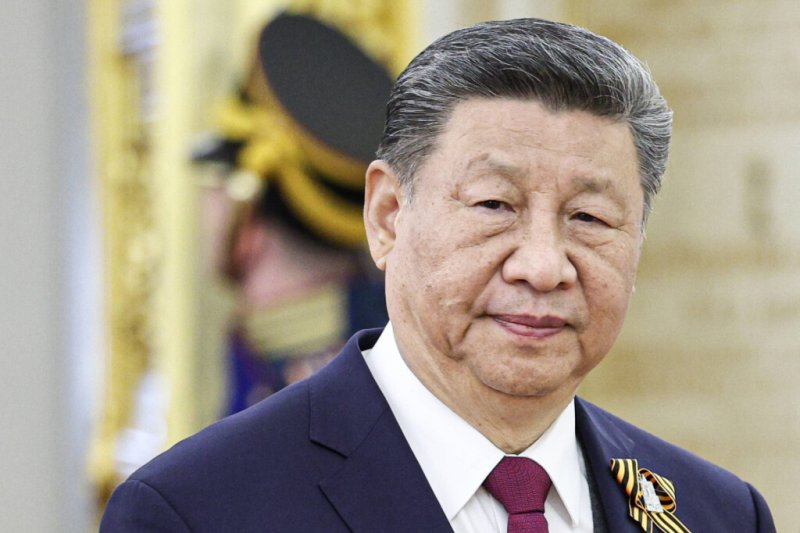
At the same time, there is a growing perception in parts of the United States that Trump is entering the talks from a weaker position. The conflict involving Iran has complicated Washington’s broader geopolitical stance. The absence of a clear outcome and continued tensions around the Strait of Hormuz blockade have contributed to a strategic stalemate. While the direct impact on the US economy has so far been limited, the global economy has come under increasing pressure, with both Washington and Beijing seeking to leverage the situation to strengthen their positions.
China, meanwhile, appears to have regained economic momentum. After slower growth in recent months, several key indicators rose sharply in April.
According to Xinhua, China’s total import and export volume in yuan terms increased by 14.2% in April compared with a year earlier. Total trade reached 4.38 trillion yuan (about $639.4bn) in a single month. Exports rose by 9.8% to 2.48 trillion yuan, while imports increased by 20.6% to 1.9 trillion yuan.
Overall, China’s foreign trade volume since the beginning of the year reached 16.23 trillion yuan, marking year-on-year growth of 14.9%.
Analysts cited by The New York Times said April’s record performance was driven in part by strong global demand and by companies accelerating purchases ahead of potential price increases and supply chain disruptions. Economists also noted that exports of electronics, semiconductors, automobiles, and other industrial goods continue to underpin Chinese trade growth.
The scale of the increase surprised many observers, with results exceeding expectations. This reinforced the view that China’s industrial base remains resilient and relatively resistant to external shocks. At the same time, rising imports highlight continued dependence on raw materials, industrial components, and energy supplies, leaving China exposed to fluctuations in global oil prices and disruptions to maritime shipping routes. Tensions around the Strait of Hormuz have added further pressure to China’s energy supply chains.
Observers also noted that Beijing released the trade data shortly before Trump’s arrival, a move seen as signalling China’s strong negotiating position ahead of the summit. Chinese authorities appear keen to demonstrate that neither the prolonged trade war with the United States, nor tariffs, nor instability in the Middle East have significantly weakened the foundations of its economy.
Positive indicators had already emerged earlier in the year. Chinese state media outlet CGTN reported that while trade between China and the United States fell by 16.9% in February and March amid tensions, this decline was offset by stronger trade with other partners. Trade with the Association of Southeast Asian Nations (ASEAN) rose by 20.3%, while trade with the European Union increased by 19.9%. Trade with Russia, which had previously declined in early 2025, also returned to growth, rising by 9.4%.

Analysts say China has mitigated the impact of US pressure by rapidly redirecting trade flows towards Asia and countries in the Global South. Chinese Commerce Minister Wang Wentao summarised this approach with the phrase: “As dusk falls in the West, dawn breaks in the East. If not the North, then the South.” He added: “While many Western partners view global markets as a battlefield, we view them as a field of opportunity.”
This pragmatic approach has long characterised China’s foreign economic policy, helping it navigate crises, maintain stability, and expand its global influence.
Taken together, these factors suggest China is entering the upcoming summit from a position of considerable confidence.
Nevertheless, the talks are unlikely to proceed entirely without friction. Trump is also expected to arrive in Beijing carrying significant political concerns. According to Bloomberg, citing senior US officials, the American president intends to raise questions about China’s economic ties with Iran, including revenues linked to bilateral cooperation and potential Chinese arms exports. China also remains one of the largest buyers of Iranian oil.
Even so, most analysts believe economic interests on both sides will ultimately outweigh geopolitical tensions. As a result, disputes linked to Iran are not expected to derail what many observers are already describing as a potentially historic visit.
By Tural Heybatov


Similar news