China's leap: What awaits the world in the near future?


"China will never seek hegemony, expansion, or the imposition of spheres of influence, no matter how strong the country becomes," once stated President Xi Jinping of China.
China has been growing stronger year by year, transforming into the most powerful nation on the planet, yet it continues to adhere to this principle. This embodies the essence of the great Chinese philosophy and the policy of the People's Republic of China, which celebrates its 75th anniversary this year.
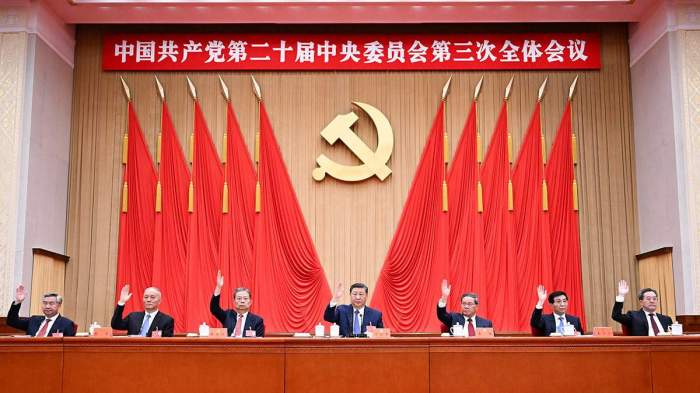
In late July, the third plenary session of the 20th Central Committee of the Communist Party of China was held in Beijing. The economic results of the first half of the year and prospects for further development were among the main topics on the agenda. Today, China's leadership is focused on more effectively utilizing market mechanisms, creating a more equitable market environment, and efficiently allocating resources. The final communiqué of the plenary session announced a course toward structural reforms and the creation of new drivers of development. Special attention is being paid to the deep integration of the real sector and the digital economy, the development of the service sector, modern infrastructure, and ensuring the security of production and supply chains. Reforms are also planned in fiscal, financial, and other key areas, among others.
Despite the complex geopolitical situation and serious attempts to hinder China, the past year and the first half of this year have shown that China has managed to overcome difficulties and move forward on the path, as the country's leadership describes it, towards high-quality development. Beijing's optimism is not baseless but grounded in real figures, which are acknowledged at the global level.
The International Monetary Fund, in the updated version of its World Economic Outlook report, revised China's economic growth forecast for 2024. Initially, growth was projected at 4.6%, but now the figure has been raised to 5%. The IMF adjusted its forecast after the Chinese government published data for the first half of the year. In the first six months of 2024, the country's GDP grew by 5%. Despite a slight slowdown in the second quarter to 4.7%, overall, as noted by China's National Bureau of Statistics, there is a general trend of growth. At the same time, the main macroeconomic indicators—GDP growth, employment, consumer prices, and the balance of payments—remain stable. Official data shows that imports and exports are growing rapidly, and foreign exchange reserves have remained at $3.2 trillion for seven consecutive months.
After the global downturn during the pandemic, the Chinese economy was the first to begin recovering, as evidenced by last year's data. In 2023, China's GDP exceeded 126 trillion yuan (about $17.7 trillion), an increase of 5.2% compared to the same period in 2022. In the first half of 2024, China's GDP approached 62 trillion yuan (about $8.7 trillion), growing by 5%. This indicates stable growth. China's share in the global economy has also remained stable—holding at 30% for 11 consecutive years.
Thus, Beijing has solid grounds for optimism.
Overall, China indeed has much to be proud of. Discussions of the "Chinese economic miracle" are not just words. No one can dispute the fact that China, since its establishment, has consistently moved forward and has achieved incredible results over the years, considering where the country started from. According to economists, from the end of 1978 to 2023, the average annual economic growth rate was 8.9%. This is a unique achievement, unmatched by any developed country. Over the past 45 years, China's economy has grown 48 times. Moreover, China has not only increased its GDP but has also modernized and adopted advanced technologies, allowing it to become one of the most high-tech countries in the world today.
Over the past decade, China has transformed into a leading scientific and technological power, catching up with former leaders—the United States and the European Union. In 2023, China accounted for a quarter of all unicorn companies globally. This is less than in the United States but significantly more than in the European Union and India combined. It's important to note that a unicorn company is a startup valued at over $1 billion. Last year, there were 394 such companies in China. Additionally, China concentrated a quarter of the world's largest regional science and technology clusters, surpassing the United States—24 to 21. In 2023, China's high-tech exports (nearly $980 billion) exceeded those of the United States, Germany, France, and the United Kingdom combined. It's no surprise that international experts are already calling China the scientific and technological backbone of the world.
Scientific and technological innovation is at the core of China's development and the enhancement of its national power. This is why the country is steadily moving forward. It has much to showcase and defend against "attacks." In the first half of this year, the modernization process has gained momentum. In China, it is recognized that working in the current geopolitical and geoeconomic conditions has become more challenging, but it is believed that it is essential to maintain clarity of thought. In China, the right approach to development is considered one with a broader perspective, emphasizing cooperation, openness, and inclusivity. In this context, relations between China and Azerbaijan are evolving.
In 2023, the trade turnover between the two countries amounted to $3.1 billion. By the beginning of this year, trade turnover between Azerbaijan and China increased by 43.5%, reaching $3.1 billion. In January-March 2024, growth reached 19.8%. Currently, more than 300 Chinese companies are registered in Azerbaijan. It is expected that the recently signed Declaration on the Establishment of a Strategic Partnership by the heads of state will expand existing cooperation mechanisms and intensify contacts.
An example of this cooperation is with the Chinese company BYD Company Limited, which will produce electric buses in the Sumgayit Chemical Industrial Park. To achieve this, the Chinese will build a factory and initially invest $34 million. It's worth noting that BYD, founded in 1995, became the first company in the world to achieve record sales of 3 million vehicles in 2023. The company is considered one of the world's leading technology firms, implementing the latest innovations in automotive, electronics, electric batteries, renewable energy, and rail transport.
Azerbaijan is interested in expanding technological cooperation with China and adopting China's experience in modernizing its economy. It's believed that all countries cooperating with China share this interest. Beijing is ready to share its knowledge. It adheres to a policy of common human development and the five principles of peaceful coexistence. This policy is one of the foundations of China's success.
China has been growing stronger year by year, transforming into the most powerful nation on the planet, yet it continues to adhere to this principle. This embodies the essence of the great Chinese philosophy and the policy of the People's Republic of China, which celebrates its 75th anniversary this year.
In late July, the third plenary session of the 20th Central Committee of the Communist Party of China was held in Beijing. The economic results of the first half of the year and prospects for further development were among the main topics on the agenda. Today, China's leadership is focused on more effectively utilizing market mechanisms, creating a more equitable market environment, and efficiently allocating resources. The final communiqué of the plenary session announced a course toward structural reforms and the creation of new drivers of development. Special attention is being paid to the deep integration of the real sector and the digital economy, the development of the service sector, modern infrastructure, and ensuring the security of production and supply chains. Reforms are also planned in fiscal, financial, and other key areas, among others.
Despite the complex geopolitical situation and serious attempts to hinder China, the past year and the first half of this year have shown that China has managed to overcome difficulties and move forward on the path, as the country's leadership describes it, towards high-quality development. Beijing's optimism is not baseless but grounded in real figures, which are acknowledged at the global level.
The International Monetary Fund, in the updated version of its World Economic Outlook report, revised China's economic growth forecast for 2024. Initially, growth was projected at 4.6%, but now the figure has been raised to 5%. The IMF adjusted its forecast after the Chinese government published data for the first half of the year. In the first six months of 2024, the country's GDP grew by 5%. Despite a slight slowdown in the second quarter to 4.7%, overall, as noted by China's National Bureau of Statistics, there is a general trend of growth. At the same time, the main macroeconomic indicators—GDP growth, employment, consumer prices, and the balance of payments—remain stable. Official data shows that imports and exports are growing rapidly, and foreign exchange reserves have remained at $3.2 trillion for seven consecutive months.
After the global downturn during the pandemic, the Chinese economy was the first to begin recovering, as evidenced by last year's data. In 2023, China's GDP exceeded 126 trillion yuan (about $17.7 trillion), an increase of 5.2% compared to the same period in 2022. In the first half of 2024, China's GDP approached 62 trillion yuan (about $8.7 trillion), growing by 5%. This indicates stable growth. China's share in the global economy has also remained stable—holding at 30% for 11 consecutive years.
Thus, Beijing has solid grounds for optimism.
Overall, China indeed has much to be proud of. Discussions of the "Chinese economic miracle" are not just words. No one can dispute the fact that China, since its establishment, has consistently moved forward and has achieved incredible results over the years, considering where the country started from. According to economists, from the end of 1978 to 2023, the average annual economic growth rate was 8.9%. This is a unique achievement, unmatched by any developed country. Over the past 45 years, China's economy has grown 48 times. Moreover, China has not only increased its GDP but has also modernized and adopted advanced technologies, allowing it to become one of the most high-tech countries in the world today.
Over the past decade, China has transformed into a leading scientific and technological power, catching up with former leaders—the United States and the European Union. In 2023, China accounted for a quarter of all unicorn companies globally. This is less than in the United States but significantly more than in the European Union and India combined. It's important to note that a unicorn company is a startup valued at over $1 billion. Last year, there were 394 such companies in China. Additionally, China concentrated a quarter of the world's largest regional science and technology clusters, surpassing the United States—24 to 21. In 2023, China's high-tech exports (nearly $980 billion) exceeded those of the United States, Germany, France, and the United Kingdom combined. It's no surprise that international experts are already calling China the scientific and technological backbone of the world.
Scientific and technological innovation is at the core of China's development and the enhancement of its national power. This is why the country is steadily moving forward. It has much to showcase and defend against "attacks." In the first half of this year, the modernization process has gained momentum. In China, it is recognized that working in the current geopolitical and geoeconomic conditions has become more challenging, but it is believed that it is essential to maintain clarity of thought. In China, the right approach to development is considered one with a broader perspective, emphasizing cooperation, openness, and inclusivity. In this context, relations between China and Azerbaijan are evolving.
In 2023, the trade turnover between the two countries amounted to $3.1 billion. By the beginning of this year, trade turnover between Azerbaijan and China increased by 43.5%, reaching $3.1 billion. In January-March 2024, growth reached 19.8%. Currently, more than 300 Chinese companies are registered in Azerbaijan. It is expected that the recently signed Declaration on the Establishment of a Strategic Partnership by the heads of state will expand existing cooperation mechanisms and intensify contacts.
An example of this cooperation is with the Chinese company BYD Company Limited, which will produce electric buses in the Sumgayit Chemical Industrial Park. To achieve this, the Chinese will build a factory and initially invest $34 million. It's worth noting that BYD, founded in 1995, became the first company in the world to achieve record sales of 3 million vehicles in 2023. The company is considered one of the world's leading technology firms, implementing the latest innovations in automotive, electronics, electric batteries, renewable energy, and rail transport.
Azerbaijan is interested in expanding technological cooperation with China and adopting China's experience in modernizing its economy. It's believed that all countries cooperating with China share this interest. Beijing is ready to share its knowledge. It adheres to a policy of common human development and the five principles of peaceful coexistence. This policy is one of the foundations of China's success.
(If you possess specialized knowledge and wish to contribute, please reach out to us at opinions@news.az).


Similar news