China to help Uzbekistan save ecology


Photo: The Hill
By Tural Heybatov
Uzbekistan is on the cusp of a remarkable transition that could make it a regional pioneer in sustainable waste management. In May 2024, the country’s Ministry of Ecology, Environmental Protection, and Climate Change signed a memorandum of cooperation with the Chinese company Shanghai SUS Environment Co. Ltd . The deal is significant: it positions Uzbekistan to become the first country in Central Asia to implement large-scale waste-to-energy (WtE) technologies. With a planned investment of around one billion dollars, Shanghai SUS aims not only to fund eco-friendly projects but also to cultivate local expertise and assist in developing regulatory frameworks. Such a move underscores the growing appeal of Uzbekistan’s market for international investors, particularly those from China, which has extensive experience in similar ventures worldwide.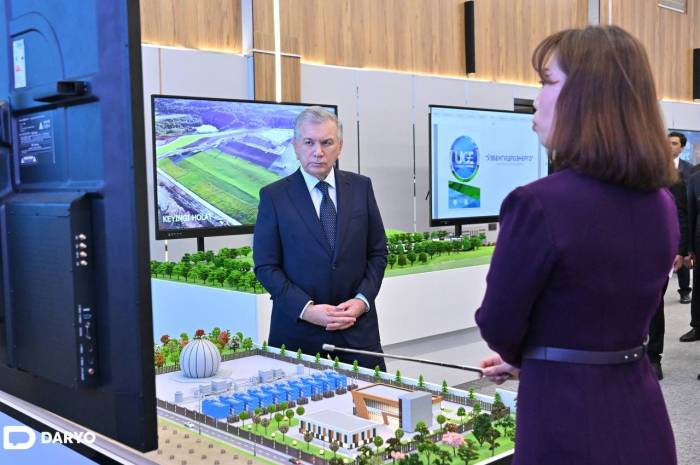
Yet, the central question remains: will this landmark collaboration transform Uzbekistan’s environmental landscape for the better, or will it merely add another layer to the country’s tapestry of foreign-led infrastructure projects? The stakes are high. Uzbekistan produces a staggering 14 million tons of waste each year , with only four to five percent currently undergoing recycling. The remainder goes to landfills, many of which release harmful chemicals into the atmosphere and surrounding soil. If handled properly, the incineration and repurposing of this waste could reduce environmental hazards while simultaneously generating much-needed electricity. According to the memorandum, the new joint venture in Samarkand alone will be able to process 1,000 tons of waste per day, producing up to 20 megawatts of energy. A similar plant is already under construction in the Kashkadarya region, signaling that these projects could well become a nationwide trend.
Of course, Shanghai SUS Environment Co. Ltd. is no stranger to large-scale WtE undertakings. In 2023, the company invested in 78 similar projects worldwide, leveraging its extensive background in technology, financing, and operational management of eco-industrial parks. The fact that it has been engaged in Uzbekistan since 2008, taking advantage of what local officials call “favorable investment opportunities,” suggests that the firm is already well-acquainted with the country’s bureaucratic and financial landscape. By helping to build new facilities, train local personnel, and conduct research, the company is positioning itself as a leader in Uzbekistan’s nascent green economy . From the Uzbek perspective, this partnership could be seen as a relatively low-risk way to acquire cutting-edge waste-management technology and expertise that might otherwise be out of reach.

But these developments do not exist in a vacuum; they must be assessed against a backdrop of broader global trends and local complexities. In recent years, Uzbekistan has actively pursued a more open economic policy, aiming to attract foreign capital for projects spanning from renewable energy to infrastructure modernization. Chinese investments, in particular, have been notable—partly because Beijing has vast experience with large population centers grappling with skyrocketing waste volumes. China, for its part, has set ambitious targets to convert up to half of its municipal waste into energy in the near future. By 2025, according to projections by the International Energy Agency, China’s WtE plants could process 260 million tons of municipal solid waste annually. With strong government support and a pool of experienced companies, it is logical for China to extend its WtE initiatives overseas.
Critics, however, argue that the large-scale incineration of waste poses its own set of environmental and social challenges. Even under ideal conditions, incinerators can produce carbon emissions and potentially release toxic substances. Residents living near such facilities often raise concerns about air quality and the long-term health implications of exposure to combustion byproducts. In Uzbekistan, where environmental regulations and monitoring mechanisms are still evolving, the question of how strictly these plants will be overseen is paramount. Will the new Agency for Waste Management and Circular Economy, established in September 2024, have the authority and resources to enforce stringent guidelines, or will it face bureaucratic hurdles and limited autonomy?
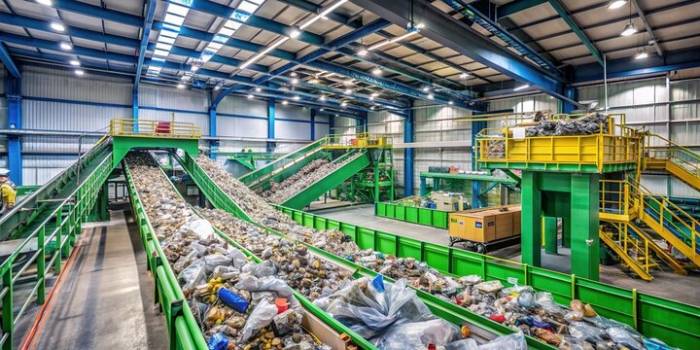
Moreover, implementing WtE initiatives requires robust waste-sorting infrastructure, which does not appear overnight. Without an efficient system for segregating organic, recyclable, and toxic materials, incineration plants may end up burning hazardous substances that could otherwise be recycled or need specialized handling. This raises another set of questions: how quickly and effectively can Uzbekistan modernize its waste-collection system to feed these facilities with the right kind of refuse? The success of WtE technology depends heavily on the composition of the waste stream, and the incineration of non-combustible or improperly sorted waste can undermine the entire operation.
The economic dimension cannot be overlooked either. While the one billion dollars in planned investment from Shanghai SUS is a substantial sum, the total budget required to build eight incineration plants and upgrade waste-management processes across Uzbekistan is estimated at 1.3 billion dollars. Other foreign entities—such as China’s CAMC Engineering, the UAE-based Tadweer Group, and South Korea’s Sejin—are also slated to invest in various waste-to-energy or landfill gas-capture projects. This diversified portfolio of investors could be beneficial, spreading the financial risk and potentially speeding up the transfer of diverse technologies. Nonetheless, as multiple players enter the market, coordination between them and the Uzbek authorities will be essential to avoid regulatory overlaps, conflicts of interest, and duplication of efforts.
From a broader geopolitical viewpoint, China’s involvement in Uzbekistan’s green sector can also be interpreted through the lens of Beijing’s Belt and Road Initiative (BRI). Infrastructure and energy projects have long been a cornerstone of China’s engagement strategy in Central Asia. Some observers see these investments as a natural extension of China’s attempt to deepen its economic influence in a region that has traditionally been a sphere of Russian interest. Others view them as beneficial for Uzbekistan, given that the country gains advanced technology, financial support, and new jobs, all while addressing a pressing environmental issue. The reality likely lies somewhere in between, where mutual advantages coexist alongside geopolitical calculations.
Ultimately, the success of these WtE projects will depend on several interconnected factors: the Uzbek government’s capacity to regulate and monitor environmental standards, the effective transfer of technology and know-how, and the public’s acceptance of a waste-incineration approach. If done correctly, Uzbekistan could indeed become the regional leader in forging sustainable practices—a pioneering force in Central Asia that proves WtE systems can both mitigate environmental threats and create economic opportunities. However, if regulations are lax or coordination is poor, these projects could compound existing environmental problems instead of alleviating them.
For Uzbek citizens, the prospect of turning mountains of garbage into a stable power source might feel like a timely solution to a long-standing dilemma. At the same time, an overreliance on foreign expertise and capital can lead to vulnerabilities, including potential debt and questions about ownership of critical infrastructure. Balancing the urgent need for environmental reform with the strategic imperatives of national self-reliance is no simple task. Yet, Uzbekistan’s apparent eagerness to expand its green agenda should be applauded—provided it does not come at the expense of accountability, community input, or a holistic vision for sustainable development.
In the final analysis, China’s billion-dollar venture with Uzbekistan exemplifies both the promise and the perils of international collaboration in environmental technology. If Uzbekistan can harness this momentum to improve its waste-management infrastructure, enforce rigorous standards, and ensure that local communities have a say in the decision-making process, then Shanghai SUS’s investment could be a turning point—one that leads to a cleaner environment and a more resilient energy sector. But if these incinerators merely serve as another revenue stream for foreign corporations while sidelining local needs, the opportunity for genuine environmental progress could slip away. As with most grand initiatives, the true legacy will lie in the details—how effectively they are executed, and whether they genuinely address the complex web of ecological, economic, and social challenges at hand.


Similar news