Donald Trump’s 20-Point Gaza peace plan: Promise, pitfalls, and political realities


.png)
Editor’s note: Faig Mahmudov is a journalist based in Azerbaijan. The views expressed are the author’s own and do not necessarily reflect those of News.Az.
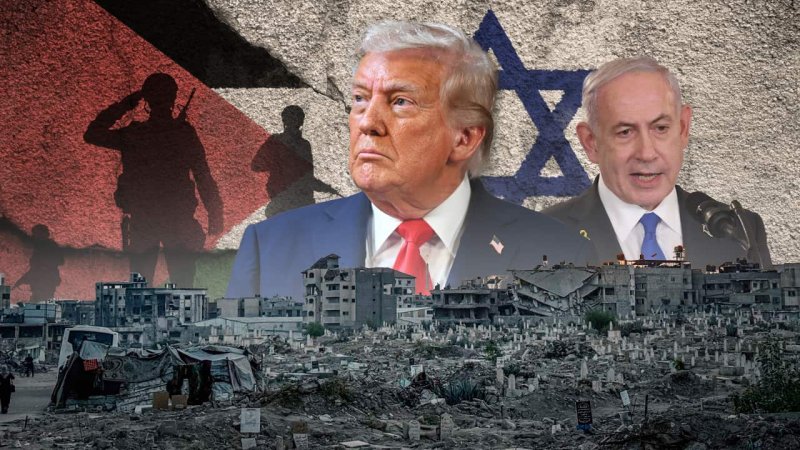
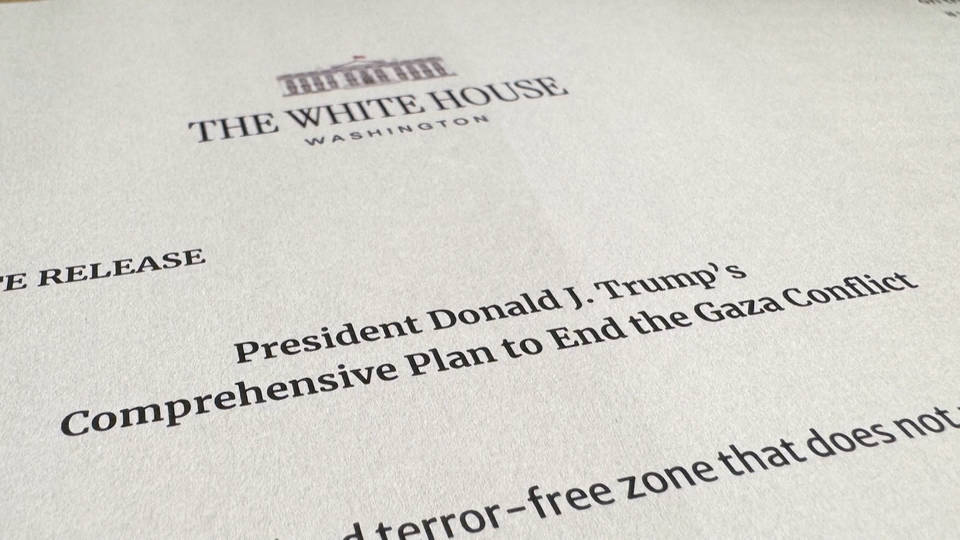
Donald Trump’s 20-point Gaza peace plan, unveiled in late September 2025, has become one of the most ambitious and controversial attempts in recent years to resolve the Gaza war. The U.S. president presented it as a roadmap not only for ending the ongoing violence but also for rebuilding Gaza and potentially opening a path to Palestinian statehood. Israel has given cautious approval, while Hamas and many Palestinian voices have rejected it outright, claiming it is tilted toward Israeli interests. To understand its potential impact, it is crucial to look at the details of the plan itself, the political context, and the criticisms it has drawn.
Trump’s plan is structured around three broad phases: humanitarian relief, security stabilization, and long-term political restructuring.
Source: Democracynow
The first element is an immediate ceasefire, designed to halt all active combat. Within 72 hours of Israel’s acceptance, Hamas would be required to release all hostages — both alive and deceased. This condition is framed as non-negotiable, with Trump stressing that “there will be no peace without the hostages’ release.” For families of Israeli captives, this clause is a central point of hope; for Hamas, it is a difficult concession that removes one of its strongest bargaining tools.
The second stage involves a phased Israeli military withdrawal. Instead of pulling out abruptly, Israel would retreat in stages, freezing frontlines to prevent sudden escalations. During this period, international monitors would oversee compliance. The logic is to avoid the kind of security vacuum that has undermined previous ceasefires.
Alongside withdrawal, the plan mandates the complete demilitarization of Hamas. This means not only the surrender of rockets and weapons but also the destruction of its extensive tunnel network and military infrastructure. In Trump’s framing, this is essential to Israel’s security and to preventing future wars. Yet for Hamas, disarmament effectively means relinquishing its leverage, making this clause among the most controversial.
Source: NPR
To govern Gaza during the transition, the plan proposes creating a temporary technocratic authority, explicitly excluding Hamas from political power. This authority would be supervised by an international “Board of Peace” made up of regional and global actors. In theory, this structure would allow reconstruction and governance reforms to proceed without partisan interference. Critics, however, argue that it sidelines Palestinian political agency and replaces it with foreign administration.
The economic and humanitarian dimensions of the plan focus on reconstruction and aid delivery. Billions in international funding would be mobilized for rebuilding housing, hospitals, schools, water systems, and electricity grids devastated by war. Aid would be strictly monitored to prevent diversion toward military purposes. Trump emphasized that Gaza’s redevelopment would be contingent on full demilitarization and governance reforms.
Perhaps the most politically sensitive element is the plan’s conditional pathway to Palestinian self-determination. The text states that “when the Palestinian Authority reform program is faithfully carried out, and when Gaza redevelopment is advancing, conditions may finally be in place for a credible pathway to Palestinian self-determination and statehood.” This wording leaves sovereignty undefined, without timelines or guarantees. Palestinians see this as deliberately vague, while Israelis view it as a safe concession that does not immediately endanger their security concerns.
Source: DailyPakistan
Beyond these core points, the plan includes several strict enforcement provisions. Trump has given Hamas a short deadline — “three or four days” — to accept the terms, warning of a “sad end” if they refuse. The plan also permits Israel to continue targeting Hamas strongholds if the group rejects or violates the agreement. This “coercive enforcement” element illustrates the imbalance of power embedded in the proposal.
International reaction has been mixed. Israel welcomed the plan’s uncompromising approach to Hamas’s disarmament and the guarantees for Israeli security. Several Arab and Islamic governments cautiously supported the framework, largely because it promised humanitarian relief for Gaza, but warned that it lacked binding guarantees for Palestinians. Western governments, including European powers, endorsed the plan’s ambition but remained silent on the statehood question. On the ground, Palestinians expressed deep skepticism, viewing the plan as an imposition rather than a negotiated settlement.
Historically, the plan sits at the crossroads of past efforts. Like the Oslo Accords, it envisions transitional governance under external supervision. Like the Camp David process, it delays the most contentious issues of sovereignty. Unlike short-term ceasefires, it seeks to restructure Gaza’s political and security architecture from the ground up. This makes it bold but also vulnerable to collapse under its own weight.
Source: 1lurer
Ultimately, Trump’s 20-point Gaza peace plan is both ambitious and problematic. It promises immediate humanitarian relief, security stabilization, and eventual political progress. Yet it suffers from imbalanced guarantees, exclusion of Palestinian voices, vague enforcement mechanisms, and coercive deadlines. For Israelis, it offers strong security assurances; for Palestinians, it offers conditional promises without enforceable protections.
For the plan to succeed, it would need more than American pressure and Israeli approval. It would require genuine Palestinian participation, binding international oversight, and a credible timetable toward political sovereignty. Without these, it risks becoming another ambitious but hollow blueprint, a document remembered more for its boldness than for its results.
(If you possess specialized knowledge and wish to contribute, please reach out to us at opinions@news.az).


Similar news