Elections in question: Georgia on the brink of political turmoil


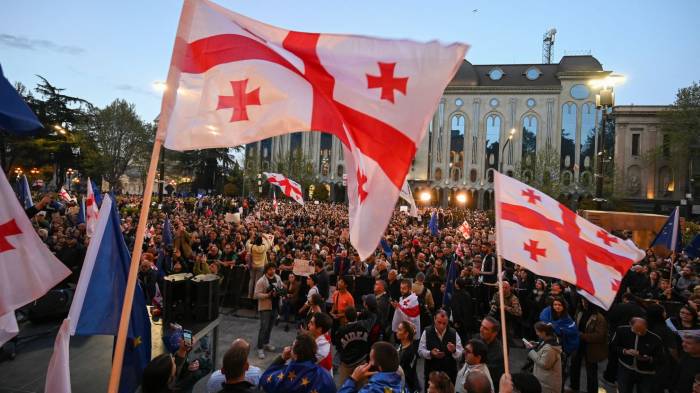
Amid rising political uncertainty in Georgia, tensions between the authorities and opposition have escalated following recent elections, the results of which have come under serious scrutiny. Leading international and national observers have reported irregularities, accusing the ruling party of vote manipulation and an undemocratic approach to the electoral process.
Against this backdrop, opposition forces are uniting to form coordination headquarters, planning large-scale protests, and demanding new elections under strict international monitoring. Representatives of the European Union and the United States have also voiced their concerns about the situation, with some leaders calling for a thorough international investigation. Experts comment on these developments and offer forecasts on the country’s future.The government, while claiming to pursue European integration, appears, in reality, disinterested in this process. Despite formal statements pledging commitment to a European trajectory, the authorities’ actions suggest otherwise. The EU’s Council of Foreign Ministers has effectively frozen further integration efforts with Georgia , and it is expected that at the EU summit on November 18, the issue of suspending visa-free travel for Georgian citizens will be discussed. This measure is seen as a form of sanction in response to alleged election fraud, which was conducted in an atmosphere lacking transparency and competitive spirit.
Approximately 500 international observers and 300 national organizations have confirmed various electoral violations, providing hundreds of pieces of evidence. A record number of complaints—around 1,200—were filed with Georgia's Central Election Commission by election monitors, contrasting sharply with the previous average of about 200. This surge highlights the widespread nature of the irregularities in this election.
In response, the Georgian opposition has united, establishing a common coordination headquarters to organize collective actions. The opposition rejects the legitimacy of the election results and plans to boycott parliamentary proceedings. A large protest is scheduled for November 4, where the opposition will openly express its discontent with the ruling party, "Georgian Dream." The situation is nearing a political impasse, with opposition forces demanding new elections to be held under greater transparency and international oversight. This call has the support of all four major opposition parties, who are refusing to recognize the election outcome.
The situation is expected to intensify after November 4, as the opposition and its supporters begin implementing a concrete action plan that includes mass civil disobedience demonstrations. This week, Georgian opposition parties, along with NGOs and international organizations, collected substantial evidence corroborating electoral misconduct. These findings have already been submitted to international bodies and European state representatives. It has been reported that even U.S. President Joe Biden has advocated for an international investigation into the electoral violations, along with possible interference from Moscow.
Legal aspects of the situation are also raising concerns. The Georgian General Prosecutor's Office, which remains under the ruling party's influence, recently summoned the country's president for questioning—an act that contravenes established political and legal norms. Opposition leader Nika Melia has called this development an attempted coup, intensifying the already heated political environment.
Additionally, the opposition is working actively with international organizations to draw attention to the electoral violations. Throughout the week, representatives of Georgian opposition parties and NGOs gathered evidence supporting claims of manipulation and submitted this information to various international bodies, including the European Parliament and human rights organizations. Reports indicate that President Joe Biden has spoken in favor of initiating an international investigation to ascertain the facts surrounding the alleged interference of the Kremlin in the electoral process in Georgia.
The possible involvement of Russia further complicates the situation, intensifying regional tensions and attracting the attention of major global powers.
Despite government statements pledging commitment to European integration, the authorities’ actions indicate a different agenda. The Georgian government appears intent on reducing the influence of European institutions, with several decisions suggesting a distancing from Western standards and values. This discrepancy between rhetoric and action has sparked criticism from the opposition and international observers alike. European leaders have voiced their disappointment, as Georgia had previously been regarded as one of the EU’s key partners in the Caucasus, receiving substantial assistance in reforms. However, the current political climate could lead Georgia to lose support from both Europe and the United States.
The future of Georgia’s political situation remains unpredictable. The crisis may deepen, especially if the government refuses to make concessions or take corrective measures. Meanwhile, the opposition is determined to continue its efforts, and the international community is closely watching, urging fair investigations and legitimate elections.
(If you possess specialized knowledge and wish to contribute, please reach out to us at opinions@news.az).


Similar news