Georgia has made its choice


By Tural Heybatov
On October 26, parliamentary elections took place in Georgia, attracting a notable level of external attention, often surpassing the interest within Georgia itself.
According to the Georgian Central Election Commission, after the votes were counted, Georgian Dream garnered 53.92% of the vote s. In contrast, four opposition parties combined received 37.78%, with the most successful being the "Coalition for Change," which achieved 11.04%. However, Nana Malashkhia, the party's leader, has already announced her refusal to accept mandates. Three other parties—Unity National Movement, Strong Georgia, and Gakharia for Georgia—also crossed the 5% threshold but expressed intentions to forgo participation in parliamentary activities.
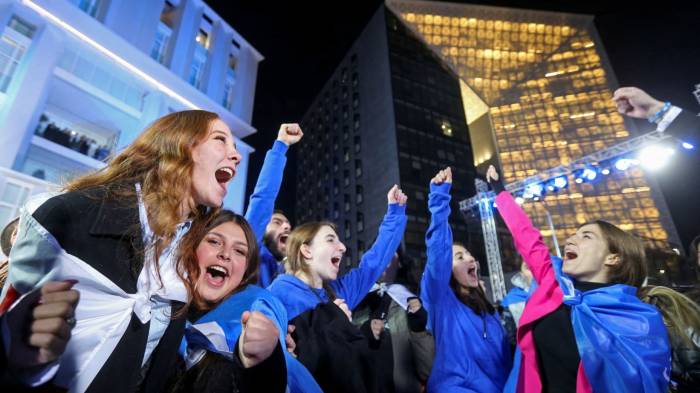
As expected, the opposition did not recognize the election results, alleging fraud and lack of freedom in the electoral process. Even before the voting concluded, opposition representatives had begun celebrating a presumed “victory.” U.S. polling agencies Edison and HarrisX had released data indicating that Georgian Dream would receive between 41-42% of the vote, while opposition parties were projected to secure between 48% and 51.9%. President Salome Zourabichvili even prematurely declared an opposition victory on X (formerly Twitter), though the initial results from the CEC quickly dispelled these expectations.
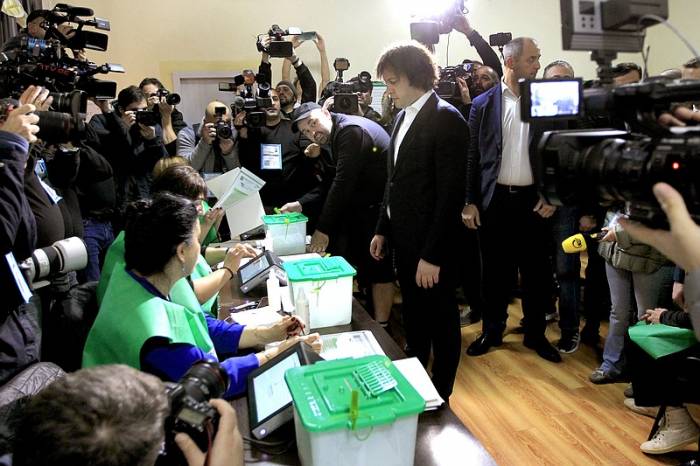
These election s carried immense significance, not only for politicians and international players but for the Georgian public as well. Reportedly, voter turnout exceeded previous records, marking the highest participation rate since 2012, with nearly 60% of eligible citizens casting their ballots.
Despite the opposition’s refusal to accept the results, the elections took place. This fact is tacitly acknowledged by international monitoring missions from the OSCE, PACE, EU, and NATO that observed the voting process. The opposition's loss disappointed Western observers, but they were ultimately compelled to acknowledge the legitimacy of the elections, albeit indirectly. The OSCE/ODIHR mission issued a neutral statement at a press conference, noting the availability of a broad choice among 18 parties and the high voter turnout as indicators of Georgia’s “emerging democratic viability.”
"OSCE observers have stated that the elections in Georgia were held in a competitive environment. This is not surprising; they used certain terms to underline the legitimacy of the newly elected government, which essentially signifies an endorsement of the election results," noted Prime Minister Irakli Kobakhidze.
Nevertheless, the ruling party did not achieve its goal of a constitutional majority, which requires 75% of the votes. In 2012, Georgian Dream won 85 out of 150 parliamentary seats, in 2016—115, and in 2020—90. This year, experts estimate the party will secure 88 seats. Western analysts attribute this drop to a decline in the party’s popularity, though it is more likely rooted in the Georgian people's fatigue with continuous political turmoil.
Since declaring independence , Georgia has been in a state of almost perpetual revolution, facing coups, protests, opposition rallies, and a constant threat of destabilization. Initially, the mass protests organized by the opposition seemed idealistic. However, with the changing dynamics in the South Caucasus after the Second Karabakh War, Georgians have begun to tire of them. Society is gradually recognizing that without political stability, genuine development and progress are impossible.
Moreover, the “European choice,” which Georgia has pursued for many years, has not delivered the expected results—2008’s war, territorial losses, and numerous disappointments. Current threats about losing EU accession prospects are losing their impact as EU membership is increasingly used as a lever of pressure, intended to keep Georgia within certain constraints.
Throughout its independence, Georgia has aligned itself with the West. Even under the current government, often labeled "pro-Russian," the country has not abandoned its Western orientation. However, Georgia has its national interests and principles. Unlike some post-Soviet states willing to make concessions for Western favor, Tbilisi exercises autonomy in decision-making. This approach has caused frustration in the West, and the EU has already suspended Georgia’s accession process.
Former UK Prime Minister Boris Johnson questioned the results, claiming on social media that the elections were “stolen by Putin's puppet government in Tbilisi.” The New York Times echoed this view, stating, "Georgia has turned away from the West and will not return." In response, Prime Minister Kobakhidze affirmed that the country does not intend to switch to a pro-Russian stance, as 10% of Georgia’s territory remains occupied by Russia. These statements aim to reassure those predicting closer ties between Tbilisi and Moscow.
The situation is still unfolding: the opposition will likely continue to pursue revolutionary plans. Failing to achieve change through elections, they may revert to familiar tactics. Opposition leaders, including President Salome Zourabichvili, are calling on citizens to protest, while former President Mikheil Saakashvili, currently under arrest, has issued a call for a "large protest." “No one should enter Parliament! It’s time for massive actions to show the world that we are fighting for freedom,” he proclaimed.
Georgia stands at a challenging crossroads. The decision to follow its own path has proved to be a point of contention for those who valued predictability. Yet, the final word rests with the Georgian people. It is they, not the politicians, who must choose between revolution and stability. The October 26 election results showed that most Georgians seek growth rather than change driven by another wave of protests.


Similar news