Europe’s military awakening: Munich Security Conference signals shift toward strategic independence


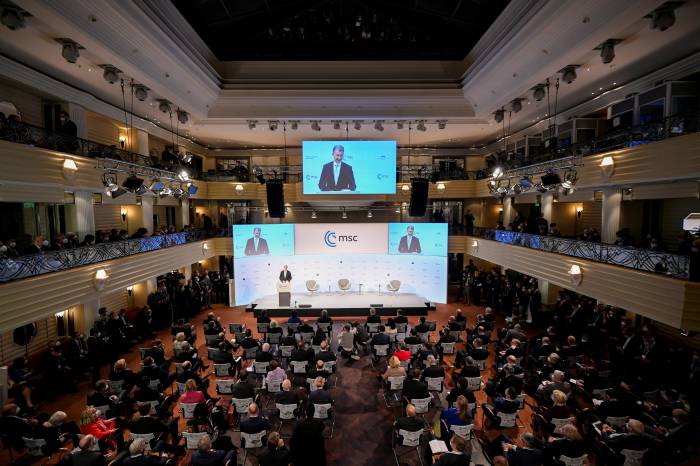
The 61st Munich Security Conference concluded in Germany, bringing together world leaders, policymakers, and experts to address pressing geopolitical challenges. The war in Ukraine, escalating tensions in the Middle East, and Europe's security architecture were central themes of the forum, which has served as a premier platform for diplomatic engagement since its inception in 1963.
This year’s event saw the participation of over 800 delegates, including heads of state, government officials, and key figures from international organizations, business, and academia. Notable attendees included U.S. Vice President J.D. Vance, German Chancellor Olaf Scholz, Ukrainian President Volodymyr Zelensky, and NATO Secretary General Mark Rutte.
The agenda encompassed a broad spectrum of global issues, from Western relations with China and ongoing trade disputes to conflicts in Sudan and the Democratic Republic of Congo, as well as climate security, energy and food stability, and the regulation of artificial intelligence. Over 350 panel discussions provided a platform for high-level debate on these critical topics.
Ukrainian President Volodymyr Zelensky underscored Kyiv’s unwavering stance, declaring that Ukraine would not accept any peace agreement negotiated behind its back. He also called for the establishment of a European Armed Forces to bolster the continent’s defense autonomy.
Meanwhile, German Chancellor Olaf Scholz reaffirmed Berlin’s commitment to Ukraine, rejecting any settlement that would be dictated by Russia. He also hinted at the possibility of declaring a state of emergency in Germany to secure military funding for Kyiv—an indication of the gravity with which Berlin views the ongoing war.
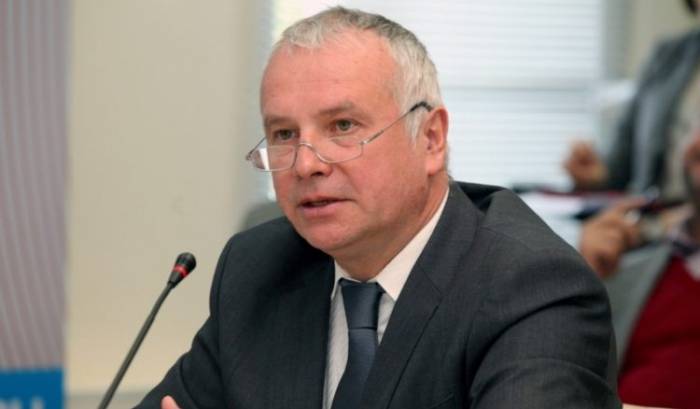
To gain deeper insights into the geopolitical shifts emerging from the conference, News.Az spoke with leading German political analyst Alexander Rahr.
According to Rahr, the Munich Security Conference underscored Europe's increasing determination to strengthen its defense capabilities independently from NATO. He noted that key German figures, including Chancellor Scholz and Christian Democratic Union (CDU) leader Friedrich Merz—a likely future chancellor—are laying the groundwork for a pan-European military force, a unified defense budget, and a strengthened defense industry.
“Europe’s stance is clear: under no circumstances can Russia be allowed to win in Ukraine. A Ukrainian victory is seen as essential for European security,” Rahr stated. This, he explained, was the overarching message from the Munich discussions. However, he cautioned that how the United States and other non-European actors will respond to these evolving dynamics remains uncertain.
The conference, he argued, marks Europe's last major effort to assert its strategic independence and defend the Western democratic model. “For the first time in three decades, European elites are seriously considering an independent military structure outside NATO,” Rahr observed.
At the core of these deliberations is the challenge of financing such an ambitious military project. “Europe is already exploring new mechanisms to fund the development of its own army,” he noted, suggesting that this shift in European security policy is more significant than widely reported.
The push for military self-sufficiency has placed Germany at the forefront of Europe's strategic recalibration. Scholz’s government has been vocal about boosting defense spending, and discussions surrounding a €100 billion European defense fund are gaining traction.
“Germany is positioning itself as the leader of a new Cold War against Russia. Preparations for potential military confrontation are now being openly discussed,” Rahr emphasized. “Berlin is driving efforts to expand its own military capabilities and accelerate Europe’s militarization.”
On the sidelines of the conference, German Chancellor Olaf Scholz met with Armenian Prime Minister Nikol Pashinyan. When asked about the significance of this meeting, Rahr noted that it received little media attention in Germany.
“The Armenian leadership is eager to strengthen ties with the European Union, seeing Germany as a key gateway to deeper engagement. However, Scholz currently has more pressing priorities—his focus is largely on his own political survival,” he said.
As European leaders navigate an increasingly volatile geopolitical landscape, the Munich Security Conference has once again reinforced a fundamental reality: Europe is at a crossroads, grappling with its long-term security strategy in an era of mounting global instability.


Similar news