Far-Right victory in Thuringia: Causes and challenges for Germany


Editor's note: Dr. Ricardo Martins. He lives in the Netherlands. He is a specialist in Geopolitics and International Relations by training and hold a PhD in Sociology with a focus on policy and international relations. The article expresses the personal opinion of the author and may not coincide with the view of News.Az.
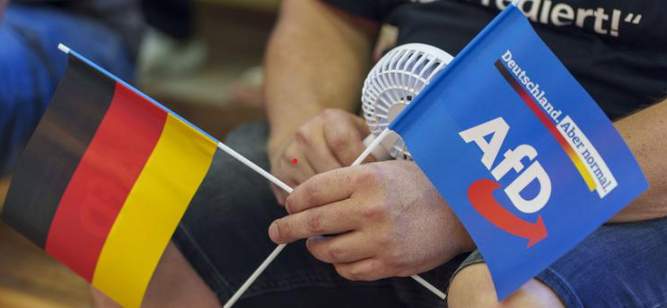
German and AfD flags: the new normal? Source: DW
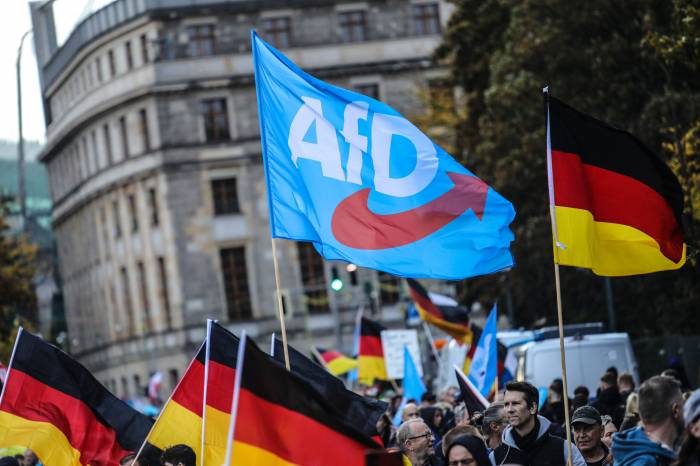
In the elections held last Sunday in the two eastern German states of Saxony and Thuringia, the Rubicon was crossed in German domestic politics. For the first time since World War II, a far-right party won a state election, specifically in Thuringia, which was part of the former German Democratic Republic (DDR), the AfD (Alternative for Germany) won with one-third of the votes. In Saxony, the AfD came very close to winning against the CDU (Christian Democratic Union), the former centre-right party of Chancellor Angela Merkel, but now under the leadership of Friedrich Merz, representing a more liberal-right stance.
AfD has been augmenting its voting basis since 2013, when the party was founded by economics university professors with an agenda of being another alternative for the European Union from the economy perspective. Last European parliamentary elections in July 2024, the AfD came overall in second place, after CDU. In the two Eastern states elections of September 1st, the AfD was victorious in Thuringia and in second place in Saxony.
The following table shows the results of the election in the federal state of Thuringia:
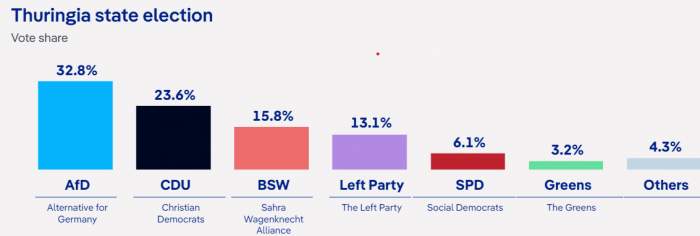
Source: State Election Commissioner (2024)
It is noteworthy that the AfD had a large winning margin over the CDU, the sudden rise of the BSW, a new leftist populist alliance created by Sahra Wagenknecht a few months ago, and the failure of two federal ruling coalition parties, the Greens and the Free Democratic Party (FDP), to qualify for the state parliament, as they did not secure at least 5% of the votes.
The following table shows the results of the election in the federal state of Saxony:
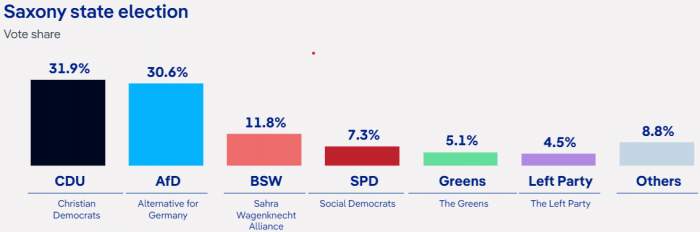
Source: State Election Commissioner (2024)
In Saxony, the CDU secured only one more parliamentary seat than the AfD, and the Greens barely managed to secure their place in the state parliament; however, that was not the case for the FDP.
Given this scenario, here are some issues to pay close attention to in German politics:
Rise of the AfD and the transformation of the party in voters perspective
The Alternative for Germany (AfD) continues to gain support and is becoming incorporated into mainstream politics, as it is increasingly viewed not just as a protest movement but as a legitimate political force. At least 50% of its voters believe in its message and see it as best equipped to represent their interests, particularly regarding asylum and refugee policies, as well as social protection and fighting crime, according to Dimap/ARD polls.
The significant victories in eastern German state elections—33% of the votes in Thuringia and 30.6% in Saxony—mark a notable increase in its political capital compared to previous elections. These results establish the AfD as a Volkspartei (party of the people) in East Germany, a title that was once reserved for the two traditional main parties, the CDU and the SPD.
Challenges for Scholtz and the ruling coalition
The Chancellor, Olaf Scholz, faces severe criticism and complications in his weak leadership, particularly as the governing coalition is losing ground: his Social Democratic Party (SPD), the Greens, and the Free Democratic Party (FDP). The latter two have not qualified to have representatives in the Thuringian Parliament, which requires 5% of the votes. The electoral setback for the ruling coalition highlights the growing discontent among voters and reveals a political landscape that fails to effectively address citizen concerns.
Voters do not like to feel alienated from the political process and no longer accept their leaders making statements such as “no matter what my German voters think,” as was said at the Forum 2000 Conference in Prague by Annalena Baerbock, the Green Foreign Affairs Minister in the current ruling coalition, regarding the government’s unconditional support for Ukraine. This is particularly significant given that the majority of Germans (56% in June 2024) favour a negotiated end to the conflict.
As traditional parties struggle, the emergence of the populist far-right and BSW’s populist far-left pose substantial challenges to the German political establishment.
Public sentiment and engagement
There is a growing mistrust of established political institutions among the electorate, as evidenced by the backlash against centrist leaders and the mainstream media's struggle to address the rise of the AfD genuinely. Citizens are increasingly dissatisfied with their representation and the perceived inadequacy of government responses to their needs. The present chancellor has only 8 to 12% of approval in Eastern Germany, a record low in German political history.
Furthermore, while the AfD's strong performance in Saxony and Thuringia has been acknowledged, all other parties have committed to excluding it from coalitions, which complicates the formation of a stable government, and worsens voters feeling of not being represented. This is a paradoxical situation, as it worsens the political instability in Germany. On the other hand, at the European level, the EU needs a stable Germany to function well.
The firewall against AfD
One of the most frequently heard words these days is "Brandmauer," or "firewall," referring to the isolation that mainstream parties intend to implement against the AfD. In practice, this means that no coalition will include the AfD.
In a historical context, the term "firewall" refers to the efforts of Germany’s mainstream political parties to prevent far-right parties from gaining legitimacy and power through coalition-building. This is reminiscent of historical lessons from the rise of the Nazis in the early 20th century when conservative parties underestimated the threat posed by extremist movements, eventually leading to coalition governments that normalised authoritarianism. This historical awareness drives contemporary leaders to avoid similar mistakes.
However, by successfully infiltrating local politics and establishing a presence in municipal governments, the AfD has managed to normalise its agenda among voters. Instances of cooperation between mainstream parties and the AfD in local councils undermine the firewall’s purpose, as political pragmatism sometimes leads to uncomfortable alliances that legitimise far-right positions. In the municipalities, coalitions and any form of cooperation with the AfD, mostly with the CDU, are a reality in 120 local administrations in East Germany, according to a study conducted by the Rosa Luxembourg Foundation .
The perception among Eastern Germans is that the mainstream parties' focus on urban centres while neglecting rural areas has created a political vacuum that the AfD has filled. Established parties’ failure to engage with local concerns has facilitated the AfD's rise, revealing a disconnect that the firewall is unable to bridge.
The Green factor
Some analysts have identified the Greens as a major damaging factor in the current governing coalition. They started the government by advocating for the phase-out of nuclear energy, a plan already initiated during Merkel’s administration following the Fukushima incident. Soon after Olaf Scholz took office with his traffic light coalition (red-green-yellow, according to the colours of each party), the energy crisis and then the war in Ukraine emerged, leading to a catastrophic energy situation with consequences such as inflation, loss of industrial competitiveness, and subsequent industry delocalisation. Paradoxically, CO2 emissions increased as coal power plants came back into full operation. One proposed solution was to extend the timeline for shutting down nuclear power plants; however, this was not accepted by the Greens.
Furthermore, the Greens' traditional alignment with NATO, U.S., and Atlanticist stances has contributed to Germany’s 'de-risking' policy toward China, where the most dynamic economic developments are currently occurring, from which the German economy could benefit the most. This alignment has also positioned Germany as a significant participant in support efforts for Ukraine, with spending levels second only to those of the U.S. Although public opinion initially supported this stance, the population later leaned towards favouring negotiations and a peace settlement.
These efforts have strained public finances and investments in infrastructure, forcing cuts in spending on infrastructure, energy subsides, farmers’ fuel subsides, the green transition subsides, and social welfare. Public spending and borrowing are very limited, a situation enshrined in Germany’s Basic Law, the Constitution, what makes Germany’s recovery slower. This situation fuels a sense of grievance, paving the way for both far-right and far-left populist parties.
Democratic Germans are worried, and they have reasons to be. The historical context of coalition politics means that established parties may face difficulties in strategising effectively against the rise of the AfD, as they become more focused on maintaining political stability rather than addressing the root issues that allow the far-right to thrive. There is little hope that the current ruling coalition will make major changes to its policies, as the signals for change have been sent long ago, yet nothing has happened.
With only a fraction of the electorate trusting traditional parties and their governance (for instance, only 10% in Saxony), the firewall is losing its legitimacy. The AfD has entered the political discourse strongly, framing its rise not just as a right-wing backlash but as a necessary response to perceived neglect by the political establishment.
The lessons from the past highlight the need for vigilance and comprehensive political engagement with voters to ensure that German democratic values are upheld. The voters in Thuringia and Saxony have given a clear signal that they do not approve of the current coalition’s domestic and international policies. This coalition cannot afford to say again, "I do not care what my voters think," unless there is no hope of restoring a democratic voting pattern in Germany.
(If you possess specialized knowledge and wish to contribute, please reach out to us at opinions@news.az).


Similar news