G7 or G5? Why does Donald Trump no longer need Europe?



Editor’s note: Moses Becker is a special political commentator for News.Az, holding a PhD in political science and specializing in interethnic and interreligious relations. The views expressed in this article are the author’s own and do not necessarily reflect the position of News.Az.
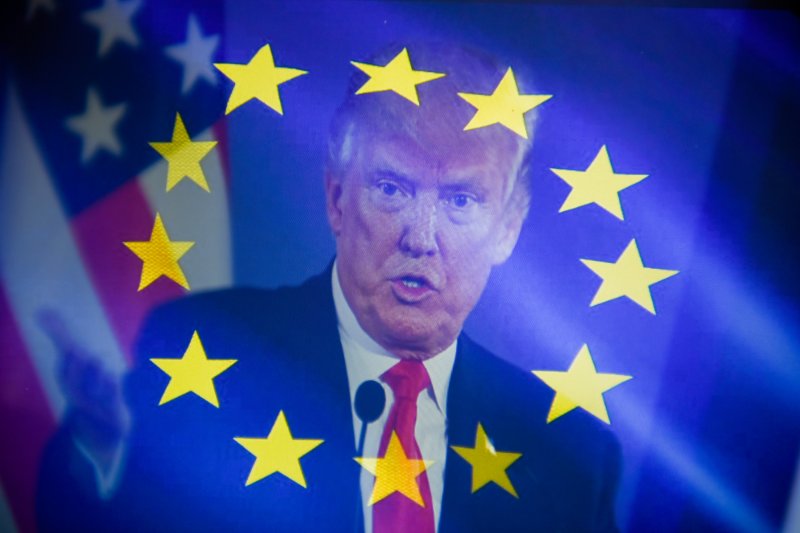
Recently, the 47th president of the United States has set out to challenge the foundations of the established world order. At times, he expresses dissatisfaction with NATO, which he views as increasingly costly and difficult to maintain; at other times, he raises the idea of replacing the familiar Group of Seven, the world’s leading economies, with a smaller but no less influential “Group of Five.”
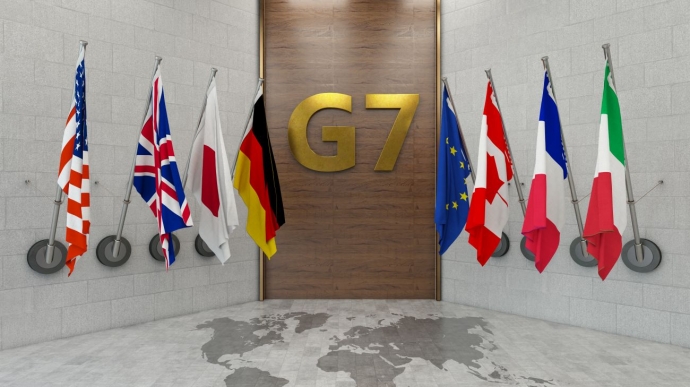
The G7 consists of the following countries: the United Kingdom, Japan, Canada, the United States, France, Germany, and Italy. Russia was also a member from 1998 to 2014. The group was conceived in 1970 following the collapse of the Bretton Woods system, a global oil crisis, and a recession. Its purpose was to provide a platform for accelerated discussion of pressing issues in the global economy and international relations.
Source: News.Az
The first G7 meeting took place in November 1975 at the initiative of French President Valéry Giscard d’Estaing, with France, the United States, the United Kingdom, West Germany, Italy, and Japan in attendance. The six countries issued their first joint declaration, setting out the group’s focus on coordinating macroeconomic strategies, regulating financial markets, supporting free trade, combating protectionism, addressing counterterrorism and cybersecurity, reducing emissions, advancing renewable energy, responding to pandemics, financing the World Health Organization, regulating artificial intelligence and data protection, supporting developing countries, and diversifying supplies to reduce dependence on fossil fuels.
In recent years, the influence of the G7 has been steadily declining as global power dynamics shift. European nations, once at the forefront, are increasingly receding into the background, with their economic strength gradually eroding — a process that appears to be accelerating. The demographic picture adds to these challenges. Local populations are being gradually supplanted by migrants from Asia and Africa, many of whom arrive with limited education or professional qualifications and often maintain traditional lifestyles rooted in long-standing, sometimes outdated, cultural norms.
)
Source: Firstpost
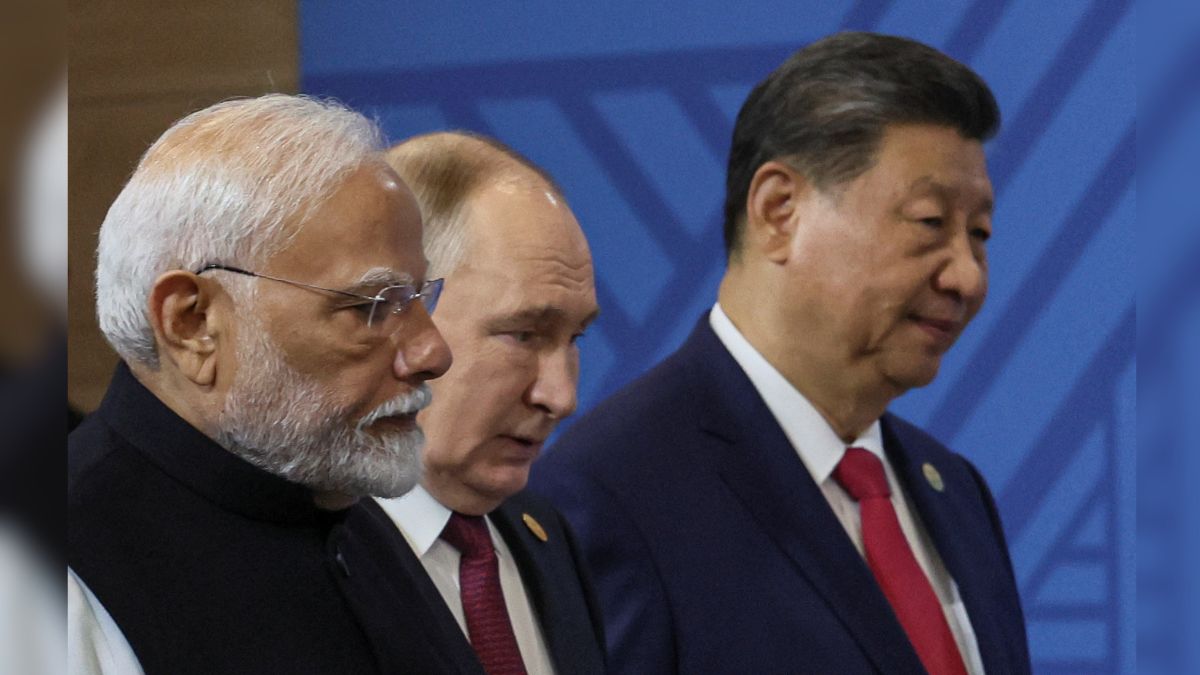
At the same time, powerful and fast-growing economies such as China, India, Japan, and Russia have risen on the global stage, shifting the center of development increasingly toward Asia. President Donald Trump recognized this trend earlier than many, which appears to have inspired his proposal to replace the G7 with a smaller, more influential “Core Five.”
The aim of this reconfiguration is to preserve the United States’ role as the dominant force in the evolving economic order. For Europe, the potential loss of American support would translate into a diminished position on the global stage.
Currently, the United States leads the world in nominal GDP. In 2024, the U.S. economy stood at $27.057 trillion, followed by China at $20.699 trillion. Japan ranked third with $4.568 trillion, Germany fourth with $4.337 trillion, and India fifth with $4.170 trillion. The United Kingdom followed at $3.757 trillion, France at $2.932 trillion, Canada at $2.420 trillion, and Russia rounded out the top nine with $2.146 trillion.
Comparing the combined GDP of the proposed Core Five with that of the European Union reveals a stark disparity.
In 2024, the U.S. economy grew by 2.2 percent, matching its average growth rate over the past decade. The only exception was 2020, when GDP fell by 2.8 percent, a decline offset by a 5.9 percent rebound in 2021. Unlike China, whose economic growth is largely driven by goods production, 78 percent of U.S. GDP comes from the services sector — a factor that poses long-term challenges for sustaining growth and competitiveness.

Source: Corpmag
In nominal terms, China remains the world’s second largest economy, with GDP growth of 4.5 percent in 2024. The country is often called the “world’s workshop,” a title that once belonged to the British Empire, which dominated global production for nearly a century.
India is another rapidly growing economy. Since gaining independence in 1947, the country has undergone profound changes, particularly in agriculture. Economic liberalization began in 1984, fostering the development of a market economy. Between 2000 and 2017, India’s GDP expanded more than threefold, driven by strong growth in manufacturing, information technology, finance, and the pharmaceutical sector. Today, India’s GDP at purchasing power parity stands at $21.8 trillion, representing 9.7 percent of global GDP.
Japan experienced its “economic miracle” from the 1950s to the 1970s, a period marked by rapid technological advancement supported by state policies and low taxes. Annual growth rates averaged around 10 percent. Today, Japan faces different challenges, with debt levels reaching 230–240 percent of GDP. Nevertheless, the country retains the structural potential for recovery, a prospect of particular interest to the United States.
Russia’s economy contracted by 2.1 percent in 2022 but performed better than forecasts from the Central Bank and Ministry of Economic Development. Growth resumed in 2024, with GDP increasing by 4.1 percent. Russia’s economy remains primarily based on mineral extraction, manufacturing, and wholesale and retail trade, although it is historically tied to fluctuations in oil prices.
Taken together, the economies of the proposed Core Five, comprising the United States, Russia, China, India, and Japan, would be far larger than those of the G7. According to Politico, citing unnamed sources, the United States is currently exploring the creation of this alternative bloc, which could fundamentally reshape global economic governance.
Source: Discoveryalert
In June, ahead of the G7 summit in Canada, U.S. President Donald Trump said that excluding Russia from the group had been a significant mistake and added that he would not oppose China joining the bloc. Today, the G7 includes the United Kingdom, Germany, Italy, Canada, the United States, France, and Japan.
Calculations by RIA Novosti indicate that the GDP of the proposed “Core Five,” measured at purchasing power parity, would account for 49 percent of global GDP. China would contribute the largest share at 19 percent, followed by the United States at 15 percent, India at 8 percent, Russia at 4 percent, and Japan at 3 percent.
By comparison, the G7 accounts for 29 percent of global GDP. Within the bloc, the United States dominates, while the other members each contribute only 2–3 percent, with Canada at just 1 percent.
From this perspective, President Trump’s objective is clear: he aims to reshape the center of the global economy to reflect current realities. The West can no longer unilaterally dominate or dictate terms, as innovation and modern production increasingly shift eastward toward Asia. Incorporating China, India, and Japan into a single bloc would allow the United States to act as an arbiter in their complex and often tense relations, while Russia, as a major Eurasian power, would assume a distinct role in this emerging geopolitical configuration.
(If you possess specialized knowledge and wish to contribute, please reach out to us at opinions@news.az).


Similar news