How Azerbaijan strengthens energy sovereignty and expands export geography


By Sabina Alizade
In recent decades, Azerbaijan has embarked on a significant journey to secure its role in world politics, particularly in the context of energy security and regional stability.
The Southern Gas Corridor project not only proved Azerbaijan's role in ensuring Europe's energy security but also opened new perspectives for regional development. This project supplies gas from the Caspian region to central European Union countries, requiring significant investment and demonstrating deep strategic partnership between Azerbaijan and its European partners.
It is important to note that Azerbaijan is not only a major supplier of energy resources but also actively draws attention to the region's cultural and religious diversity. Its multi-confessional society and participation in international institutions, including the Organization of Islamic Cooperation , underscore its role in intercultural dialogue.
Moreover, Azerbaijan is actively working to restore devastated lands and ensure the return of refugees and internally displaced persons to their homes. Projects for rebuilding infrastructure and creating "smart villages" and cities demonstrate the country's commitment to creating favorable living and development conditions for the population of these regions.
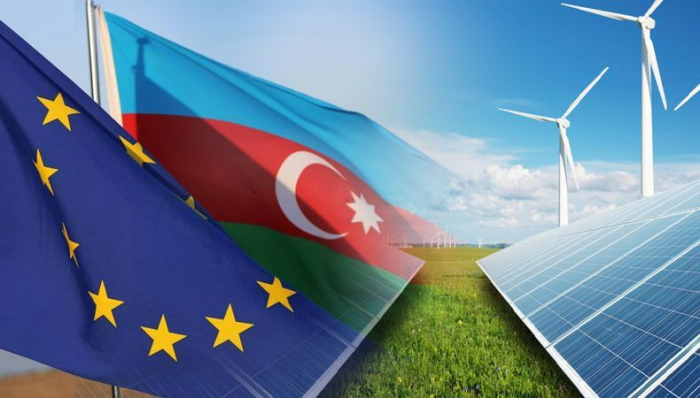
Azerbaijan, a country with a rich cultural heritage and a desire for progress, is at the forefront of the fight for environmental sustainability. The country is actively working on developing green energy and implementing ambitious plans to combat climate change. In 2024, Azerbaijan was chosen as the host country for the 29th session of the Conference of the Parties (COP29) to the UN Framework Convention on Climate Change. This decision, supported by the countries of the Eastern European Group, recognizes Azerbaijan's role in the global environmental agenda. COP29, to be held in Baku, promises to be a forum not only for discussing climate change issues but also for making important decisions and joint actions to combat environmental challenges.
As part of the Year of Green World Solidarity initiative , the country's authorities have called for a transition to a green economy and transformation into a green energy supplier. The statement on recognizing the liberated territories as a "green energy" zone and plans to turn these areas into "zero emission" zones by 2050 underscore the country's strong commitment to ecological sustainability. Another significant step in this direction was SOCAR's voluntary commitment to reducing methane emissions to zero, announced at COP28 in Dubai. This example shows that Azerbaijan not only acknowledges climate challenges but also acts in response to them.
Rich in oil and gas, Azerbaijan has emerged on the world stage as a key player in the energy sector, ensuring stability and security in Europe and beyond. While strengthening its role in energy security, Azerbaijan is also taking responsibility for sustainable development, becoming a recognized leader in green initiatives.
With the completion of the Southern Gas Corridor, Azerbaijan has become a reliable natural gas supplier to Europe, in addition to being a traditional oil producer. This project, Europe's largest infrastructure project, delivers gas pipelines from the Caspian Sea to seven European countries and is expected to expand to 10 countries. Thus, Azerbaijan is becoming a key factor in ensuring Europe's energy security by offering alternative energy sources and diversified supplies.
In addition to its role in energy security, Azerbaijan actively participates in green initiatives and sustainable development. The country's new national development strategy includes a priority area for a clean environment and green development, with commitments to reduce greenhouse gas emissions by 40% by 2050 and create a green energy zone in the Eastern Zangezur region. In the modern world, energy security means not only ensuring the stable supply of energy resources but also encompasses diversity, sustainability, and protection from cyber threats. Azerbaijan recognizes these challenges and is actively working to diversify its energy infrastructure, invest in alternative energy sources, and strengthen the cybersecurity of its systems.
On the global geopolitical stage, energy has become a key factor in determining states' influence and strategic position. Countries rich in natural resources can use their energy power to shape international relations and build economic ties. However, along with these opportunities, there are challenges such as cybersecurity threats, geopolitical conflicts, and climate change, which require joint efforts of states to ensure energy stability and sustainable development.

In a comment to News.Az, Afaq Rza, a political scientist , noted that Azerbaijan has been pursuing its own economic and energy policy since the end of the last century. "The implementation of the international project 'Contract of the Century' marked a turning point in Azerbaijan's economy," he said.
"As a result of the policies implemented, today, significant projects have been signed to ensure global energy security. Naturally, our country now plays a crucial role in global energy security. We can evaluate this role from various aspects. Specifically, our country's geographical position, rich energy resources and oil fields highlight it as a strategic energy supplier. The role of Azerbaijan in global energy security has been further enhanced by projects such as Baku-Tbilisi-Ceyhan (BTC), Baku-Tbilisi-Erzurum (BTE), Trans-Anatolian Pipeline (TANAP), and Trans-Adriatic Pipeline (TAP). For example, the BTE pipeline delivers Azerbaijan's gas to European markets, making a significant contribution to Europe's energy security. The implementation of these international projects further strengthens Azerbaijan's role in global energy security, as well as its strategic importance and influence in energy markets," he added.
The political scientist stated that he does not believe energy security in the modern and changing world should be evaluated solely in terms of supply. It includes continuous supply, quality infrastructure, resource diversity, energy efficiency, ecological sustainability, and international cooperation.
"All these listed aspects are interconnected to some extent, conditioning one another. For instance, energy security requires international cooperation and diplomacy. International cooperation, in turn, requires reliable infrastructure and continuous supply. In this sense, energy security is a complex concept, not limited to supply alone. It encompasses energy stability, sustainability, security, and measures and policies aimed at achieving these goals," the expert added.
Afaq Rza emphasized that Azerbaijan's active participation in energy diplomacy and its significant role on the international stage increase the importance of its energy policy globally.
"Today, due to Azerbaijan's successful political moves and strategies aimed at future prospects, various energy projects and cooperation agreements are being signed, making our country a key participant in international projects. Through these agreements, Azerbaijan makes significant contributions to global energy security. Simultaneously, Azerbaijan also focuses on sustainable development and green energy projects in the energy sector. Investments in renewable energy sources and international collaborations in this area highlight Azerbaijan's commitment to energy security and ecological sustainability. It is also expected that Azerbaijan will increase its attention and investment in renewable energy sources and green energy projects. One of our future prospects is to strengthen the role of our country as a regional energy hub. On the other hand, it is forecasted that the legal perspective in the field of energy security will be strengthened, which means improving the investment climate and increasing transparency. Overall, with all the steps taken and its strong strategy in the field of energy security, Azerbaijan is solidifying its place and role in the global energy market," he noted.
Since the start of the Russia-Ukraine war, Eastern European countries have been paying more attention to their energy sovereignty. This war highlighted the importance of diversifying energy supplies and forced many countries to reassess their energy policies. However, even before this, Germany faced a threat to its energy sovereignty due to sanctions imposed by the US on the Nord Stream pipeline. This demonstrates the increasing importance of energy sovereignty in the context of global geopolitical dynamics.
Energy sovereignty has been particularly relevant for Japan in the Indo-Pacific region. The conflict in the Middle East and sanctions on Russian gas pose serious challenges to the country's energy security. Japan is actively seeking alternatives, including purchasing Australian and American gas. This may lead to the formation of energy minilateralism, strengthening strategic and military trust among the respective countries.
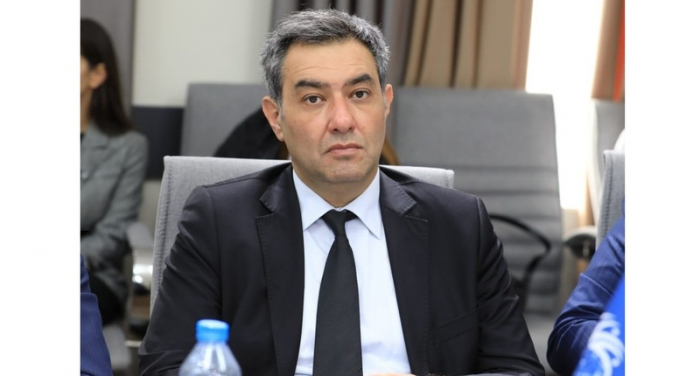
In a comment to News.Az, political scientist Tural Aliyev stated that Azerbaijan's role in global energy security is recognized by many countries and has become a reality of today. The policy pursued by Azerbaijan in energy security is not only related to the country's resources but also to its strategic and geographical position.
"The foundation of energy security was laid not in the last 10 or even 20 years, but with the Contract of the Century in 1994. For 30 years, Azerbaijan has remained committed to bilateral and multilateral agreements with Western states, particularly European countries," he said.
What is happening today? Amid the Russia-Ukraine war, the West faced many problems in energy security. In addressing these problems and filling the gap, Azerbaijan has become a key country. It should be noted that this is not only related to Azerbaijan's gas and oil fields. Considering that the demand of the customers is larger, it is impossible for Azerbaijan to fully meet this demand," he added.
Tural Aliyev emphasized that Azerbaijan is a gateway for Central Asia and a transit country for transporting Central Asian energy resources to the West. He stated that considering the oil and gas reserves of Kazakhstan and Turkmenistan, and the recent expansion of the Middle Corridor with the inclusion of other countries, Azerbaijan has become a hub. This hub signifies that Azerbaijan has become a significant figure on the global stage.
"Another future-oriented step is the creation of green energy and green corridors. In November, during COP29 and in parallel with climate change discussions, a transformation in green energy export from Azerbaijan is expected. If green energy becomes as powerful and resourceful as traditional energy, it will further solidify Azerbaijan's position in global energy security. Considering today's realities, energy security, in the geopolitical context, is not just about energy carriers and dependency but also a matter of a country's sovereignty," the expert pointed out.
The political scientist stated that as long as there are threats to our independence, steps should be taken to eliminate these threats.
"Countries with gaps in their energy security face more serious challenges and cannot insure themselves. This card is always widely used against such countries. From this perspective, by highlighting energy security in its foreign policy priorities, Azerbaijan not only ensures economic aspects but also political and security issues," he added.
P.S. If we look at it from a geopolitical perspective, defense plays a key role in ensuring energy security. Military efforts should not only focus on protecting energy infrastructure but also on ensuring stability in the energy sector amid various threats, including cyberattacks and international conflicts. There is also a need for the development of military technologies that can utilize alternative energy sources and increase energy efficiency. This will help guarantee the reliability of energy supply during crises and conflicts. International energy relations will continue to be influenced by geographical and geopolitical factors. Countries will strive to ensure their energy sovereignty and diversify their energy supply sources to reduce dependency on a single supplier. This may also lead to the deepening of strategic relations between countries based on common energy and security interests. Challenges and threats to energy security will remain relevant, and only through joint efforts and cooperation between world countries can a sustainable and secure energy future for all be ensured.


Similar news