How the US and Russia divide the world


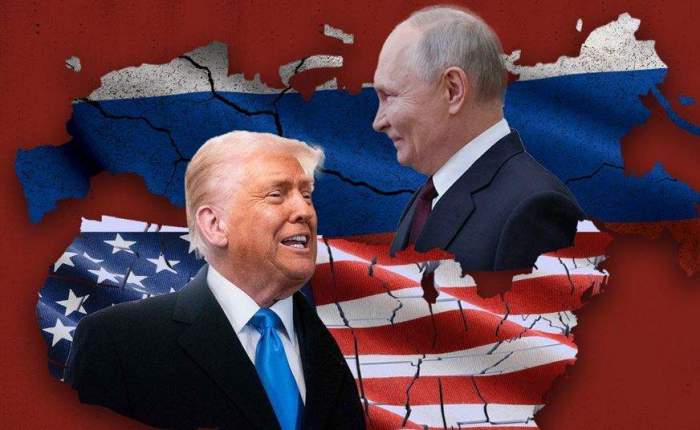
By all appearances, the geopolitical chessboard is shifting once again, and this time, the grandmasters are playing behind closed doors.
Recent reports from Riyadh suggest that the United States and Russia are engaged in discussions that go far beyond Ukraine. The much-publicized negotiations, ostensibly aimed at finding a resolution to the ongoing war, may in fact be the prelude to a broader geopolitical realignment—one where Washington and Moscow carve out new spheres of influence while the world watches from the sidelines.
The details of the Riyadh talks are murky, but one revelation is clear: Ukraine was not at the table. While representatives of Russia and the U.S. reportedly discussed a three-phase peace plan—including a ceasefire, elections, and a final peace agreement—Kyiv was conspicuously absent from the negotiations. President Volodymyr Zelensky was neither invited nor informed of the proposed framework, a striking development that underscores his dwindling relevance in Washington’s strategic calculations.
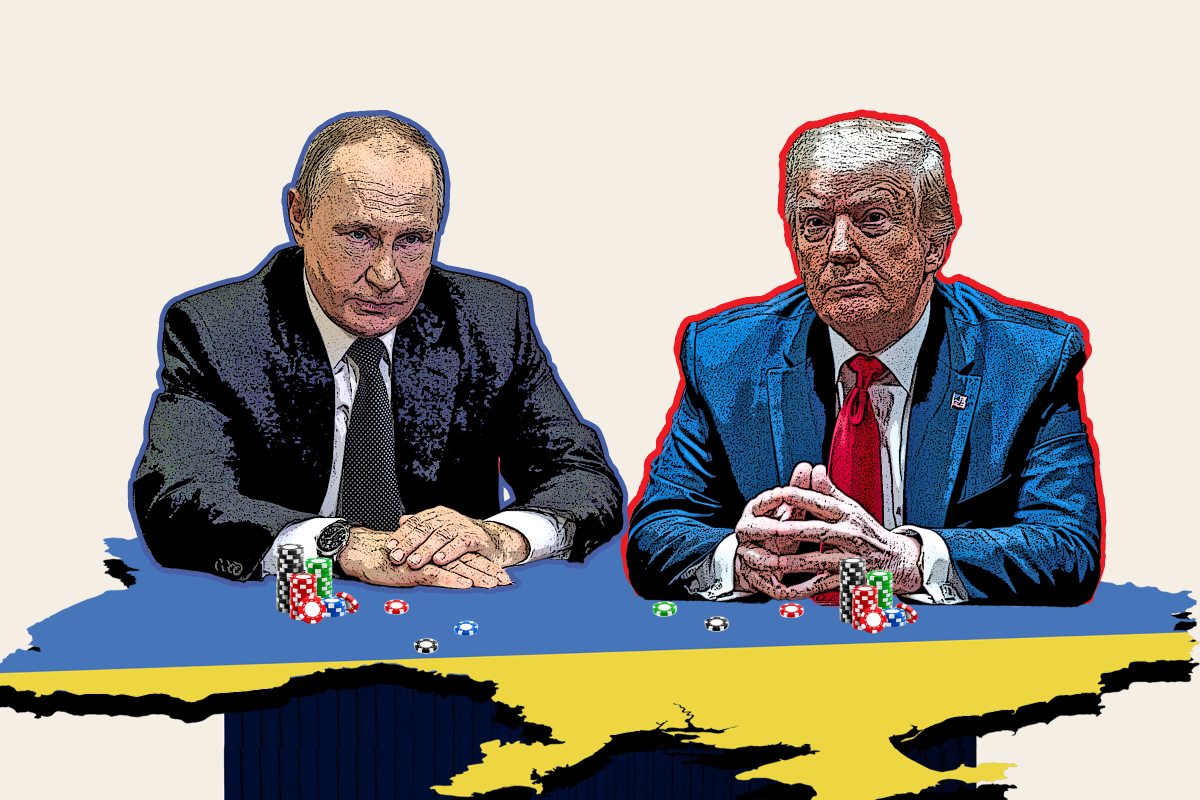
This exclusion was no accident. Donald Trump, who has signaled a willingness to rethink U.S. support for Ukraine, has already dismissed Zelensky’s legitimacy as president. His position suggests that Kyiv will only be allowed to engage in peace talks once new elections produce a leader deemed acceptable in Washington. Given Zelensky’s plummeting approval ratings and growing discontent in Ukraine, his chances of securing another term appear increasingly slim. But this raises an unsettling question: If neither a pro-Western nor a pro-Russian candidate is viable, then who will decide Ukraine’s future?
Perhaps the answer lies in Washington’s latest maneuver. According to reports, the Trump administration made a bold proposal to Ukraine: grant the U.S. a 50% stake in its rare-earth mineral reserves in exchange for continued American support. Treasury Secretary Scott Bessent personally flew to Kyiv to discuss the deal, only to be rebuffed by Zelensky. In response, White House National Security Council spokesperson Brian Hughes criticized the Ukrainian leader for his “shortsightedness,” arguing that American investment would have benefited both Ukraine’s economy and U.S. taxpayers.
Shortly thereafter, Trump made his move: negotiations with Russia were officially announced. The message was unmistakable—Kyiv’s refusal to cooperate would come at a cost. If Ukraine had agreed to Washington’s terms, the White House might have been more inclined to soften its stance. Instead, Zelensky now faces renewed pressure to hold elections, despite the deep instability in his country.

Yet the bigger picture suggests that Ukraine is merely a bargaining chip in a much larger game. The meeting in Riyadh was not about resolving the war—it was about testing the limits of U.S.-Russia diplomacy. The Kremlin and the White House are assessing just how far they can go in redrawing the global order, with Ukraine serving as a convenient testing ground.
Notably, Washington has stopped insisting on Ukraine’s territorial integrity, a shift that speaks volumes. The Russian-occupied territories are no longer an issue of negotiation between Moscow and Kyiv; they are now part of a broader U.S.-Russia settlement. And the implications go beyond Eastern Europe.
Trump, ever the dealmaker, sees an opportunity. If the U.S. grants Russia certain concessions—perhaps turning a blind eye to Moscow’s ambitions in the post-Soviet space—Russia may, in turn, offer something in return. That "something" could be acquiescence to U.S. efforts to contain China, or perhaps facilitating American access to Ukraine’s vast natural resources.
Meanwhile, whispers are growing that Ukraine’s upcoming presidential elections could be held under Russian supervision. If true, this would mark an extraordinary shift—one that effectively ends Ukraine’s role as an independent actor in its own war. Instead, the country would become the subject of a quiet yet decisive understanding between Washington and Moscow.

The one potential flashpoint in this unfolding realignment? Energy. Trump wants to force Europe to buy expensive American liquefied natural gas, while Russia has no intention of ceding its dominance over the European energy market. If the two sides can navigate this impasse, the road to a broader U.S.-Russia understanding becomes much clearer.
Of course, this remains speculation. But recent history has shown that global politics is full of surprises, and the lines between allies and adversaries are often blurrier than they seem. What we do know is that the world is shifting, and the next great geopolitical realignment may already be underway—not on the battlefield, but in discreet negotiations where the stakes are nothing less than the future of the global order.
(If you possess specialized knowledge and wish to contribute, please reach out to us at opinions@news.az).


Similar news