Hungary seeks to boost ties with China amid economic recession in Europe


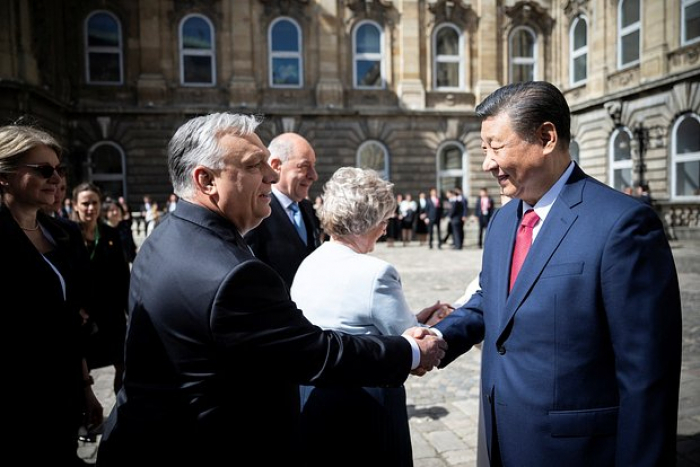
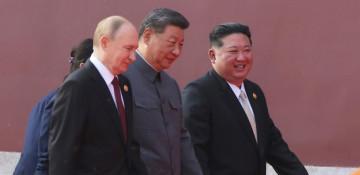
Xi Jinping’s official visit to Hungary was a striking affirmation of Hungary’s Eastern Opening policy. Arriving after visits to Emmanuel Macron’s France – Western Europe’s only country with ambitions for a sovereign Europe – and Aleksandar Vučić’s Serbia , which is by far the largest recipient of Chinese investments on the continent, Xi scheduled most of his high-level meetings in Budapest for Europe Day . This rare gesture cemented Hungary’s position as China’s most reliable partner in the European Union, which results in a volume of cooperation that belies Hungary’s modest size, population, and economic power.
Under the four consecutive terms of Prime Minister Viktor Orbán, Hungary has built its economic growth & convergence model on stimulating exports. It is with this in view that Hungary has championed foreign direct investments (FDI) in high value-added and high-tech manufacturing sectors, especially automotive, with a politically highly important side mission of increasing pre-2010 Hungary’s poor labour force participation rate. In the years between 2012-2022, this led to yearly average GDP growth rates of 2.95%. This growth performance is mediocre when compared to other EU members in the region; however, it is to be evaluated in the context of a staggering 24% increase in the number of Hungarians who had a job (in a country with an ageing population!), as well as declining government debt measured as a share of GDP.
However, in the last decade, Hungary’s main export & investment partner, Germany, has gradually turned away from common sense in shaping its economic policy. Plagued by heaps of bureaucratic red tape, increases in environment-related taxation, deteriorating trade ties with Russia & China, as well as skyrocketing energy costs, Germany was the only large European economy that got stuck in a recession last year, and it is predicted to stagnate this year as well.
Post-Merkel Germany’s economic plight is a burden to the Hungarian economic model, as is the Von der Leyen EU Commission’s decision to focus on the Green Deal instead of fuelling economic growth. On top of that, the Biden administration and its Ambassador to Hungary, David Pressman, have been actively trying to discourage investment in Hungary for political reasons relating to Hungary’s opposition to the war in Ukraine.
These factors combined have strengthened Hungary’s commitment to looking for partners in the East for cooperation on energy, exports, and investment. This has led to increased economic cooperation with Turkey, Azerbaijan, Central Asia, and especially China. In 2023, China single-handedly doubled Hungary’s total inward FDI: Hungary garnered record investment that amounted to €13 billion in total, 82% of which came from Asia and over half of the total sum, €7.6 billion, from China. This Chinese investment mostly went into the automotive sector and acted in concert with German capital, coupling Eastern and Western investments and feeding into Hungary’s strategy of connectivity: the country wants to be the meeting point of Western and Eastern high-tech and a safe haven for cooperation in an international environment characterized by sanctions.
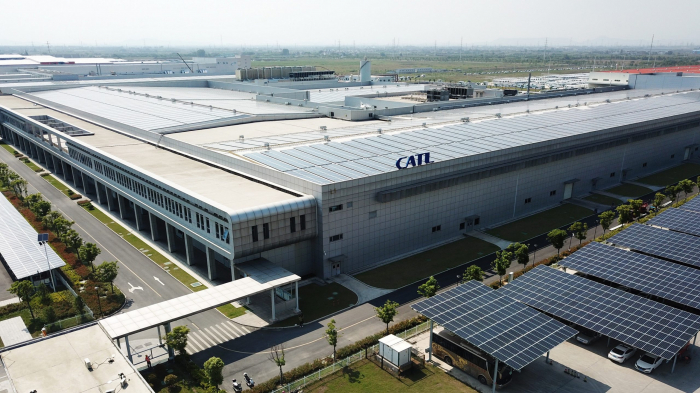 CATL, an EV battery manufacturer, is working on a plant around the second largest Hungarian city of Debrecen, which will be the largest single foreign investment project in the history of Hungary. In addition, BYD , the global leader in EV manufacturing, announced its plans to build its second car manufacturing centre in the Southern Hungarian city of Szeged after increasing fivefold the capacity of its bus & truck manufacturing centre in Komárom, a city on the border with Slovakia. Rumours have also circulated about another leading Chinese EV manufacturer, Great Wall Motors, establishing a manufacturing base close to Pécs in the southwestern part of Hungary, an area which had historically grappled with a lack of good-paying jobs.
The presence of these large economic ventures is critically important to Hungarian economic development as German investment in automotive manufacturing in Hungary – Audi in Győr close to Austria, Mercedes-Benz in Kecskemét south of Budapest, Opel in Szentgotthárd on the Hungarian-Austrian-Slovenian triple border, and most recently, Debrecen in the Northeast – turned these areas into the most prosperous parts of Hungary. Net average salaries in these parts of Hungary are well in excess of €1.000, while other parts of the country average €700 or less, a very significant difference. Chinese investments also help Hungary retain the presence of its German premium car manufacturing sites against the backdrop of the total loss of car manufacturing jobs in Europe due to EV transition. Győr and Kecskemét have already been selected by their respective parent companies as EV manufacturing bases, and BMW is currently building out its Debrecen base to do the same.
Coupled with this economic cooperation, Xi’s visit also marked an upgrade in Chinese-Hungarian infrastructure cooperation. For a long time, the only shared project was a high-speed railway line between the capitals of Hungary and Serbia, Budapest and Belgrade, as part of China’s Belt and Road Initiative. During this visit, it was announced that China is planning to invest in a range of infrastructure projects in Hungary: a high-capacity freight rail ring around Budapest called the V0 line; a high-speed rail line connecting downtown Budapest with the country’s largest international airport, which is now connected to 7 Chinese cities; EV charging infrastructure; an oil pipeline between Hungary and Serbia; and a large, modern and effective border station on the Hungarian-Serbian border, a choking point in international logistics.
These agreements are compounded by upgraded cooperation in the realm of nuclear energy, which now spans the entire vertical of the industry, visa waivers for Hungarians in China, and liberalization of Hungarian agricultural exports into China as well. Politico has every reason to write in its Friday newsletter that “Orbán’s Xi bromance pays off”, as the Chinese president leaves behind “16 new cooperation agreements covering everything from cars to nuclear energy and a cool €16 billion in investment”. Hungary’s upgraded strategic partnership helps it make the most of its strategically important location at the crossroads of the Balkans, Eastern and Western Europe, while simultaneously fending off the debilitating effects of misled German economic policy on the entirety of Europe and American economic blackmail as well.
The author is Deputy Editor at Mandiner.hu, a Hungarian expert
Under the four consecutive terms of Prime Minister Viktor Orbán, Hungary has built its economic growth & convergence model on stimulating exports. It is with this in view that Hungary has championed foreign direct investments (FDI) in high value-added and high-tech manufacturing sectors, especially automotive, with a politically highly important side mission of increasing pre-2010 Hungary’s poor labour force participation rate. In the years between 2012-2022, this led to yearly average GDP growth rates of 2.95%. This growth performance is mediocre when compared to other EU members in the region; however, it is to be evaluated in the context of a staggering 24% increase in the number of Hungarians who had a job (in a country with an ageing population!), as well as declining government debt measured as a share of GDP.
However, in the last decade, Hungary’s main export & investment partner, Germany, has gradually turned away from common sense in shaping its economic policy. Plagued by heaps of bureaucratic red tape, increases in environment-related taxation, deteriorating trade ties with Russia & China, as well as skyrocketing energy costs, Germany was the only large European economy that got stuck in a recession last year, and it is predicted to stagnate this year as well.
Post-Merkel Germany’s economic plight is a burden to the Hungarian economic model, as is the Von der Leyen EU Commission’s decision to focus on the Green Deal instead of fuelling economic growth. On top of that, the Biden administration and its Ambassador to Hungary, David Pressman, have been actively trying to discourage investment in Hungary for political reasons relating to Hungary’s opposition to the war in Ukraine.
These factors combined have strengthened Hungary’s commitment to looking for partners in the East for cooperation on energy, exports, and investment. This has led to increased economic cooperation with Turkey, Azerbaijan, Central Asia, and especially China. In 2023, China single-handedly doubled Hungary’s total inward FDI: Hungary garnered record investment that amounted to €13 billion in total, 82% of which came from Asia and over half of the total sum, €7.6 billion, from China. This Chinese investment mostly went into the automotive sector and acted in concert with German capital, coupling Eastern and Western investments and feeding into Hungary’s strategy of connectivity: the country wants to be the meeting point of Western and Eastern high-tech and a safe haven for cooperation in an international environment characterized by sanctions.
CATL, an EV battery manufacturer, is working on a plant around the second largest Hungarian city of Debrecen, which will be the largest single foreign investment project in the history of Hungary. In addition, BYD , the global leader in EV manufacturing, announced its plans to build its second car manufacturing centre in the Southern Hungarian city of Szeged after increasing fivefold the capacity of its bus & truck manufacturing centre in Komárom, a city on the border with Slovakia. Rumours have also circulated about another leading Chinese EV manufacturer, Great Wall Motors, establishing a manufacturing base close to Pécs in the southwestern part of Hungary, an area which had historically grappled with a lack of good-paying jobs.The presence of these large economic ventures is critically important to Hungarian economic development as German investment in automotive manufacturing in Hungary – Audi in Győr close to Austria, Mercedes-Benz in Kecskemét south of Budapest, Opel in Szentgotthárd on the Hungarian-Austrian-Slovenian triple border, and most recently, Debrecen in the Northeast – turned these areas into the most prosperous parts of Hungary. Net average salaries in these parts of Hungary are well in excess of €1.000, while other parts of the country average €700 or less, a very significant difference. Chinese investments also help Hungary retain the presence of its German premium car manufacturing sites against the backdrop of the total loss of car manufacturing jobs in Europe due to EV transition. Győr and Kecskemét have already been selected by their respective parent companies as EV manufacturing bases, and BMW is currently building out its Debrecen base to do the same.
Coupled with this economic cooperation, Xi’s visit also marked an upgrade in Chinese-Hungarian infrastructure cooperation. For a long time, the only shared project was a high-speed railway line between the capitals of Hungary and Serbia, Budapest and Belgrade, as part of China’s Belt and Road Initiative. During this visit, it was announced that China is planning to invest in a range of infrastructure projects in Hungary: a high-capacity freight rail ring around Budapest called the V0 line; a high-speed rail line connecting downtown Budapest with the country’s largest international airport, which is now connected to 7 Chinese cities; EV charging infrastructure; an oil pipeline between Hungary and Serbia; and a large, modern and effective border station on the Hungarian-Serbian border, a choking point in international logistics.
These agreements are compounded by upgraded cooperation in the realm of nuclear energy, which now spans the entire vertical of the industry, visa waivers for Hungarians in China, and liberalization of Hungarian agricultural exports into China as well. Politico has every reason to write in its Friday newsletter that “Orbán’s Xi bromance pays off”, as the Chinese president leaves behind “16 new cooperation agreements covering everything from cars to nuclear energy and a cool €16 billion in investment”. Hungary’s upgraded strategic partnership helps it make the most of its strategically important location at the crossroads of the Balkans, Eastern and Western Europe, while simultaneously fending off the debilitating effects of misled German economic policy on the entirety of Europe and American economic blackmail as well.
The author is Deputy Editor at Mandiner.hu, a Hungarian expert
(If you possess specialized knowledge and wish to contribute, please reach out to us at opinions@news.az).


Similar news