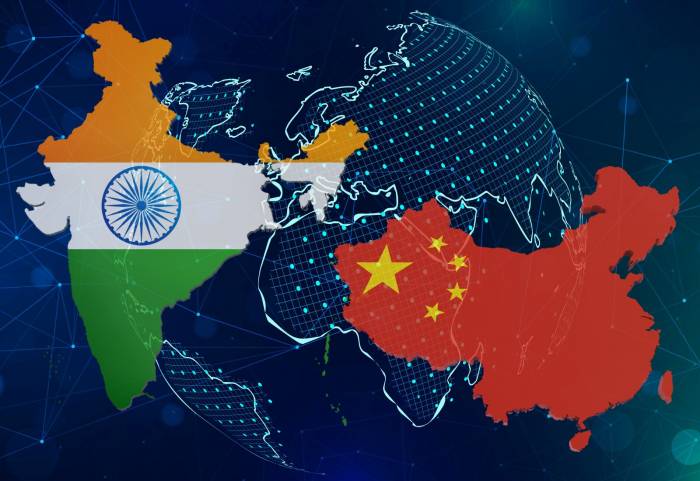
India and China compete for leadership in the global semiconductor industry


By Asif Aydinli
Tata, one of India's largest industrial conglomerates, has commenced construction of a semiconductor manufacturing plant in the state of Assam. This was announced by the Ministry of Electronics and Information Technology of India. The project, valued at 270 billion rupees ($3.2 billion), marks a significant step in the development of the semiconductor industry in the country.The new plant is expected to produce up to 48.3 million chips per day, reinforcing India's position in the global microelectronics market. Minister of Electronics and Information Technology Ashwini Vaishnaw noted that the facility will be a center for advanced semiconductor assembly technologies, including Wire Bond, Flip Chip, and I-SIP. These technologies play a crucial role in the automotive industry, particularly in electric vehicle production, as well as in communications and network infrastructure. Vaishnaw emphasized the potential of these technologies to drive innovation and boost economic growth in the region.
India's government has been making concerted efforts to develop its semiconductor manufacturing capabilities, recognizing the sector's strategic importance. By offering financial incentives, tax breaks, and streamlined regulatory processes, India aims to attract global semiconductor giants to set up operations within its borders. In June 2023, the state of Gujarat signed an agreement with American company Micron Technology worth nearly $3 billion to build a plant that will start production in December 2024. Additionally, Taiwanese company Foxconn applied to establish microchip manufacturing in India in late 2023. These initiatives are part of India's broader strategy to reduce its dependence on semiconductor imports and establish itself as a key player in the global supply chain.
China, meanwhile, continues to hold a leading position in global semiconductor manufacturing. Companies like SMIC, Hua Hong Semiconductor, and Yangtze Memory Technologies Corp (YMTC) play a significant role in the global industry. Government support and substantial investments allow China to develop advanced technologies and increase production capacity. However, amid geopolitical tensions and trade disputes, the country is striving for greater independence from Western technologies. China has been ramping up its efforts to achieve technological self-sufficiency, investing heavily in research and development and expanding its domestic manufacturing capabilities.
The semiconductor industry is at the heart of the global tech economy, and nations worldwide are recognizing its critical importance. The COVID-19 pandemic has underscored vulnerabilities in global supply chains, prompting countries to reassess their reliance on foreign semiconductor supplies. As part of this shift, several European countries, including Germany, are seeking to reduce their dependence on Asian microelectronics manufacturers. The European Union has launched initiatives to bolster its semiconductor industry, aiming to double its global market share by 2030.
These developments highlight the dynamic and rapidly evolving landscape of the semiconductor industry. As countries like India and China expand their capabilities, the global semiconductor market is becoming increasingly competitive. This competition is expected to drive innovation, improve supply chain resilience, and potentially lead to lower costs for consumers.
The semiconductor race is not just about economic gains but also about strategic positioning in the technological arena. As countries invest in their semiconductor industries, they are also investing in their futures, aiming to lead in the next wave of technological advancements that will shape the world.


Similar news