Indian arms positioned on Azerbaijan’s border: How will Baku respond?


By Tural Heybatov
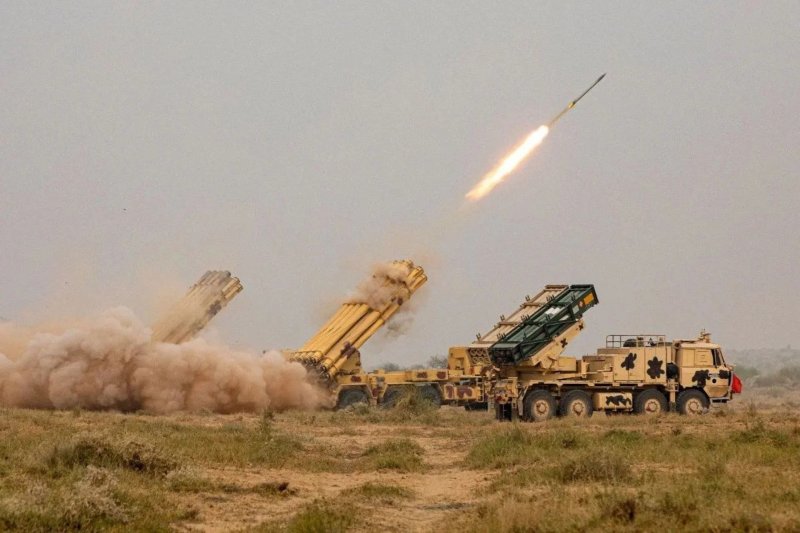
The Pinaka rocket and air defense systems acquired by Armenia from India late last year have already been deployed along the Azerbaijani border. According to media reports, the Pinaka multiple launch rocket system (MLRS) is now positioned near Azerbaijan’s borders. Given the recent increase in Armenian shelling incidents, this information does not seem unrealistic. Armenia is deliberately escalating the situation, attempting to provoke Azerbaijan into retaliatory actions.
Unfortunately, Armenia is relying on the European monitoring mission in this scenario. The EU mission has already announced that the border remains quiet, with no gunfire detected, thereby providing significant assistance to Yerevan. There is no doubt that the deployment of the Indian missile system on the border will also escape their notice. The observers, it seems, are too preoccupied with scrutinizing Azerbaijani positions through binoculars to pay attention to Armenia’s military preparations.

Source: Armenianweekly
India began delivering Pinaka MLRS to Armenia in November last year. The first batch of this weaponry was sent to the neighboring country in the fall. Around the same time, Armenia also received the Akash air defense system. Under an agreement reached between Yerevan and India in 2022, Armenia is expected to receive between 24 and 40 Pinaka systems over two years.
Named after the bow of the deity Shiva, the Pinaka MLRS can strike targets at a range exceeding 80 km and launch a full salvo of 12 rockets in just 44 seconds, covering an area of 700x500 meters.
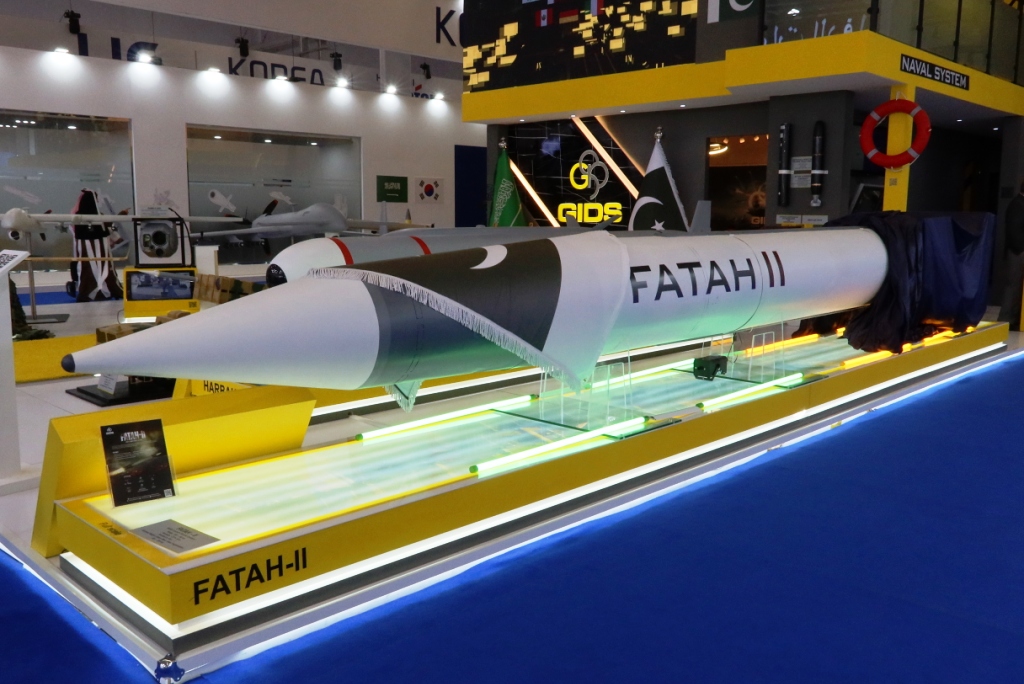
India takes great pride in the Pinaka MLRS, as it is one of the few domestically produced weapons adopted by the Indian Army, which has deployed it along its borders with Pakistan and China. Typically, India’s armed forces prefer foreign-made weaponry, which is considered more advanced and reliable. This preference is not without reason—military experts argue that the Pinaka system significantly lags behind its Pakistani counterparts, primarily due to its limited range. For instance, Pakistan’s Fatah-1 and Fatah-2 missile systems can strike targets up to 140 km and 400 km away, respectively.
Source: Edrmagazine
Despite being officially adopted by the Indian Army, reports emerged that Pinaka MLRS performed poorly during last year’s military exercises. Some rockets reportedly exploded mid-air upon launch. Indian experts themselves acknowledge that these missiles are unreliable in terms of range and consistency. This may explain why Pinaka has not attracted much interest from international buyers—Armenia was the first country to purchase these systems. Later, reports indicated that France also began expressing interest in Pinaka, seemingly out of solidarity.
When it comes to certain types of weaponry, Armenia is the first and only importer. Some believe that India is hoping Armenia will engage in a new conflict, allowing it to test various systems in real combat conditions.
India is primarily an importer rather than an exporter of arms. In 2024, the Stockholm International Peace Research Institute (SIPRI) released a report on global arms transfers, in which India was listed as one of the world’s largest arms importers. Over the past 20 years, India has spent $60 billion on weapons purchases from other countries and aims to increase this figure to $100 billion.
Meanwhile, according to expert assessments, India’s defense industry remains far from world-class.
As former Armenian Defense Minister Arshak Karapetyan previously told Armenian media, India sells weapons to Yerevan at high prices and without any quality guarantees. According to him, the Indian arms purchased by Armenia are in poor condition, and "for over a year, it has been impossible to repair or make Indian-made weapons operational."

Source: Spsmai
Armenia is not only buying the Pinaka MLRS from India. Under an existing contract, India will also supply Armenia with 90 ATAGS howitzers, which have not been accepted into service by the Indian Army. According to Indian media, these howitzers have been undergoing tests for several years without success. Despite their underwhelming performance, they are more expensive than foreign counterparts.
At the beginning of last year, the Indian news agency IADN reported that Armenia had become the largest buyer of Indian arms. Contracts worth $600 million were signed for the 2024–2025 fiscal year. This is a relatively small amount, and it is worth noting that this is considered India’s largest arms export deal.
According to military experts, Armenia would be better off spending its money more wisely. The Pinaka acquisition was India’s second arms deal with Armenia; prior to that, Yerevan purchased four Swathi radar stations from India for $40 million. India is also eager to sell Armenia its subpar helicopters and aircraft—while at the same time, it procures these types of military equipment from France.
Every country has the right to build and equip its armed forces. Armenia will also have that right once it concludes a stable and guaranteed peace agreement that leaves it no opportunity for aggression against its neighbors. Until that happens, however, the deployment of Pinaka and other destructive systems along the border will be viewed unequivocally by Azerbaijan—as a threat. And the presence of a military threat carries very specific consequences for the Armenian side. If those consequences arise, Armenia will have only itself to blame.


Similar news