Iran after Assad’s fall: New strategy or continuation of old approaches?


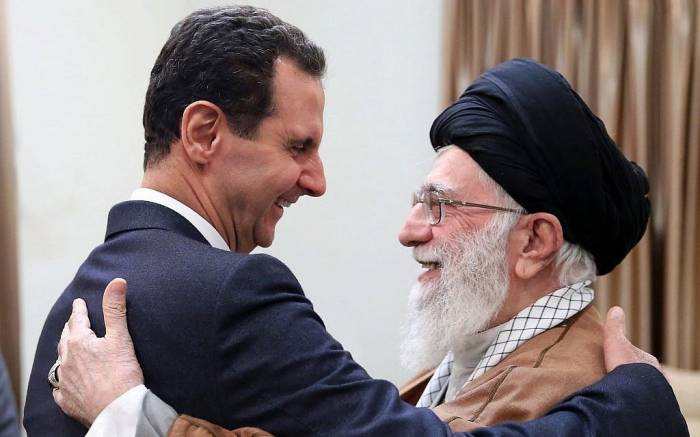
In this photo released by the Syrian official news agency SANA, Syrian President Bashar Assad, left, shakes hands with Iranian Supreme Leader Ayatollah Ali Khamenei, before their meeting in Tehran, Iran, on February 25, 2019. (SANA via AP)
By Asim Mustafayev
Iran’s influence in the Middle East has long depended on an intricate network of proxy groups and strategic alliances that extend across the region.
For over four decades, Syria has played a pivotal role in Iran’s strategy to counterbalance its regional adversaries. Since the Islamic Revolution in 1979, Tehran has viewed Syria as a vital ally in its efforts to build the "Axis of Resistance," a coalition of states and groups aligned against Israel, the United States, and their allies in the Middle East. Syria has served as a critical transit hub for arms shipments and financial support to Hezbollah in Lebanon, as well as a staging ground for Iran’s broader regional ambitions.
When the Syrian civil war erupted in 2011, Iran was quick to commit resources to ensure the survival of the Assad regime. Iranian leaders framed their intervention as a fight against Sunni extremism and Western interference, justifying their deep involvement in Syrian affairs. Tehran provided massive political, military, and financial aid, ranging from military advisors and ground troops to billions of dollars in economic assistance. These efforts underscored the strategic importance of Syria to Iran’s broader regional calculus.
However, the cost of sustaining Assad’s regime has been staggering. Estimates suggest that Iran has invested between $30 billion and $50 billion in the conflict, placing immense strain on an economy already reeling from international sanctions and mismanagement. Despite these sacrifices, the sustainability of Iran’s influence in Syria has come under increasing scrutiny, as geopolitical realities evolve and Assad’s grip on power becomes less certain.
Iran’s heavy investment in Syria has not shielded it from criticism or setbacks. The broader concept of the "Axis of Resistance" has faced significant challenges, exposing vulnerabilities in Tehran’s approach. The escalation of conflicts involving groups like Hamas and Hezbollah has further complicated the regional landscape, leaving Iran to contend with mounting pressures on multiple fronts.
Recent events, such as Hamas’ unprecedented attacks on Israel, have drawn attention to the limitations of Iran’s support networks. Experts like James Jeffrey of the Wilson Center argue that Tehran’s pool of reliable allies is shrinking, a trend that could undermine its ability to project power effectively. These developments highlight the fragility of Iran’s position in a region marked by shifting alliances and intensifying rivalries.
The potential overthrow of Assad’s regime in Syria would represent a seismic shift for Iran, disrupting decades of strategic planning and leaving Tehran to grapple with a host of challenges. Economically, the loss of Syria would deal a severe blow to Iran’s investments in the country, further straining an already fragile economy. With sanctions continuing to isolate Iran from global markets, the collapse of its Syrian ally would amplify Tehran’s financial woes and limit its ability to sustain foreign policy initiatives.
Domestically, the repercussions could be equally profound. Foreign policy failures often resonate within Iran, fueling public dissatisfaction and protests. The combination of economic hardship and perceived geopolitical setbacks could weaken the legitimacy of Iran’s leadership at home, creating additional layers of instability.
On the international stage, a post-Assad Syria could align itself with Tehran’s adversaries, such as Israel and the United States. This shift would increase military and diplomatic pressure on Iran, forcing it to reassess its regional posture. Furthermore, the potential power vacuum in Syria could allow Sunni extremist groups to regain a foothold, posing new security challenges for Tehran and its allies.
The loss of Syria would also have a domino effect on Iran’s regional alliances. Hezbollah, which relies heavily on Syrian support, could find its operations severely constrained. The weakening of this key proxy would diminish Iran’s influence in Lebanon and across the Levant, further isolating Tehran within the region.
In the face of such challenges, Iran is likely to pursue a range of strategies to adapt to the changing landscape. Strengthening its nuclear program could emerge as a central pillar of its response, allowing Tehran to deter external threats and project power. Accelerating nuclear development would send a clear signal to the international community that Iran remains a formidable player, despite setbacks in Syria.
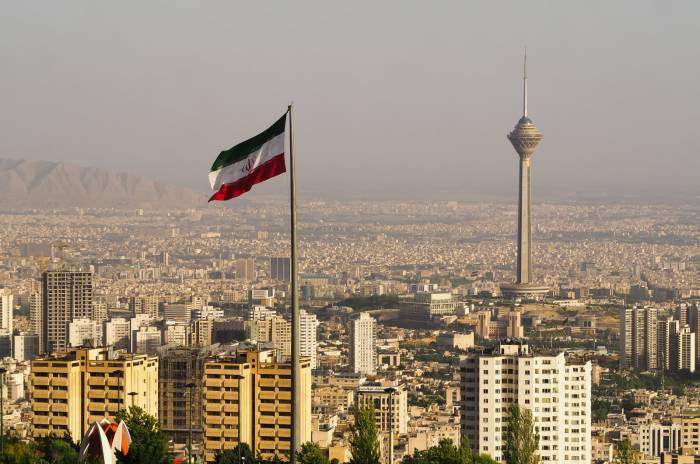
Skyscrapers line the skyline in Tehran, Iran, April 28, 2019. (Shutterstock Photo)
At the same time, Tehran may attempt to engage with any new administration that emerges in Syria following Assad’s fall. Reports suggest that Iranian officials are already exploring avenues to establish relationships with potential successors, aiming to safeguard their interests and minimize losses. However, the feasibility of such negotiations remains uncertain, particularly given the fragmented nature of Syria’s opposition groups and the influence of competing powers.
If diplomatic efforts prove unsuccessful, Iran could resort to destabilizing tactics, leveraging its experience in asymmetrical warfare to create challenges for any government that opposes its interests. This approach, reminiscent of Iran’s activities in Iraq and Lebanon, could prolong instability in Syria, complicating efforts to establish a stable post-Assad order.
The fall of Assad would not only reshape Iran’s strategy but also have far-reaching consequences for the broader Middle East. Geopolitical tensions between Iran and Israel are likely to escalate, with both nations vying for influence in a region undergoing rapid change. Renewed conflict within Syria could destabilize neighboring states, creating a ripple effect that undermines regional security.
Moreover, the shifting dynamics could deepen existing divisions between Sunni and Shia powers, exacerbating sectarian conflicts across the Middle East. The emergence of new alliances and rivalries would add complexity to an already volatile region, challenging the ability of global powers to manage escalating tensions.
In this context, Iran’s ability to navigate these challenges will depend on its capacity to adapt to new realities while preserving its core interests. Tehran’s next moves will be closely watched, not only by its adversaries but also by an international community eager to understand how the Middle East’s evolving landscape will influence global stability.


Similar news