Is Germany changing course? Nord Stream back in the spotlight


The idea of restoring Nord Stream is no longer marginal. The notion of reviving the Nord Stream pipeline no longer sounds as far-fetched as it did just a year ago. Discussions on the feasibility of bringing the pipeline back online are no longer limited to pro-Russian politicians and energy experts—German officials, such as Saxony’s Prime Minister Michael Kretschmer, are now openly addressing the issue. This is happening despite Germany’s official stance of having written off the project both politically and economically. So, what has changed?
When Europe decided to abandon Russian gas, it was framed as a liberation from "energy dependence." However, in reality, the rejection of Nord Stream has led to the creation of a new dependence—on American liquefied natural gas (LNG) and volatile markets. Energy prices in Europe have skyrocketed, and German industry now faces the threat of mass deindustrialization.

The decision to forgo cheap Russian gas has proven catastrophic for Germany, accelerating the country’s deindustrialization.
Energy-intensive industries have been forced to shut down due to soaring gas and electricity prices. The closure of six modern nuclear power plants in 2022—at the peak of the 21st century’s biggest energy crisis—transformed Germany from an electricity exporter into an importer. This has also increased pressure on neighboring EU countries, which are obliged to supply energy to Germany under pan-European regulations, driving up prices elsewhere—particularly in Sweden and Norway, where authorities are now restricting energy exports to safeguard their own needs.
Michael Kretschmer is not the only one openly speaking out on this issue. Alice Weidel, a politician from the Alternative for Germany (AfD) party, previously stated that Germany must urgently launch Nord Stream 2. Moreover, British politician David Kurten has also joined the discussion on potentially resuming deliveries via the Russian pipeline, noting that one of the Nord Stream 2 lines remains undamaged and could be put into operation.
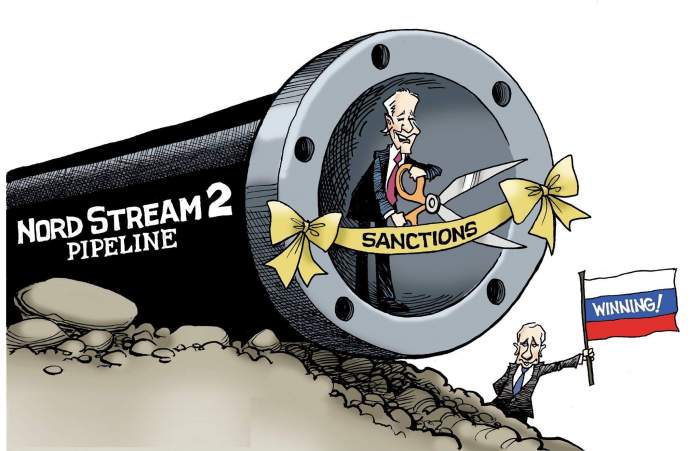
However, there is a problem: the German and EU authorities are not yet ready to acknowledge the failure of their sanctions strategy.
The statements by Kretschmer, Weidel, and Kurten make economic sense: the pipeline exists, it was built with German money, and it remains one of the most cost-effective routes for gas supplies to Europe. But this is not a technical issue—it is a political one.
As Igor Yushkov, a leading analyst at the National Energy Security Fund and an expert at the Financial University under the Government of Russia, points out, technically, Nord Stream 1 can be restored . However, this would require not only financial investment but also political consensus. Even the undamaged line of Nord Stream 2 could be launched tomorrow—all it would take is the political will of the German government. However, Berlin itself froze the certification process for the pipeline after the start of the special military operation.
At present, Germany receives Russian gas only through the TurkStream pipeline and via transit through Ukraine. But the Ukrainian route is unlikely to remain open for long. Meanwhile, Europe is facing rising energy prices, leading to factory closures, declining competitiveness in European industry, and growing social unrest.
One of the key factors preventing serious discussions about restoring Nord Stream is the West’s political reputation. If Europe were to take such a step, it would be an admission of failure in its sanctions policy and a strategic miscalculation in energy planning.

Furthermore, the investigation into the sabotage of Nord Stream remains unresolved. The official authorities in Germany, Sweden, and Denmark have effectively buried the inquiry. Washington continues to insist on the narrative that Russia allegedly blew up its own pipeline. However, after Seymour Hersh’s investigative report linking the sabotage to the United States and Norway, this explanation has become increasingly difficult to defend.
Despite strict sanctions against Russia, Europe imported 17 million tons of LNG from Gazprom in 2024, a 20% increase compared to 2023, surpassing even pre-war levels. The primary deliveries come through terminals in France, Spain, and Belgium. This year, pipeline gas imports may decrease due to Ukraine’s refusal to extend its gas transit contract . However, gas continues to flow into Europe via the sole remaining route—TurkStream through the Black Sea—while LNG imports continue to grow.
The real prospects for restoring Nord Stream depend entirely on political developments within Europe. A shift away from sanctions rhetoric, a deepening crisis in the EU, and changes in leadership in key countries could gradually lead to a reassessment of restrictions.

Moreover, the energy crisis has not disappeared—Europe’s dependence on expensive American LNG continues to grow, while Germany’s industrial competitiveness declines.
The real question is what Berlin will prioritize—its own economy or ideological dogma. If pragmatism prevails, then in the foreseeable future, discussions about restarting Nord Stream may transition from political statements to concrete action.
For now, however, Germany faces enough challenges even without Russian gas—meaning that the political will to restore Nord Stream remains more of a theoretical scenario than a realistic prospect.
(If you possess specialized knowledge and wish to contribute, please reach out to us at opinions@news.az).


Similar news