January 20: When a collapsing empire turned its guns on a nation’s will


.png)

January 20 occupies a singular place in the modern political memory of Azerbaijan. It marks not only a tragic loss of life, but a decisive moment when the relationship between the Azerbaijani people and the Soviet state was irreversibly severed. The events that unfolded in Baku in the early hours of January 20, 1990 exposed the true nature of a collapsing imperial system that, faced with legitimate popular demands, chose violence over dialogue and coercion over political responsibility.
This article approaches January 20 not simply as a humanitarian catastrophe, but as a turning point in the formation of Azerbaijan’s modern political identity. The Soviet military intervention was intended to suppress mass civic mobilization and to reassert central control at a time when the foundations of the union were already crumbling. Instead, it produced the opposite effect. The use of force against unarmed civilians destroyed the last vestiges of Soviet legitimacy in Azerbaijan and transformed the demand for independence from a political aspiration into a historical inevitability.
At the same time, January 20 revealed uncomfortable truths about the international environment of the period. The muted response of global actors, despite clear violations of human rights, reinforced a painful lesson for Azerbaijani society: sovereignty and security cannot be outsourced, and justice in international politics is often selective. This realization played a crucial role in shaping Azerbaijan’s subsequent strategic thinking as an independent state.
By examining January 20 through a political and historical lens, this article seeks to move beyond commemoration toward understanding. The tragedy in Baku was not an isolated episode of violence, but a formative threshold that reshaped collective consciousness and set Azerbaijan irreversibly on the path to independence.
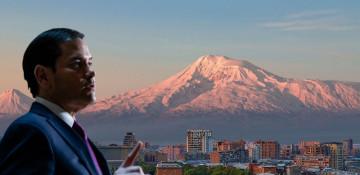
Turkish political scientist Mehmet Emir Aksoy characterizes January 20, 1990 as a critical rupture in Azerbaijan’s modern political history, stressing that it was not simply a massacre but a direct assault on the political will of a nation.
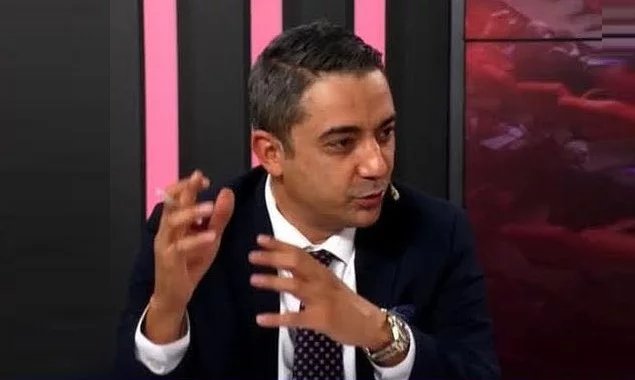
Turkish political scientist Mehmet Emir Aksoy
This assessment is reinforced by concrete facts surrounding the operation. In January 1990, the Soviet leadership deployed more than 26,000 troops, including army units, internal forces, and KGB special detachments, into Baku and surrounding areas. The operation was conducted under the pretext of restoring order, yet it unfolded before the declaration of a state of emergency, depriving civilians of any legal warning or protection.
The bloodshed in Baku revealed the final reflex of a collapsing Soviet center, namely its reliance on armed coercion to preserve control. Tanks, armored personnel carriers, and automatic weapons were used against unarmed civilians, ambulances, and private vehicles. According to official Azerbaijani data, 147 people were killed, more than 700 were injured, and over 800 individuals were unlawfully detained. Independent assessments later suggested that the real number of victims may have been higher, particularly when deaths in surrounding regions are taken into account.
Aksoy places these events within the broader context of the late 1980s, when the Soviet Union was already in systemic crisis. Economic stagnation, declining legitimacy of the Communist Party, and rising national movements across the Baltic states, the South Caucasus, and Central Asia had weakened Moscow’s authority. In Azerbaijan, this process was intensified by the Nagorno Karabakh conflict. Moscow’s failure to prevent the forced expulsion of hundreds of thousands of Azerbaijanis from Armenia and its tolerance of Armenian separatist structures in Nagorno Karabakh deepened perceptions of injustice and discrimination.
The mass protests in Baku in 1989 and early 1990 were therefore not spontaneous riots but organized civic mobilization demanding sovereignty, political representation, and territorial integrity. The Soviet response, Aksoy argues, followed a familiar imperial pattern: redefining political dissent as extremism and treating the population itself as an internal enemy.
Equally significant was the international reaction. Despite clear violations of international human rights norms, including the right to life and peaceful assembly, global institutions and major powers issued only muted statements. This silence reinforced a strategic lesson for Azerbaijani society that sovereignty and security could not rely on external guarantees.
In this context, the principled stance taken by the late Heydar Aliyev, who publicly condemned the killings in Moscow, acquired lasting political significance. As Aksoy concludes, the independence declared in 1991 was not a sudden geopolitical accident, but the inevitable outcome of a collective political consciousness forged on January 20, when the cost of subjugation became unmistakably clear.


Similar news