Kazakhstan's uranium market: Russia leaves, China arrives


Kazatomprom
By Tural Heybatov
On Tuesday, many global media outlets reported on Russia's withdrawal from Kazakhstan's uranium market. However, it would be more accurate to focus not on Russia but on China, which has been quietly and steadily securing its position in this market.
According to reports, Rosatom is selling its shares in joint uranium enterprises in Kazakhstan. As announced by Kazatomprom, Uranium One Group JSC has already sold 49.979% of its shares in the joint-stock company “Zarechnoye” to SNURDC Astana Mining Company Limited and is planning to transfer an additional 30% stakes in the LLP “Khorasan-U” and LLP “Kyzylkum.” The expected new owner of these shares is China Uranium Development Company Limited, a subsidiary of China General Nuclear Power Corporation (CGN).
Kazakhstan’s share will remain unchanged—approximately 50%. However, economists believe that China’s expanded involvement will benefit the resource-rich nation by attracting investments, providing greater access to the extensive Chinese market, and establishing new logistical routes.
As one of the world’s leaders in nuclear energy, China possesses the largest market. It is projected that by 2030, the country will have the highest number of nuclear power plants globally, requiring a substantial increase in fuel supplies. According to Kazakh analysts, Kazakhstan has gained a strong foothold in this lucrative market.
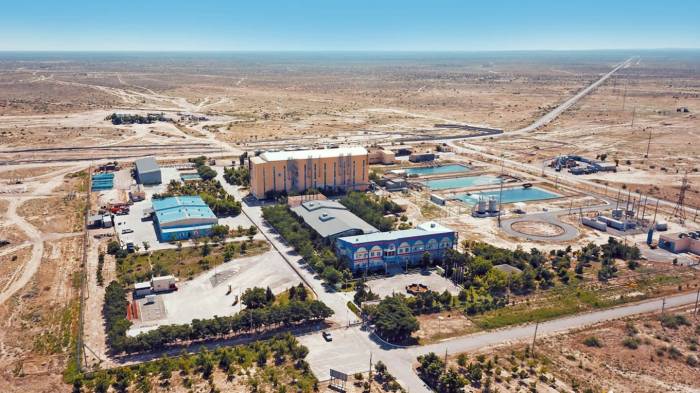
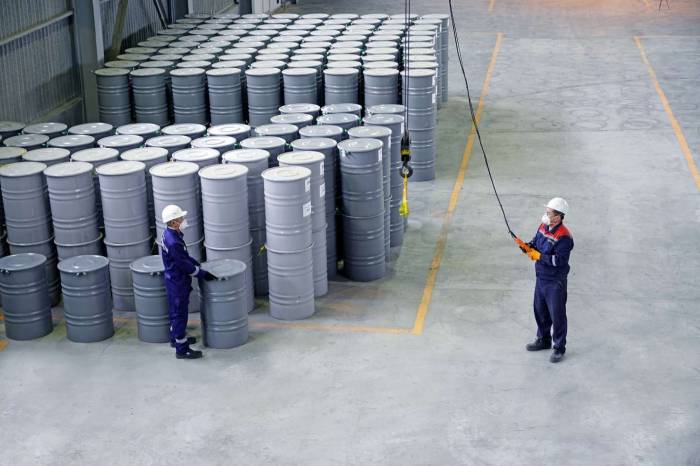
Notably, Kazakhstan does not position itself solely as a raw material supplier. Under agreements with China’s CGN, signed in 2006 and 2007, China gained access to uranium deposits in exchange for the vertical integration of Kazatomprom. These contracts are based on mutual benefit: China accesses mining operations, while Kazakhstan develops high-value-added fuel production. For instance, at the Ulba Metallurgical Plant, uranium extracted in Kazakhstan is processed into fuel pellets for Chinese nuclear power plants.
The Ulba Metallurgical Plant, part of Kazatomprom, is one of the world’s leading producers of uranium, beryllium, tantalum, and niobium products for nuclear energy, electronics, metallurgy, and other industries. The plant operates the “Ulba-FA” joint venture, where 51% of the shares belong to Kazakhstan and 49% to China’s CGNPC-URC.
According to Kazakh media, five shipments were sent to China between 2022 and 2023. The Yangjiang and Fangchenggang nuclear power plants are already operating on Kazakh fuel. As of early August 2024, a total of eight shipments of fuel assemblies have been delivered.
In November 2023, Kazatomprom’s shareholders approved a major deal with Chinese companies CNNC Overseas Ltd. and China National Uranium Corp. This agreement focuses on supplying natural uranium concentrates to meet the needs of China’s nuclear industry.
In 2024, Kazatomprom received four new licenses for uranium exploration in promising areas, which it plans to develop independently. Preliminary estimates suggest that these sites hold over 180,000 tons of projected resources.
Over the past four years, uranium prices have surged due to plans by the U.S., Japan, and France to triple their nuclear energy capacities by 2050. Consequently, Western interest in Kazakhstan’s uranium reserves—the second-largest in the world—has grown significantly. Following sanctions imposed on Russia due to the war in Ukraine, Western countries have turned their attention to Central Asia. European leaders have increasingly visited the region, with French President Emmanuel Macron leading the way during his November 2023 trip to Astana.
France, heavily reliant on nuclear energy, urgently needs an alternative to Russian supplies, as nuclear power generates 70% of its energy. This need is echoed in Slovakia, Belgium, and Hungary, where nuclear energy accounts for about half of electricity consumption, and in Slovenia, the Czech Republic, and Finland, where it contributes over a third. In Switzerland and Sweden, nuclear power provides about a third, while in the U.S. and Spain, it generates a fifth of their energy. Most European nations depend on Rosatom and are striving to reduce this dependency. France has even signed a uranium supply agreement with China.
While Kazakhstan seeks to diversify its uranium industry, recent developments—the withdrawal of Rosatom and the strengthening of China’s position—suggest that China will likely play a leading role in this sector in the near future. Analysts note that Chinese companies have secured access to Kazakhstan’s resources by adhering to regional ownership rules and supporting local players’ vertical integration goals. China’s CGN was the first foreign partner of Kazatomprom to fulfill its commitments to localize a plant producing high-value-added nuclear fuel.
Thus, Kazakhstan is no longer merely an exporter of raw materials but an equal partner in the global uranium market. This is the unique aspect of its partnership with China—it fosters growth rather than hindering it.


Similar news