Mehmet Emir Aksoy: Türkiye–Azerbaijan economic alliance enters a new strategic phase - INTERVIEW


.png)

Over the past 34 years, economic relations between Türkiye and Azerbaijan have developed into a strategic partnership grounded in political trust and large-scale mutual investment. Bilateral trade has approached $8 billion, while reciprocal investments have exceeded $35 billion, driven largely by major energy projects such as BTC and TANAP.
Energy cooperation has established Türkiye as a key transit hub and Azerbaijan as a reliable supplier. Beyond the energy sector, post-conflict reconstruction in liberated territories, as well as the development of the Middle Corridor and the Zangezur route, are expanding cooperation into logistics, defense, and green energy.
The News.Az analytical portal asked Turkish expert Mehmet Emir Aksoy to share his insights into the deepening Türkiye–Azerbaijan economic partnership.
- Mr. Aksoy, how do you assess the economic dimension of the 34 years of Türkiye–Azerbaijan diplomatic relations?
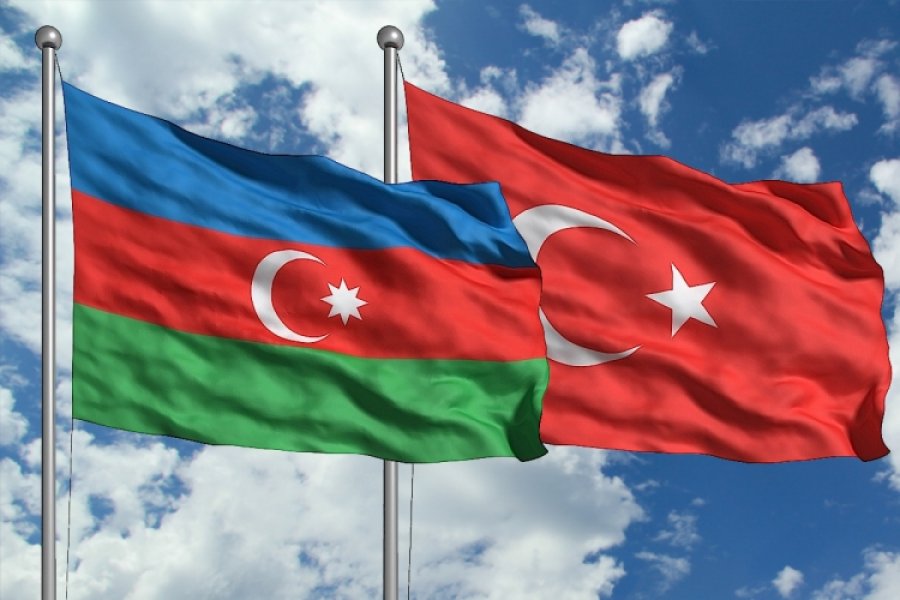
- Over the past 34 years, Türkiye–Azerbaijan economic ties have developed from modest trade exchanges into a structured strategic partnership shaped by long-term state policy. According to official data from Azerbaijan’s Ministry of Economy and TURKSTAT, bilateral trade volume rose from negligible levels in the early 1990s to approximately $7.5–8 billion in 2024, representing more than a twentyfold increase since the early 2000s. Türkiye consistently ranks among Azerbaijan’s top five trading partners, while Azerbaijan remains one of Türkiye’s leading economic partners in the South Caucasus.
Source: APA
Institutional foundations laid during the Heydar Aliyev era have enabled steady growth regardless of regional or global disruptions. Turkish investments in Azerbaijan have exceeded $15 billion, while Azerbaijani investments in Türkiye have surpassed $20 billion, driven largely by strategic assets such as the STAR Refinery and SOCAR Türkiye. This reciprocal investment model reflects a rare case in which political trust has translated directly into durable economic outcomes, reinforcing the “one nation, two states” concept through tangible economic interdependence.
- To what extent have energy projects elevated economic integration?
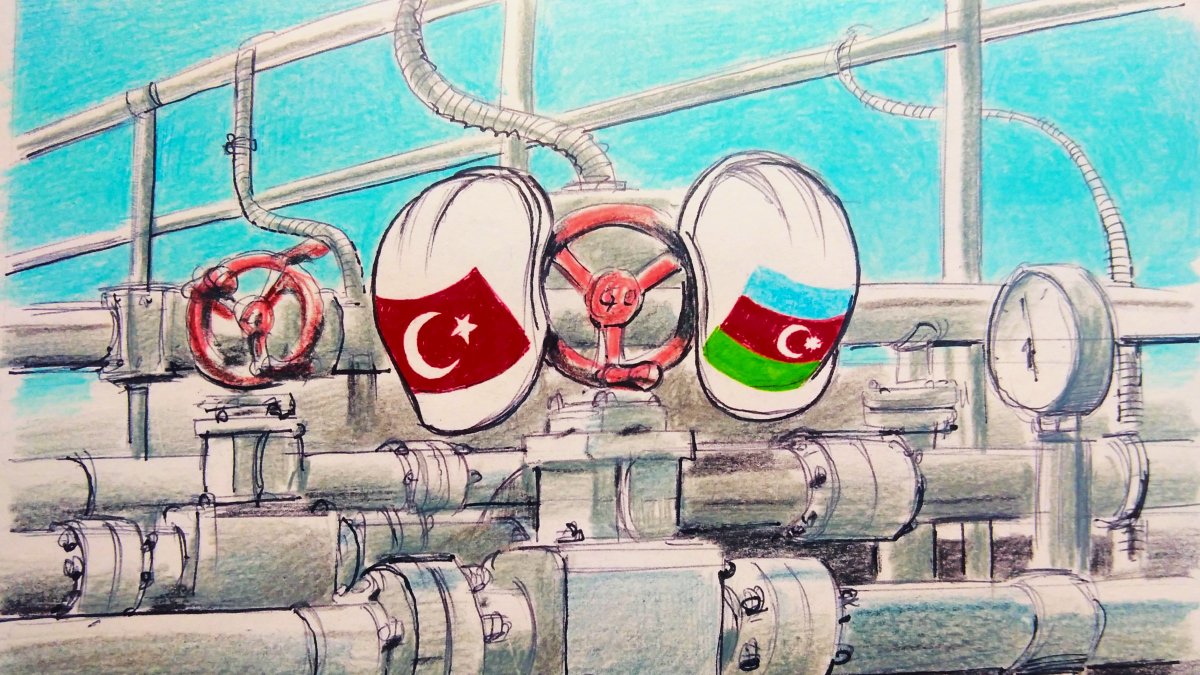
- Energy projects have elevated Türkiye–Azerbaijan economic integration to a strategic and systemic level. According to SOCAR data, Azerbaijan exports approximately 10–11 billion cubic meters of natural gas annually to Türkiye, primarily via the TANAP pipeline, which currently has a capacity of 16 bcm, with expansion plans to reach 31 bcm. Since its commissioning, the Baku–Tbilisi–Ceyhan pipeline has transported more than four billion barrels of oil, generating long-term transit revenues and strengthening the geopolitical standing of both countries.
Source: Daily Sabah
These projects have positioned Azerbaijan as a key non-Russian energy supplier to Europe and Türkiye as an indispensable energy corridor. Energy cooperation now accounts for the largest share of bilateral investment stock and underpins the regional energy security architecture extending from the Caspian Basin to Southern Europe. Importantly, this integration has created structural interdependence rather than transactional cooperation, reinforcing long-term strategic alignment.
- Despite growing trade volumes, which potential areas remain underutilized?
- Despite strong headline figures, official trade composition data shows that more than 70 percent of bilateral trade value remains concentrated in energy and energy-related products. This points to underutilized potential in high value-added manufacturing, agricultural technologies, logistics services, defense industry cooperation, and financial instruments. Non-energy trade remains below $3 billion, despite the scale of both economies.
Source: caspianpost
Small and medium-sized enterprise cooperation remains particularly limited. Data from Turkish and Azerbaijani chambers of commerce indicates that SMEs account for less than 15 percent of bilateral trade activity, well below European benchmarks. Expanding joint industrial zones, technology parks, and export financing mechanisms could significantly broaden the economic base and make integration more socially inclusive and resilient.
- What does the role of Turkish companies in the reconstruction of liberated territories represent?
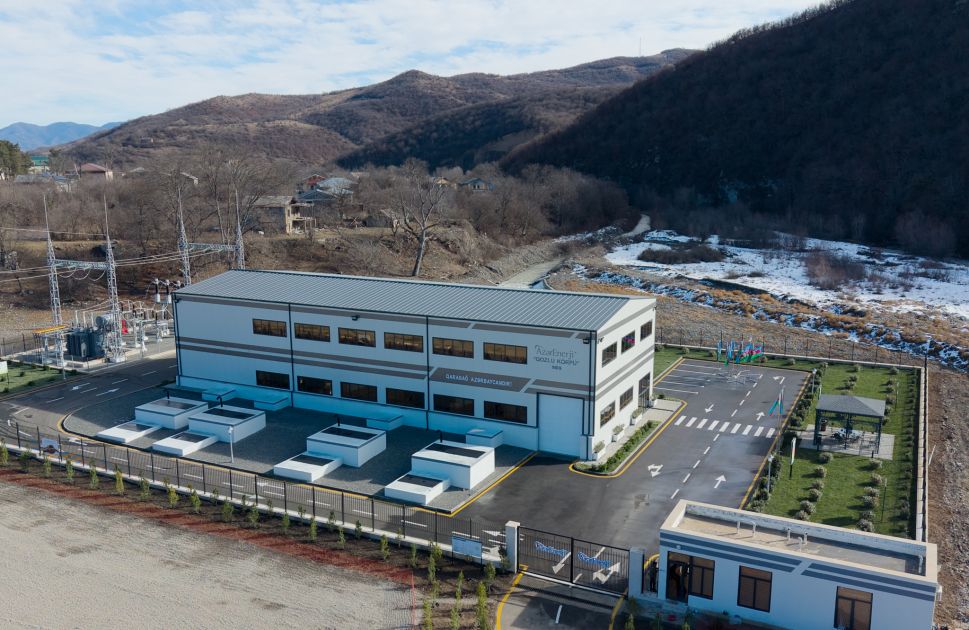
- In Azerbaijan’s liberated territories, Turkish companies play a central role in reconstruction efforts that carry both economic and symbolic significance. Official Azerbaijani government data shows that more than $10 billion has been allocated to reconstruction and development projects since 2021, with Turkish firms among the largest foreign contractors involved in infrastructure, housing, roads, airports, and energy systems.
Source: TREND
More than 200 Turkish companies have participated in tenders or joint ventures related to projects in Karabakh and East Zangezur. Their involvement is accelerating Azerbaijan’s reconstruction timeline while providing Turkish companies with long-term market access. The cooperation model emphasizes sustainable development, smart cities, and green energy, reinforcing a shared vision of post-conflict economic normalization rather than short-term profit extraction.
- How do the Middle Corridor and the Zangezur Corridor strengthen economic cooperation?
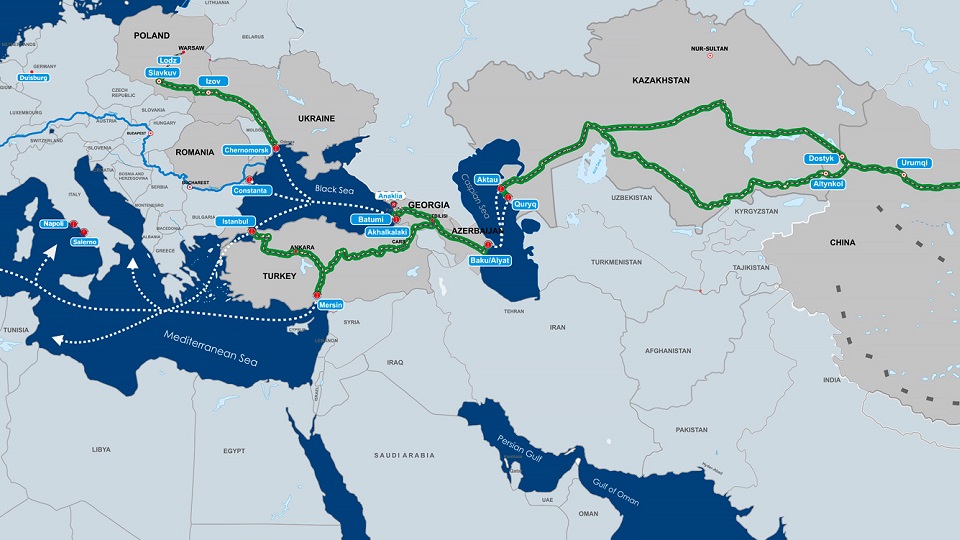
- The Middle Corridor has already demonstrated tangible economic impact. According to official transport statistics, cargo volumes along the route increased by more than 65 percent between 2021 and 2024, exceeding three million tons annually. Türkiye and Azerbaijan form the backbone of this corridor, linking Central Asia, the South Caucasus, and Europe.
Source: caucasuswatch
The operationalization of the Zangezur route would further reduce transit times between Türkiye and mainland Azerbaijan and enhance east–west connectivity across the Turkic world. Official feasibility studies suggest that the corridor could handle between five and eight million tons of cargo annually in its initial phase, strengthening both countries’ positions as logistics hubs and active shapers of regional trade architecture.
- In which areas could the economic partnership deepen over the next decade?
- Official strategic documents from both governments indicate that defense industry cooperation, digital transformation, green energy, and advanced manufacturing will shape the next phase of the partnership. Defense cooperation already includes joint production, technology transfer, and procurement, with bilateral defense trade volumes growing at an average annual rate of more than 20 percent in recent years.

Source: Azertag
In renewable energy, Azerbaijan aims to reach 30–35 percent renewable capacity by 2030, while Türkiye plans to exceed 50 percent installed renewable capacity. Joint investments in solar, wind, and hydrogen technologies are increasingly viewed as natural extensions of existing energy cooperation. Digital economy initiatives, including fintech, artificial intelligence, and smart logistics, are supported by the demographic reality that more than 60 percent of both populations are under the age of 40.
Across all sectors, official statements consistently emphasize that the decisive factors remain institutional trust, coordinated political leadership, and a shared strategic outlook rooted in common history.


Similar news