Mongolia pulls out, Russia and China can't agree on "Power of Siberia-2"


By News.Az
Recent news from Mongolia has sparked serious concerns about the "Power of Siberia-2" project. Once envisioned as a cornerstone of Russia and China’s energy strategy, this gas pipeline is now on shaky ground. Mongolia unexpectedly removed the project from its long-term development plan until 2028, casting a shadow over its future. As Ulaanbaatar takes a step back, doubts are growing in Moscow and Beijing.
On August 16, 2024, Mongolia’s coalition government, "National Unity," unveiled a new development plan that did not include "Power of Siberia-2." This decision has raised eyebrows, especially given comments from former Mongolian National Security Council member M. Bayarlkhavga , who suggested that Russia might indefinitely delay the project, realizing that securing favorable terms from China would be challenging.The Mongolian section, which was supposed to cover a significant part of the pipeline’s route, is now in question. Moreover, the possibility of Russia strengthening its influence in Mongolia in the long run might have alarmed Beijing, particularly if Gazprom were to take unilateral control of this section. Bayarlkhavga pointed out that it would have been wise to involve Chinese companies in the development of the Mongolian section from the outset, but this didn’t happen.
The "Power of Siberia-2" project has become entangled in broader geopolitical and economic disputes. According to MGIMO Associate Professor A. Kireev, negotiations between Gazprom and CNPC have stalled over pricing issues. CNPC is asking for terms similar to those on the Russian domestic market, which Gazprom finds unacceptable. Meanwhile, China isn’t rushing to invest in the project, as noted by Li Lifan, an expert from the Shanghai Academy of Social Sciences.
Other analysts, such as Zhao Long from the Shanghai Institute for International Studies, believe that a consensus between Russia, China, and Mongolia is still possible, but the parties are not yet ready to compromise. Former HSE visiting lecturer A. Chigadaev described the Mongolian parliament’s decision as sober and rational, suggesting that 2028 could be the starting point for new negotiations.
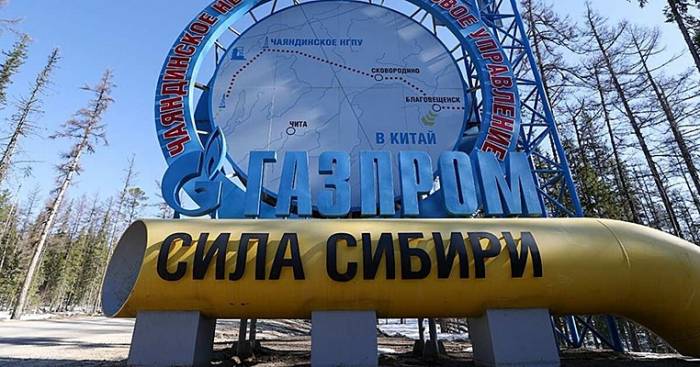
Gazprom is in a tough spot. On one hand, the company is ready to invest in the project on its own to avoid pressure from China. On the other hand, Gazprom’s activities in Mongolia, including the registration of a special company and the start of exploratory work, might raise suspicions at CNPC. How much these suspicions might slow down negotiations remains to be seen.
Mongolia, meanwhile, finds itself in a tricky position: the country wants to benefit from its two powerful neighbors, but the risks are high. Without an agreement between China and Russia on mutually beneficial terms, the project could remain just an idea on paper.
Western media have been quick to speculate about the "Power of Siberia-2." They suggest that China might drag out negotiations in favor of alternative gas suppliers like Turkmenistan. Back in May 2023, outlets like the Financial Times and Reuters were already hinting that China might prefer the fourth line of the Central Asia-China Gas Pipeline over the Russian project.
Despite this speculation, the reality is different. Gas volumes supplied from Russia to China via "Power of Siberia-1" and other routes continue to grow. For instance, in 2023, supply volumes reached 22.7 billion cubic meters, up 47.4% from 2022. The forecast for 2024 is 30 billion cubic meters, and by 2025, "Power of Siberia-1" is expected to reach its full capacity of 38 billion cubic meters.
Currently, Russian gas flows to China through several routes, and "Power of Siberia-2" remains in limbo. However, negotiations continue, and the project might still be realized, albeit in a significantly altered form. The Russian side is already working on integrating the eastern and western gas transportation systems, which could offer greater flexibility in gas supplies.
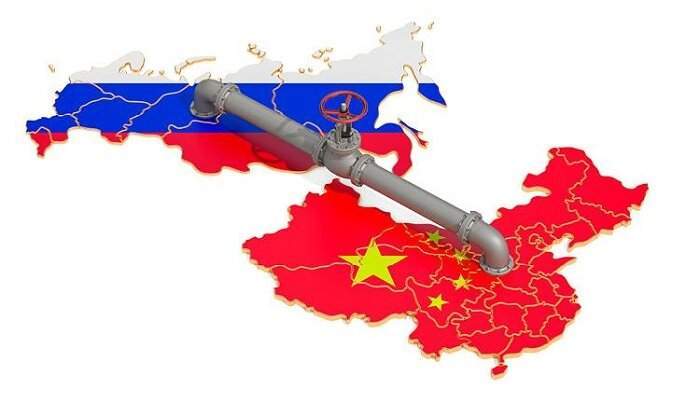
If all three routes are operational, Russian gas supplies to China could reach 98 billion cubic meters annually. This figure could be even higher with the enhancement of compressor capacities, giving Russia a significant advantage in the Chinese market.
The future of "Power of Siberia-2" is still uncertain, with its fate likely to hinge on the political will and economic feasibility for both Russia and China. In the current complex geopolitical climate, both countries must consider not only their bilateral interests but also the broader international context.
On one hand, Russia is eager to strengthen its position in the Asian gas market, which is becoming increasingly important as supplies to Europe dwindle. In this context, "Power of Siberia-2" is seen as a key project that could secure long-term gas supplies to China. On the other hand, China, while interested in diversifying its energy sources, is in no hurry to accept terms that might be economically unfavorable or politically risky.
Several key events in the coming months could be decisive for the project. One such platform is the Eastern Economic Forum (EEF), scheduled for September 3-6, 2024, in Vladivostok. A high-level Chinese delegation is expected to attend, and it’s possible that new details will emerge and agreements will be reached. The visit of China’s Premier of the State Council, Li Qiang, to Moscow on August 20-21, 2024, did not bring the expected progress, making the upcoming forum even more significant for all parties.
Further negotiations between governments and companies are also expected, especially amid growing pressure from Western countries and sanctions, which could influence the course of talks. It’s important to note that any decisions regarding "Power of Siberia-2" will take into account a range of factors—from pricing conditions to geopolitical risks involving Mongolia and potential reactions from other countries in the region.
There’s even talk among experts of possibly revising the route or the conditions of construction. If the project faces further delays or complications, alternative options, such as building a new pipeline through Kazakhstan, are already being discussed. Although the details of this project are still unclear, it could become a viable alternative if Mongolia continues to adopt a wait-and-see approach.
In conclusion, the next few months will be crucial for the future of "Power of Siberia-2." The success or failure of this project could become not only an economic milestone but also a symbolic moment, shaping the future of energy cooperation between Russia and China for years to come.


Similar news