News.Az from Minsk: A glimpse into Belarus's hero city - PHOTO


Minsk, Belarus — At the end of February and the beginning of March, I arrived in Minsk, the capital of Belarus, known as the "hero city" for its resilience during World War II. The country had just emerged from its presidential elections, with Alexander Grigoryevich Lukashenko securing a convincing victory. As my plane touched down, a wintry chill greeted me, the sky draped in clouds that seemed to mirror the city’s complex history — both proud and turbulent.
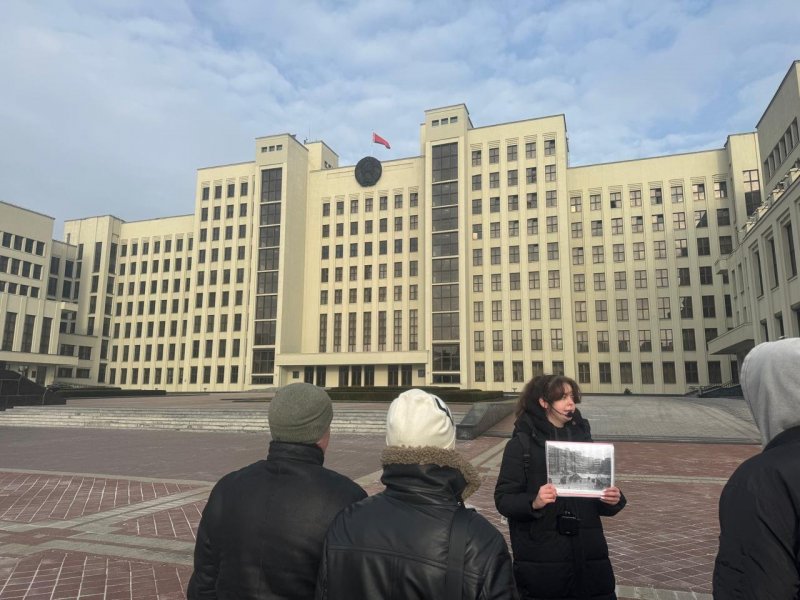
Eager to immerse myself in the city's atmosphere, I wasted no time arranging a guided tour. My guide, a young woman with an impressive command of Russian and a profound understanding of her city’s past, led me through Minsk’s streets, weaving stories of war, survival, and cultural revival. Her eloquence was a reminder of the significant role the Russian language plays in Belarus. Although Belarusian is the country’s official language, it is Russian that dominates daily life in Minsk. Belarusian, I was told, is mostly spoken in rural areas and smaller towns, though even there, it is gradually fading.
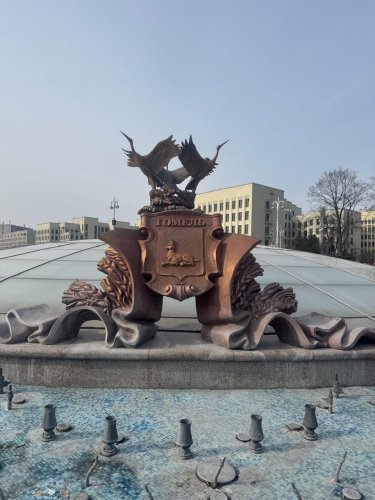
Minsk is a city with a millennium of history behind it, its origins tracing back to the 1070s. This long timeline is etched into its architecture and public spaces. As we moved through the city, my guide recounted tales of medieval wars, the Polish-Lithuanian Commonwealth, and the devastation of World War II, during which Minsk was almost completely destroyed. Today, the city’s broad avenues and monumental buildings tell a story of post-war reconstruction, where every stone seems to bear the weight of history.
A city of faiths and traditions
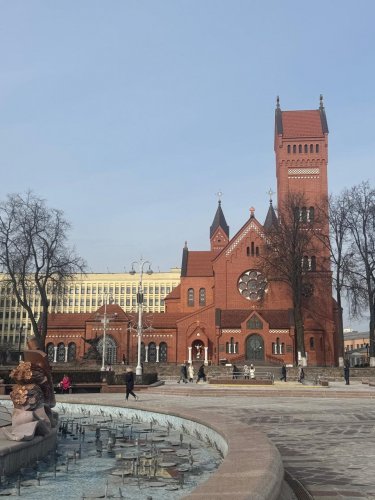
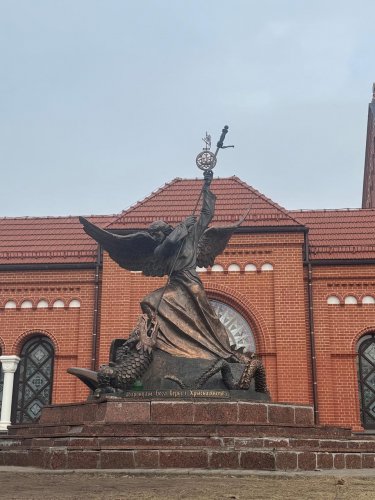
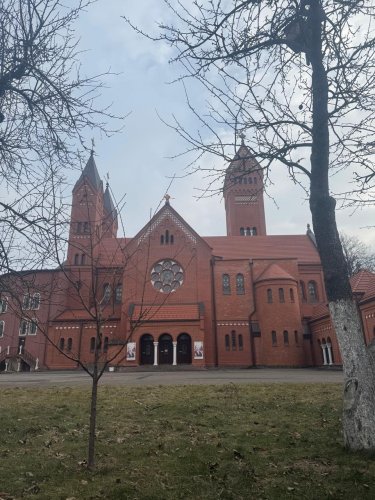
Religion is a visible part of Minsk’s identity, with a striking number of churches and chapels, each narrating a different chapter of the city's past. In the Old Town, cobblestone streets lead to Orthodox and Catholic churches alike. One of the most remarkable is the Church of Saints Simon and Alena, a red-brick Neo-Gothic structure built in 1910. Its stained-glass windows and serene interiors offer a stark contrast to the Soviet monuments scattered throughout the city.
Minsk's religious diversity extends beyond Christianity. On February 28, a Friday, I witnessed a crowded Juma prayer at the main mosque, a sight that underscored the city’s multicultural fabric. The mosque, with its elegant minarets and peaceful courtyards, was a hub of activity, drawing believers from different walks of life. This coexistence of Orthodox churches, Catholic cathedrals, and Islamic mosques reflects a city that, despite its past, has found a way to embrace its diverse communities.
Soviet legacy amidst modernity
Minsk’s skyline is a blend of Soviet-era architecture and contemporary designs. The city’s avenues are flanked by imposing Stalinist buildings, with their austere facades and grand columns. The statues of Lenin that dot the cityscape are a reminder of Belarus’s Soviet legacy. Yet, amid these relics of the past, modern structures rise, hinting at a country cautiously stepping into the future.
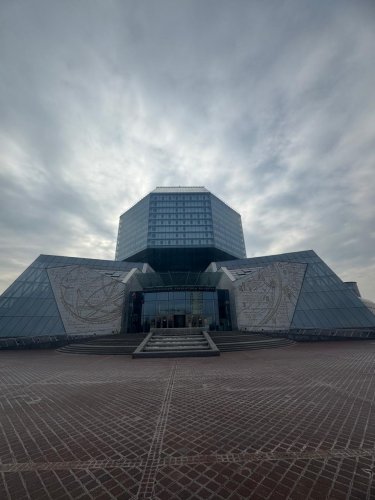
The National Library of Belarus is perhaps the most striking example of this juxtaposition. Its futuristic, diamond-shaped facade gleams under the gray sky, a symbol of Belarus’s efforts to modernize. Inside, the library houses millions of books and historical documents, preserving the intellectual legacy of the nation. In front of it stands the statue of Francisk Skaryna, the first Belarusian printer, whose life spanned from 1470/1490 to 1551/1552. Skaryna’s legacy as a pioneer of printing in Eastern Europe is a point of pride for Belarusians, and his statue is a fitting guardian for this temple of knowledge.
A stroll through Independence Avenue
Independence Avenue, Minsk’s main artery, stretches for 15 kilometers, cutting through the city like a spine. As I walked its length, I passed government buildings, theaters, and shopping centers, all constructed in the grandiose style of Soviet architecture. The avenue’s vastness can feel overwhelming, but it offers a comprehensive view of the city’s identity — one that balances Soviet monumentalism with the aspirations of a modern European capital.
Cafés and restaurants along the avenue serve everything from traditional Belarusian dishes like draniki (potato pancakes) and machanka (pork stew) to international cuisine. The warmth of a local café, with its soft lighting and the comforting aroma of fresh pastries, provided a welcome refuge from the cold outside. Conversations in Russian filled the air, a reminder of the linguistic reality of the city.
The economic pulse of Minsk
Economically, Belarus faces challenges, and the exchange rate reflects this reality. The Belarusian ruble trades at just over three rubles to the dollar, a sign of a currency that has struggled amid economic sanctions and limited foreign investment. Prices in Minsk are modest by European standards, making it an affordable destination for travelers. Street markets brim with fresh produce, and vendors sell everything from homemade cheeses to intricately embroidered linen — a Belarusian specialty.
Despite economic difficulties, the people of Minsk display a resilience that seems woven into the fabric of the city itself. Taxi drivers, shopkeepers, and students alike speak of their country with a mix of pragmatism and pride, acknowledging the hardships while expressing hope for a better future.
A city of contrasts
Minsk is a city of contrasts — where Soviet monuments stand alongside Catholic churches, where the echoes of the past are interwoven with the ambitions of a new generation. It is a city that refuses to be defined by a single narrative. Its history is complex, its politics controversial, but its people exude a warmth that belies the winter chill.
As I prepared to leave, the gray sky began to lighten, and a few rays of sun pierced the clouds, casting a soft glow over the city’s wide avenues and war memorials. It was a fitting farewell for a city that balances past and present with such precarious grace.
In my next report, I will dive deeper into the thousand-year history of Minsk, exploring the events and figures that shaped this resilient city. For now, the impressions of a city standing at the crossroads of history and the future linger in my mind — a story still unfolding in the heart of Belarus.
Source: News.Az


Similar news