Nuclear power plants could be used for Caspian Sea water desalination


By Sabina Alizade
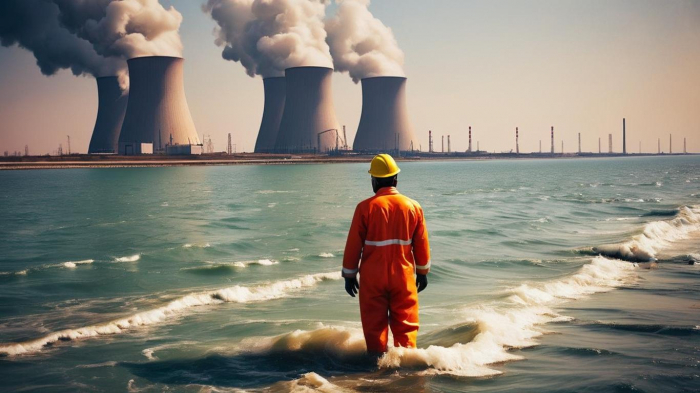
Nuclear power plants (NPP) play a crucial role in the energy supply of many countries, but their impact can extend far beyond electricity generation. In the context of desalination, NPPs can provide key capabilities to address the issue of access to clean drinking water, especially in regions with limited resources.
The desalination process can be carried out using the heat produced by nuclear power plants. The heat generated during electricity production can be used to evaporate seawater and then condense it into clean, fresh water. This method is effective in purifying water from salts and contaminants, making it suitable for drinking and various uses, including agriculture and industry.
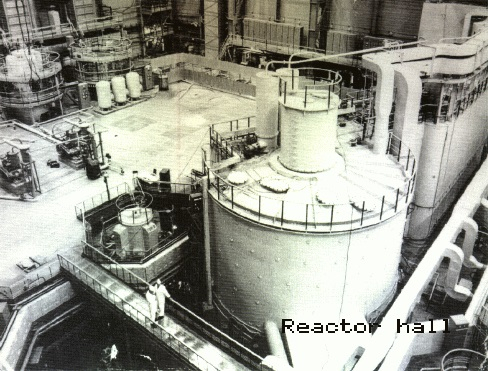
One of the technologies that can be applied in this process is the use of nuclear reactors previously developed and used in the city of Aktau. For instance, fast reactors like BN-350 can provide the necessary heat for desalination with minimal environmental impact.

In an interview with News.Az, Adil Garibov, Doctor of Chemical Sciences, Academician, Advisor to the National Academy of Sciences of Azerbaijan, stated that the Soviet government conducted extensive experiments on the peaceful use of atomic energy in Aktau, where uranium deposits are located. In this area, installations with a capacity of 50 MW were created, producing purified water. The process was mainly based on the use of thermal neutrons in interaction with hydrogen, which helps in rapidly heating and evaporating water without creating radioactivity.
"In addition, the city housed one of the world’s first fast neutron reactors, BN-350, which produced plutonium-239 for military purposes. Aktau could be considered a nuclear city due to uranium extraction and the use of nuclear facilities. After the collapse of the Soviet Union in the 1990s, Kazakhstan did not take over the management of these facilities," he said.
"These plants had the potential to produce purified water for local use and export it to other regions worldwide. Considering the existing fresh water problems globally, this is particularly relevant. Technologies used in such reactors can be applied in the future to address the issue of access to drinking water, especially in resource-limited regions. These reactors are relatively inexpensive devices and can be efficiently used to purify seawater," the expert noted, adding that such nuclear technologies will continue to develop and play an important role in water purification in the future.
Adil Garibov highlighted the physical aspect of the process, stating that its physical basis mainly involves the use of thermal neutrons participating in nuclear fission processes, especially uranium-235. The fission process of uranium-235 occurs using fast neutrons. Fast neutrons transfer most of their energy to hydrogen molecules through elastic scattering immediately after collision. Hydrogen atoms, being the most energetically favourable, rapidly heat the environment, causing water molecules to evaporate and exit the aqueous medium.
"However, it is known that due to the low capture capability of water, neutrons are practically not captured by it. Therefore, water does not become radioactively contaminated even if it contains other salts of light elements like uranium or sodium and potassium. The goal is to obtain purified water from seawater. These facilities were used for a long time, but after the collapse of the Soviet Union in the 1990s, Kazakhstan did not continue using and managing these facilities," Garibov pointed out.
He said that in addition to the aforementioned facilities, the region also has the BN-350 fast neutron reactor, which uses uranium-238 to produce plutonium-239 for military purposes. This reactor made Aktau a kind of nuclear city.
"Water purification occurred in the BN-350 reactor, where neutrons interacted with water in the primary circuit, and the resulting heat was used to heat tanks of water in the secondary circuit. As a result, the water evaporated, and the collected pure water vapour contained no radioactive substances. These principles can be used to purify seawater, and the BN-350 reactor can assist us in this matter," he said.
The implementation of desalination systems based on nuclear power plants can solve the problem of access to clean water not only in the Caspian Sea region but also in other similar places worldwide. This is an example of using nuclear energy not only for electricity generation but also for addressing global water and environmental problems.


Similar news