Ofir Haivry: We might see skirmishes between pro-Turkish militias and Israeli-backed forces in Syria – EXCLUSIVE


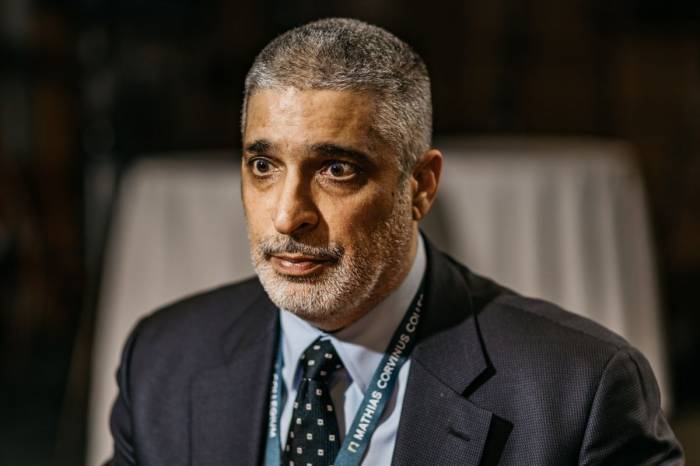
Photo: Nazione Futura / Ofir Haivry
Rumors of a potential military conflict between Israel and Türkiye have been circulating widely, fueled by heightened tensions over geopolitical and territorial disputes. At the heart of these strains are conflicting interests in the Middle East—particularly in Syria—and diverging policies on regional security.
Despite these challenges, experts generally agree that an outright war between Ankara and Jerusalem remains unlikely. Both nations are strategic players with significant roles in the international community, making diplomatic solutions a more plausible path to address their disputes. However, the situation remains unpredictable, leaving room for escalation if efforts at negotiation fail.To delve deeper into the evolving dynamics of Israel-Türkiye relations,News.az spoke with Ofir Haivry, a prominent Israeli political scientist and expert in international affairs .
"I don’t believe a direct war is likely for two reasons," Haivry stated confidently. "First, there are no shared borders between the two nations. While both countries possess advanced missile and air capabilities, they lack the kind of territorial dispute that typically leads to war."
Haivry highlighted that, although the Gaza issue occasionally surfaces in discussions, it is not a primary concern for Türkiye. Instead, he pointed to Syria as the central theater where Israeli and Turkish interests clash.
In Syria, the stakes are significantly higher for both nations. According to Haivry, the collapse of the Syrian regime and the decline of Iranian influence have created a volatile environment.
"Syria was once dominated by Iran, with support from Russia. Both countries were more focused on their regional agendas than on Israel or Türkiye. But when the Syrian regime weakened, partly due to Israeli strikes on Iran’s infrastructure and Russia’s shifting focus to Ukraine, the dynamic changed," he explained.
Haivry noted that Türkiye has since sought to expand its influence in Syria by aligning with groups that could serve as proxies, creating a "client regime." However, this move directly opposes Israel’s interests, as it raises the prospect of a more Islamic-leaning government near its borders.
Adding another layer of complexity is the presence of Kurdish forces in Syria, linked to the Kurdistan Workers’ Party (PKK), a group Türkiye has long battled. "Türkiye’s actions against the Kurds complicate the situation further, as this clashes with Israel’s broader regional interests," Haivry noted.
While Israel opposes both an expanded Turkish influence and a strong Iranian regime near its borders, its support for Kurdish groups could intensify friction with Ankara.
Despite these tensions, Haivry dismissed the likelihood of a direct military conflict. "As a NATO member, Türkiye would inevitably draw the alliance into any war with Israel, something neither side wants," he observed.
Instead, he predicted that both nations might resort to proxy conflicts in Syria. "Türkiye may leverage its alliances with Damascus to pressure Israel, while Israel could counter by supporting Kurdish groups. This proxy dynamic allows both nations to safeguard their interests without escalating into full-scale war," he explained.
Ultimately, the rivalry between Israel and Türkiye is likely to manifest in indirect confrontations rather than direct warfare. "If diplomacy fails, we might see skirmishes between pro-Turkish militias and Israeli-backed forces in Syria. But a direct war between the two nations remains improbable," Haivry concluded.
While the prospect of a full-scale war appears remote, the complexities of the Israel-Türkiye relationship underline the importance of sustained diplomacy to prevent further instability in an already volatile region.


Similar news