Oil market awaits decisions: What did OPEC+ leaders discuss?


Photo: Shutterstock
By Samir Muradov
On November 26-27, 2024, intensive negotiations were held ahead of the OPEC+ Ministerial Meeting involving representatives from Russia, Saudi Arabia, Iraq, and Kazakhstan. These discussions, conducted both in person and via teleconference, marked a crucial step toward forging a unified stance among alliance members. The talks focused on current commitments, addressing overproduction, and ensuring stability in the global oil market. Participants reaffirmed their commitment to voluntary production cuts and underscored the importance of collaboration in achieving OPEC+'s long-term objectives.
A key focus of the negotiations was the role of the eight member states that had voluntarily agreed to reduce oil production. Initiated in 2023, these cuts aimed to maintain market balance. However, in 2024, the timeline for restoring production was repeatedly postponed. Initially set for Q4 2024, the increase was rescheduled for January 2025, reflecting the volatile nature of supply and demand in the market and the need for flexibility in decision-making.The visit of Alexander Novak to Iraq on November 26 was a pivotal event. In Baghdad, he met with Iraqi Prime Minister Mohammed Shia’ Al Sudani and Acting Oil Minister Abdelghani Maarij, joined by Saudi Energy Minister Abdulaziz bin Salman. The parties reaffirmed their adherence to the OPEC+ agreement, including voluntary production cuts , and agreed to intensify joint efforts to compensate for previously produced excess volumes.
The discussions also emphasized strengthening bilateral ties between Russia and Iraq, particularly in the energy sector. According to the Iraqi News Agency (INA), topics included the potential for collaboration in artificial intelligence, digital technologies, and energy initiatives. Russia reiterated its interest in joint projects, notably in Iraq's oil and gas sector, where companies like Lukoil and Gazprom Neft play significant roles in developing the West Qurna-2 and Badra fields. However, increased oversight by Iraq's central government over the Kurdistan region’s oil and gas sector has presented challenges, particularly regarding production bonuses and discrepancies in cost and compensation rates.
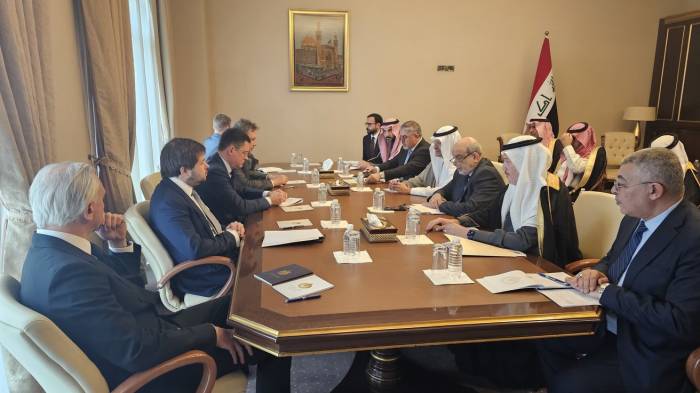
Alexander Novak held a trilateral meeting with Minister of Energy of Saudi Arabia Prince Abdulaziz bin Salman Al Saud, and Minister of Electricity of Iraq Ziyad Ali Fadhel. Photo: government.ru
On November 27, Novak traveled to Astana for a trilateral meeting with Kazakhstan's Energy Minister Almasadam Satkaliyev and Saudi Energy Minister Abdulaziz bin Salman, who participated via videoconference. The discussions centered on maintaining market stability, adhering to established quotas, and addressing overproduction. Kazakhstan confirmed its readiness to meet all OPEC+ obligations, despite regular quota breaches in previous months.
Data from October 2024 revealed ongoing challenges for Iraq and Kazakhstan in meeting their commitments. Iraq needs to compensate for an overproduction of 1.44 million barrels per day (bpd) by September 2025, while Kazakhstan faces a shortfall of 699,000 bpd. These figures highlight systemic overproduction, undermining the effectiveness of OPEC+ collective efforts. For instance, Iraq exceeded its October quota by 207,000 bpd, and Kazakhstan by 105,000 bpd. In contrast, Russia almost fully met its obligations, exceeding its quota by only 23,000 bpd.
Russia demonstrated consistent compliance, maintaining production at 8.978 million bpd. However, Moscow still needs to offset 480,000 bpd between October 2024 and September 2025 to fully align with the agreement. This performance stands out compared to the more significant overproduction levels of Iraq and Kazakhstan.
The intensive pre-Ministerial negotiations reflect the necessity of aligning strategies amid oil market volatility. The voluntary production cuts introduced in 2023 were a crucial step toward stabilizing the market, but persistent overproduction by some countries threatens the agreements' efficacy. Additionally, the upcoming December 1 meeting will be pivotal in determining 2025 quotas, drawing heightened interest from market participants. Stakeholders anticipate not only a reaffirmation of current commitments but also potential signals regarding the future course of voluntary production cuts.
Thus, coordination within OPEC+ remains a complex yet indispensable process. The outcomes of the November 26–27 negotiations will directly shape the agenda of the Ministerial Meeting, influencing not only the global oil market’s prospects but also the long-term economic stability of the alliance’s member states.


Similar news