Orban's visit to Kyiv and Moscow: A desire for peace amid tensions in the EU


Editor's note: Hungarian political scientist, editor-in-chief of the portal moszkvater.com, expert of the Valdai Club Gabor Stir.
It is important to note that his diplomatic initiatives also enhance his image, although his actions are not always positively received within the European Union. Orbán has repeatedly shown that he is not afraid to go his own way and push boundaries, while considering Hungary's room for maneuver. It is important to note that he acts on behalf of Hungary, not the entire EU.
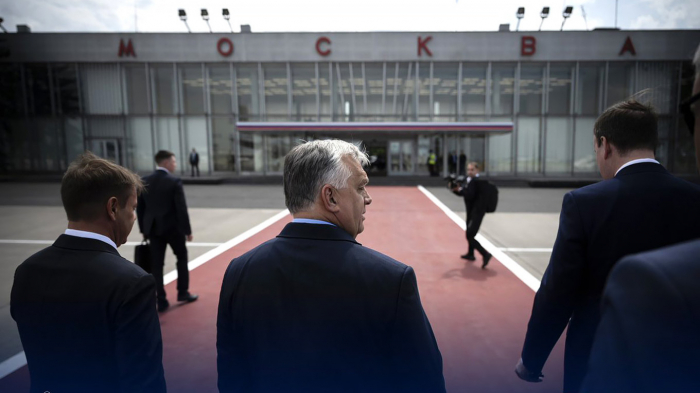
Recently, Viktor Orbán visited Kyiv for talks with Ukrainian President Volodymyr Zelensky. Considering his previous statements against military support for Ukraine from the EU, his visit to Kyiv was aimed at proposing a ceasefire along the current front lines and starting peace negotiations. Orbán knew that the two opposing sides would not accept this proposal, but he wanted to assess how far they could go in making compromises. This initiative also enhances Orbán's image, despite the fact that many in the EU do not support his trip to Moscow.
However, the Hungarian Prime Minister has repeatedly shown that he is not afraid to go his own way, push boundaries, and make compromises when necessary. An example is his decision not to veto decisions regarding Ukraine in NATO in exchange for a guarantee that Hungary will not participate in operations outside NATO. Hungary was also represented at the foreign minister level at the Swiss peace summit and signed the final declaration. The quick visit to Kyiv was aimed at reducing Western pressure on Budapest.
Relations between Hungary and Ukraine deteriorated not because of the war, but much earlier, due to the education and language law adopted in 2017, which grossly violates minority rights. Relations between the two countries will not normalize until Kyiv restores minority rights to the level that existed before 2015. During the EU accession negotiations, Kyiv guaranteed that it would meet the requirements set by the Hungarian government in 11 points on this issue. However, so far, Kyiv has only made promises, so I remain skeptical.
Moreover, it is disappointing that by the time Ukraine addresses minority rights, there will hardly be any Hungarian Transcarpathia left. The war has deeply changed ethnic relations in the region due to refugees from the interior of the country, and even more Hungarians have fled. However, Kyiv is only happy about this, as minorities do not fit into the national state. Despite all this, economic relations were maintained and developed, Hungary continued to uphold Ukraine's territorial integrity, supported its efforts to join the EU, and provided humanitarian aid. At the same time, Budapest sharply criticized Kyiv's policy towards minorities and blocked Ukraine's political cooperation with the EU and NATO, although this did not limit cooperation at the technical level.
Orbán, stating that peace is the most important thing for Europe, sees his presidency in the European Council as a peacekeeping mission. However, the capabilities of the presiding country are limited. It can influence the agenda, but the EU does not even decide on matters of war and peace. All Hungary can do is draw attention to the importance of peace with steps like the current one, assess positions, and create a clearer situation with its proposals, as everyone must address this in some way.
Hungary will not create peace, it needs the great powers. Seeing the reaction of the West and Kyiv, it is not even certain that they will accept them as a mediator, but a tough and consistent position can make many in Western society think twice, and this will already affect the political elites. Additionally, at Hungary's initiative, a sovereignist faction called "Patriots of Europe" is being formed in the European Parliament, which also presents more moderate views on the war issue than the current mainstream. Therefore, the voice of those demanding peace may become louder in Europe in the future.
I believe that the most important thing is mutual distrust, because it not only affects specific issues but also hinders the negotiations themselves. Regarding the differences in positions, I see the possibility of reaching a compromise on territorial issues with all directly or indirectly involved parties, but the neutrality and demilitarization of Ukraine is a much more complex issue.
Moreover, it seems that Kyiv will have to compensate for territorial losses at least with EU membership, and this noticeable blurring of the boundaries between the EU and NATO also complicates the situation. But going further, the start of negotiations is delayed because the parties rightly believe that by that time they should be closer to their goals and thus improve their negotiating positions.
Preventing a complete economic, military, and demographic collapse may force Kyiv to come to the negotiating table. Russia is ultimately weakened by the prolonged war, and the "global South" is also more interested in peace. In addition to the sharp decline in Europe's competitiveness and increasingly alarming security problems, the West may be driven to negotiate by the fact that the war has accelerated the impressive self-formation and strengthening of the so-called non-West, and this is becoming an increasingly serious problem in a strategic sense.
Ukraine will have to come to terms with territorial losses. Russia must recognize that it will not achieve a crushing victory. And the West will have to come to terms with the fact that it cannot bring Russia to its knees and completely weaken it. Most importantly, security guarantees and the stability of peace can only be ensured if the West and Russia can agree on a new European security system with the participation of the United States.
(If you possess specialized knowledge and wish to contribute, please reach out to us at opinions@news.az).


Similar news