Protests in Iran : Causes, global reactions, and what’s next


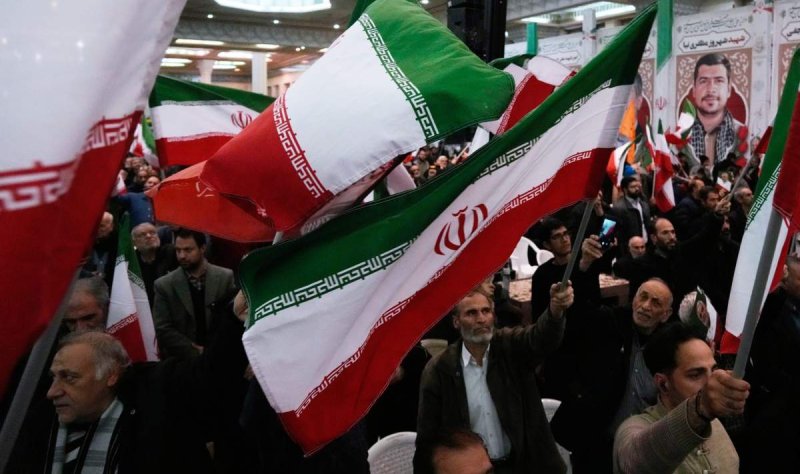
A new wave of protests has swept across Iran, once again exposing deep economic frustration and political tension inside the Islamic Republic. Demonstrations that began in late December 2025 have continued into early January 2026, spreading from major urban centers to provincial cities and smaller towns. While the immediate triggers were economic, the broader dynamics suggest a more complex and potentially long-term challenge for the Iranian authorities.
The protests erupted amid worsening economic conditions. Iran’s national currency has suffered another sharp decline, inflation remains stubbornly high, and the cost of basic goods has risen beyond the reach of many households. For large segments of the population, particularly the urban middle class and young people, daily life has become increasingly precarious. These pressures created fertile ground for public anger, which quickly moved from isolated economic complaints to street demonstrations.
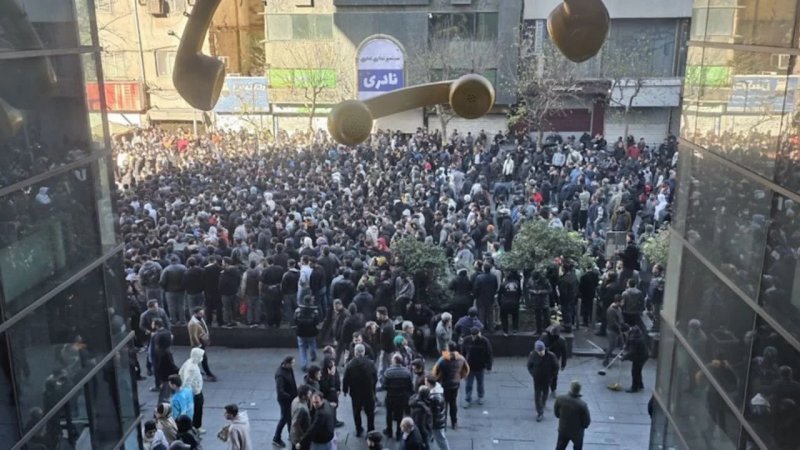
Unlike earlier protest waves that were concentrated in specific regions or social groups, the current unrest appears geographically widespread. Demonstrations have been reported not only in Tehran but also in major cities such as Isfahan, Shiraz, and Mashhad, as well as in smaller provincial centers. This breadth has raised concern within the political establishment, as it suggests that dissatisfaction is no longer limited to the margins of society.
🇮🇷Iranian police have promised to take decisive action against those who disturb the peace. #IranProtests pic.twitter.com/N9bHEiAq39
— News.Az (@news_az) January 3, 2026
Although the protests began with economic demands, political slogans emerged rapidly. Calls for accountability, criticism of corruption, and expressions of anger toward senior officials have been reported in multiple locations. At the same time, the movement remains decentralized. There is no visible leadership, no unified opposition structure, and no single political program. This lack of organization makes the protests harder to negotiate with—but also harder to fully eliminate.
The authorities’ response has followed a familiar pattern. Security forces have been deployed in large numbers, demonstrations have been dispersed, and arrests have been reported. In some areas, internet access has reportedly been restricted, a tactic used in previous crises to limit coordination and the spread of images abroad. Officials have described the unrest as unlawful and accused external actors of exploiting economic grievances to destabilize the country.
Reports from independent media and human-rights organizations indicate that there have been casualties, including deaths and injuries, though precise figures remain contested. As in past episodes, the lack of transparency makes verification difficult, further fueling public distrust and international criticism.
Reaction in the United States
The protests have drawn immediate attention in Washington. President Donald Trump publicly commented on the situation, warning Tehran against the violent suppression of demonstrators. Trump stated that the United States is “watching very closely” and emphasized that the Iranian people have the right to express their grievances peacefully. His remarks were framed not as a call for direct intervention, but as a political warning that harsh crackdowns would carry consequences.
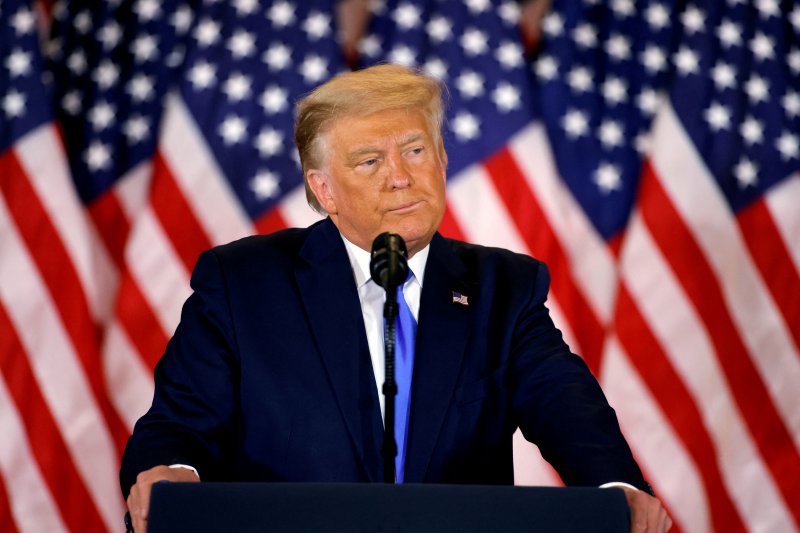
The Trump administration’s rhetoric fits a broader pattern of pressure on Iran that combines sanctions, diplomatic isolation, and public messaging aimed at highlighting internal instability. At the same time, U.S. officials have been careful to avoid explicit commitments that could be interpreted as encouragement of regime change, aware that such statements could strengthen hardliners inside Iran.
Tehran reacted sharply to Trump’s comments, accusing Washington of interference and hypocrisy. Iranian officials argued that the U.S. has no moral authority to comment on domestic unrest, pointing to its own internal challenges and past interventions in the Middle East.
Reaction in Israel
In Israel, the protests were closely monitored by political and security circles. Israeli officials largely avoided detailed public commentary, but senior figures and analysts made clear that events inside Iran are seen as strategically significant. Israel views Iran as its primary regional adversary, particularly due to Tehran’s support for militant groups and its nuclear ambitions.
Israeli analysts noted that internal instability in Iran could constrain Tehran’s ability to project power abroad, at least temporarily. At the same time, there is caution in Jerusalem about drawing optimistic conclusions. Past experience has shown that Iranian authorities often respond to domestic pressure by escalating external confrontations or accelerating sensitive military programs in order to rally nationalist sentiment.
Some Israeli commentators also warned that public Western support for protesters, if too explicit, could backfire by allowing Iranian hardliners to frame the unrest as a foreign-orchestrated plot. From Israel’s perspective, the situation is one to observe carefully rather than influence openly.
Broader regional and international context
The renewed protests come at a time when Iran faces mounting external pressure alongside internal strain. Sanctions continue to limit economic recovery, regional tensions remain high, and negotiations over Iran’s nuclear program have made little visible progress. This combination leaves Tehran with limited room for maneuver.
At the same time, the protest movement itself faces structural weaknesses. The absence of leadership, clear goals, and organizational capacity reduces the likelihood of rapid political transformation. Iranian authorities retain strong security institutions and have demonstrated, repeatedly, their willingness and ability to suppress unrest when necessary.
Forecast: What comes next
In the short term, the most likely scenario is a gradual containment of protests through a combination of security measures and selective concessions. Authorities may attempt to calm public anger with limited economic steps, such as subsidies or price controls, while avoiding broader political reforms.
Protesters in Iran set fire to several symbols of the Islamic Republic
— News.Az (@news_az) January 2, 2026
✈️Contact 👌 Subscribe
📱 Instagram 📱 Facebook 📱 X(Twitter) pic.twitter.com/7WoFZmuqGG
In the medium term, however, the underlying drivers of unrest—economic stagnation, inflation, corruption, and lack of opportunity—remain unresolved. This suggests that even if the current wave subsides, similar protests are likely to return. Each new cycle carries the risk of becoming broader, more politicized, and harder to control.
For the international community, including the United States and Israel, the protests reinforce a key reality: Iran’s internal stability can no longer be taken for granted. While immediate regime change appears unlikely, sustained internal pressure may gradually reshape Tehran’s domestic and foreign policy calculations.
In that sense, the current protests may not mark a turning point—but they are another clear warning sign that Iran is entering a period of prolonged internal tension, with consequences that will extend far beyond its borders.


Similar news