Qatar cements position as global LNG leader with Chinese supply pact


@Al Jazeera
By Asif Aydinli
QatarEnergy, the state-owned energy giant, and Shell, one of the world's largest energy companies, have signed a landmark long-term sales and purchase agreement (SPA) for the supply of liquefied natural gas (LNG) to China. This agreement represents a significant step in Qatar’s strategy to solidify its position as a global leader in LNG exports amidst growing competition and sChinahifting market dynamics.Under the terms of the SPA, QatarEnergy will supply Shell with 3 million tons of LNG annually beginning in January 2025. The LNG will serve Shell’s customers in China, the world's largest LNG importer. While the financial and temporal specifics of the deal remain undisclosed, this is the 11th such agreement between QatarEnergy and Shell, highlighting their long-standing partnership.
Qatar’s Minister of State for Energy Affairs and QatarEnergy CEO, Saad Sherida Al-Kaabi, emphasized the dual importance of this deal: meeting China’s growing energy demand while reinforcing Qatar’s role in the global LNG market. The agreement also demonstrates the strategic alignment of QatarEnergy and Shell in addressing the energy needs of Asia’s most energy-hungry nation.
China has cemented its position as the largest LNG importer globally, with imports reaching 71 million tons in 2023. While this figure reflects a decline from the record 79 million tons imported in 2021 due to a temporary slowdown in economic growth, the country’s long-term energy strategy remains heavily reliant on LNG to reduce coal dependence and meet its carbon neutrality goals.
Between January and October 2024, Qatar supplied China with 14.4 million tons of LNG, valued at $8.4 billion, making Qatar China’s second-largest LNG supplier after Australia. This robust trade relationship underscores the strategic importance of China as a destination market for Qatar’s LNG exports.
QatarEnergy is executing an aggressive expansion plan to increase its annual LNG production capacity by 85%, from 77 million tons to 142 million tons by 2030. Central to this effort is the North Field project, the largest LNG reserve globally, which Qatar shares with Iran (referred to as South Pars on the Iranian side).
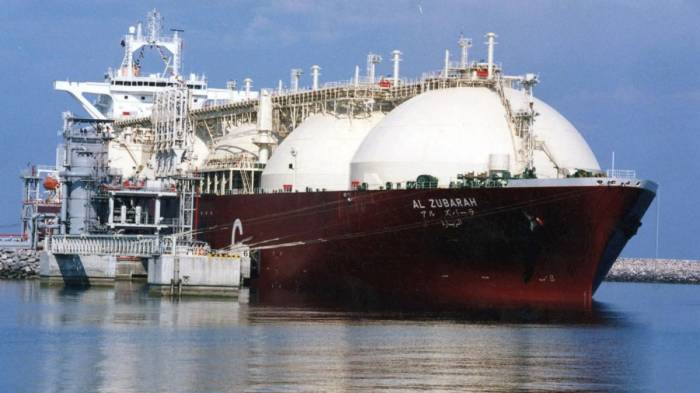
To facilitate this growth, QatarEnergy is rapidly enhancing its LNG infrastructure. In November 2024, the company unveiled four new LNG carriers, built by South Korean shipbuilders Samsung Heavy Industries and Hanwha Ocean. These vessels will bolster Qatar’s shipping capabilities and support its ambitious production targets.
The expansion aligns with Qatar’s strategy to secure long-term contracts with major LNG consumers like China, ensuring a steady revenue stream and solidifying its position as a reliable supplier. Such contracts also provide stability for infrastructure investments and long-term project financing.
Despite Qatar’s ambitious plans, the global LNG market is becoming increasingly competitive. The United States, the UAE, and Oman are emerging as strong rivals, offering more flexible and competitively priced contracts. U.S. suppliers, for instance, often provide LNG under free-on-board (FOB) terms, granting buyers the flexibility to resell cargoes on the spot market. Additionally, U.S. contracts are frequently linked to the Henry Hub gas index, which is typically cheaper than oil-indexed pricing mechanisms.
In contrast, QatarEnergy predominantly offers long-term agreements with fixed pricing tied to oil benchmarks. While this ensures predictable revenue, it limits buyers' ability to adapt to fluctuating market conditions. Consequently, Qatar risks losing market share in regions like Japan and South Korea, where demand for greater flexibility is growing.
The latest agreement with Shell underscores Qatar’s adaptability and its ability to focus on high-growth markets like China. By prioritizing long-term partnerships with strategic players, QatarEnergy secures stable revenue streams and reinforces its role as a cornerstone of the global LNG supply chain. However, to remain competitive, Qatar may need to revisit its contract structures and pricing strategies to align with evolving buyer preferences.
Moreover, the deal highlights the broader geopolitical and economic implications of Qatar’s energy diplomacy. As countries increasingly seek secure and sustainable energy supplies, Qatar’s investments in infrastructure, capacity expansion, and long-term contracts position it as a critical player in ensuring global energy security.
As QatarEnergy ramps up its LNG production and export capabilities, it faces both opportunities and challenges. The growing demand for cleaner energy sources, particularly in Asia, provides Qatar with a robust market for its LNG exports. However, rising competition, fluctuating energy prices, and evolving buyer expectations will require Qatar to remain agile and innovative.
Ultimately, Qatar’s success will depend on its ability to balance traditional strengths, such as reliable supply and long-term contracts, with the flexibility and competitiveness demanded by a dynamic global energy market. The agreement with Shell represents a pivotal step in this journey, showcasing QatarEnergy’s strategic foresight and its commitment to maintaining its leadership in the LNG sector.


Similar news