Repealing Section 907 is essential to restoring fairness in U.S.–Azerbaijan relations


.png)

Editor's note: Faig Mahmudov is a journalist based in Azerbaijan. The views expressed in this article are his own and do not necessarily reflect those of News.Az.
Section 907, added by the U.S. Congress to the Freedom Support Act in 1992, has gone down in history as a restrictive legal measure applied solely to Azerbaijan in the post-Soviet space. For decades, it has remained one of the most sensitive issues in Baku–Washington relations.
Although U.S. presidents have had the authority to temporarily suspend the provision since 2002, its continued formal existence has kept the issue of its full repeal on the agenda. In today’s geopolitical context, Section 907 stands out as a historical injustice that has completely lost its relevance.
To understand that injustice, it is enough to consider the realities of 1992. In October of that year, large parts of Azerbaijan, including Shusha and Lachin, were under Armenian occupation. The Khojaly genocide had occurred, thousands of civilians had been killed, and hundreds of thousands had become refugees or internally displaced. The country faced an acute economic crisis: the state budget was nearly empty, foreign currency reserves were almost nonexistent, and many families were living in tents. Under these circumstances, Section 907 deprived Azerbaijan of crucial assistance, creating not only a legal but also a severe humanitarian injustice.
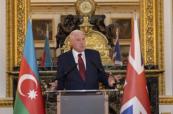
In an interview with local media on January 5, President Ilham Aliyev addressed the issue, noting that claims of “Armenia being blockaded” had no basis.

Source: AzerTag
Mr. President emphasized that Armenia’s borders with Georgia and Iran were open, and the border with Türkiye had only been closed in 1993. “The blockade argument formulated in the U.S. Congress was based not on facts but on political lobbying,” he said, adding that the Armenian lobby and affiliated political groups played a decisive role in the adoption of Section 907.
In this sense, Section 907 functioned more as a political pressure tool than a legal measure. The weakness of Azerbaijan’s early state institutions and its limited ability to engage the international community made it difficult to prevent this decision. The victim state was subjected to sanctions, while the aggressor faced no consequences, contradicting the principles of justice under international law.
President Aliyev also pointed to Joe Biden’s involvement in Section 907, noting that as a senator he played an active role in its adoption. This partly explains why the Obama–Biden and later Biden–Blinken administrations appeared distant, and at times openly biased, toward Azerbaijan. According to Aliyev, relations with Washington under these administrations reached a near-crisis point.

Source: BBC
The humanitarian impact of Section 907 was severe. Azerbaijan, already facing a socio-economic crisis, was denied international assistance at a time when thousands of families lived in harsh conditions under tents. Restricting aid at that moment amounted to a policy of punishment. Nevertheless, Azerbaijan pursued an independent development path and continued building its statehood.
The implementation of Section 907 was temporarily suspended after the September 11, 2001 attacks, when Azerbaijan became a key logistics and security partner for U.S. operations in Afghanistan. “When the United States needed Azerbaijan, Section 907 was set aside,” Aliyev said. However, following the chaotic conclusion of the U.S. mission in Afghanistan, the Biden administration abandoned the practice of suspending the provision, demonstrating that old stereotypes and lobbying influences still affect Washington’s policy.
By contrast, under the Trump administration, U.S.–Azerbaijan relations became more pragmatic, based on mutual respect, sovereignty, and real strategic interests. Today, relations are stronger than in previous years, and Azerbaijan is recognized as an important partner in U.S. policy toward the South Caucasus. In this context, retaining Section 907 in force serves only as a meaningless legal remnant.

Source: News.Az
The “blockade claim” that justified Section 907 has now lost all relevance. Cargo is transported to Armenia through Azerbaijan, trade relations exist, and even Azerbaijani oil products are exported to Armenia. Without a factual basis, the legal mechanism underpinning Section 907 has no legitimacy.
Several conclusions are now clear. First, Section 907 was a historical injustice that punished Azerbaijan even though Azerbaijan was the victim. Second, this provision was largely the result of Armenian lobbying and the weak political environment of that period. Third, for many years Section 907 was used as a political pressure tool in relations between the United States and Azerbaijan. Finally, today Section 907 has lost any real relevance and is meaningless from geopolitical, legal, and political perspectives.
Azerbaijan is now a sovereign state and a key player in regional stability and security. In energy, transport, security, and diplomacy, it acts as a serious international partner. Maintaining a biased legal restriction against such a partner undermines U.S. credibility and reinforces perceptions of policy driven by lobbying rather than principle.
Source: CNN
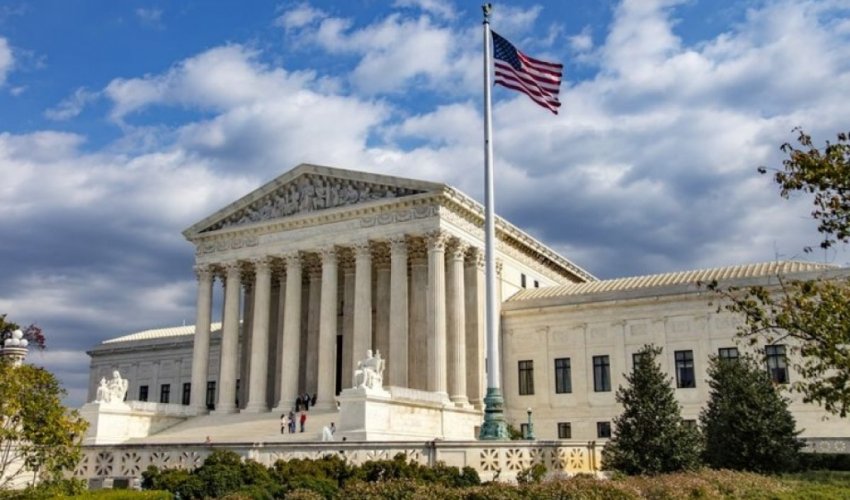
The full repeal of Section 907 by Congress would not only restore Azerbaijan’s rights but also signal a return to strategic, principle-based thinking by the United States. Such a move would show that Washington treats its partners fairly and would inject new momentum into bilateral relations.
More importantly, this decision would go down in history as a triumph for political culture. Even symbolic injustices, if left unresolved, hinder the full realization of justice.
The time to close this historical chapter has long since arrived. By doing so, the U.S. Congress would both correct a longstanding wrong and lay a solid foundation for future partnership.
(If you possess specialized knowledge and wish to contribute, please reach out to us at opinions@news.az).


Similar news