Russia’s defenses falter as drones hit ports, refineries, cities



Overnight drone attacks deep inside Russian territory have become a defining feature of the evolving military landscape in the second half of the war, and the latest strikes on the Krasnodar Territory, Samara Region, and Chechnya underline a clear shift in both strategy and capability. What happened across Russia this week is not an isolated episode but part of a systematic campaign targeting energy, port, and urban infrastructure hundreds of kilometers from the front line — a trend now reshaping Moscow’s threat perceptions, air defense priorities, and internal political messaging.
The incident in the Krasnodar Territory, where a UAV strike caused a fire at port infrastructure in Temryuk, highlights the growing vulnerability of Russia’s logistic corridors along the Azov and Black Sea basins. Although regional officials downplayed the scale of the attack, OSINT analysis by ASTRA points to a hit on the gas terminal of the Temryuk commercial seaport, a strategically important node that handles liquefied petroleum gas, petroleum products, grain, and other commodities.
The fact that the Defense Ministry acknowledged only one intercepted drone, while independent monitoring groups identified clear damage, demonstrates a widening gap between official reporting and on-the-ground evidence.
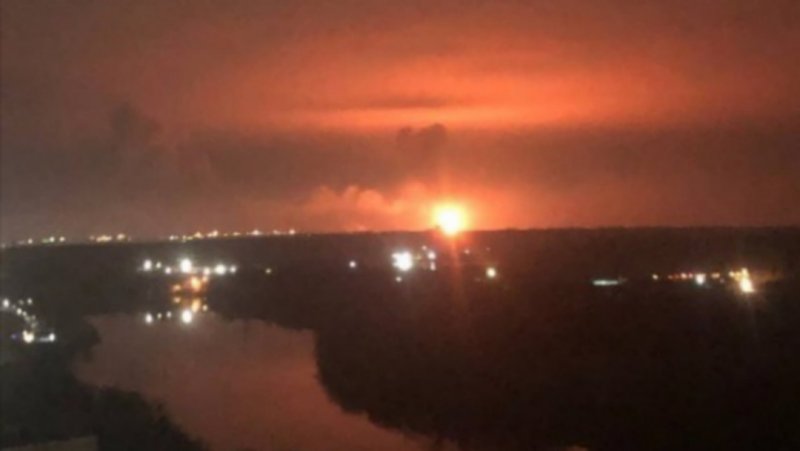
The strike in the Samara Region adds an equally important dimension. According to local authorities, drones targeted Syzran, with OSINT reports and resident videos suggesting that an oil refinery was hit. Russia’s Defense Ministry stated it downed eight drones over Samara and a total of 41 across Russia and Crimea that night. However, even if these numbers are accurate, the recurring pattern is the same: a saturation approach designed to stretch Russian air defense systems, force them to disperse resources, and expose weak spots across a massive geographic area. For a country that depends heavily on long-distance energy logistics, even temporary disruptions carry strategic weight.
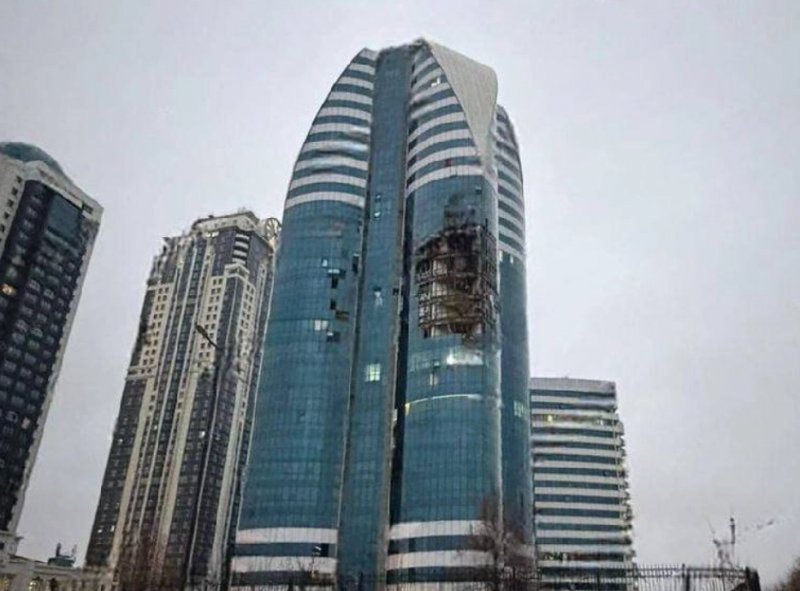
The situation in Chechnya is especially notable. Damage to a skyscraper in the Grozny City complex, a symbol of the region’s stability and reconstruction, introduces a new psychological layer. Whether the incident was a drone crash or a small aircraft collision, as some local reports suggest, the images circulated by the NIYSO opposition movement immediately gained traction online.
Importantly, the Defense Ministry did not include Chechnya in its daily briefing, raising questions about whether the federal center seeks to avoid acknowledging strikes in politically sensitive regions.
Taken together, these events signal a deeper transformation in Russia’s internal security environment. Drone attacks on infrastructure such as refineries, ports, and high-rise buildings penetrate not only physical defenses but also the information space and public expectations. Russian air defenses, traditionally optimized for conventional threats, now face a decentralized and unpredictable model of warfare where small, inexpensive UAVs can inflict both physical and reputational damage.
Geopolitically, the frequency and reach of these strikes challenge Moscow’s ability to project an image of strategic resilience. Each attack on a port, fuel facility, or urban center forces Russian authorities to reassess the distribution of air defense systems, many of which remain tied to the front in Ukraine or to major military bases. Protecting every potential target across a country of Russia’s size is impossible, and this asymmetry is one of the reasons drone warfare has become such a powerful tool in modern conflicts.
The pattern also reflects a broader trend toward targeting critical nodes rather than symbolic objects. Ports like Temryuk, oil refineries in Samara, and high-density urban neighborhoods all fit into a strategy aimed at disrupting supply chains, complicating logistics, and forcing Moscow to allocate more resources to domestic defense. Even when damage is limited, the psychological impact, especially when footage circulates widely on social media, serves as a multiplier, creating an atmosphere of vulnerability inside regions previously considered insulated from attack.
While Russia reports high interception rates, the continuation of these incidents suggests that defensive systems are struggling to maintain full coverage. This, in turn, may push Moscow to further decentralize its air defense infrastructure, invest in counter-UAV technologies, and strengthen cooperation between military and regional authorities.
At the same time, the political implications are increasingly visible: governors and mayors now appear more frequently in public communications on strikes, as the Kremlin attempts to shift responsibility for local security responses downward.
The latest wave of attacks demonstrates that the conflict is no longer confined to military front lines but has evolved into a multi-layered contest extending deep into Russian territory. With strategic infrastructure repeatedly tested, the country faces the challenge of adapting its security architecture to an era where drones redefine the boundaries of warfare.


Similar news