Sudan challenges the West: Invites Russia to explore oil fields


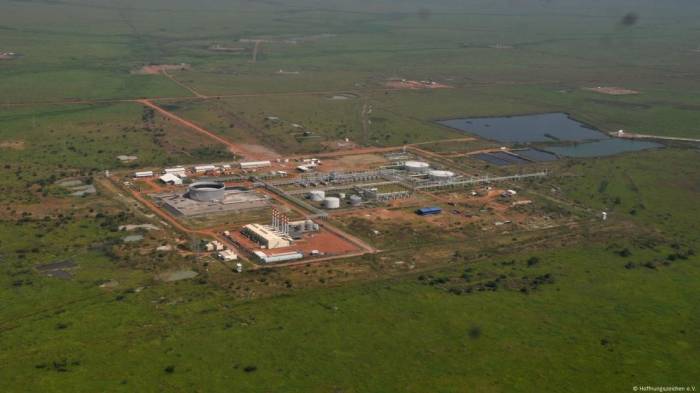
Photo: Oil field Thar Jath in Unity State, South Sudan. Photo: Hoffnungszeichen e.V.
Amid a prolonged crisis and armed confrontation between the Sudanese Army and the Rapid Support Forces (RSF), Sudan's Minister of Energy and Petroleum, Mohamed Abdalla Al-Naai'm, issued a statement that could attract the attention of Russian businesses. Russia has been invited to explore and develop 22 oil fields, most of which are located in relatively secure areas. However, should these prospects be viewed through rose-tinted glasses? Let’s delve deeper.
Sudan's oil wealth is concentrated in the north and east of the country, including regions around the capital, Khartoum. In theory, this provides Russian companies with opportunities for exploration and extraction under comparatively lower risks. However, the critical question is who will control these resources tomorrow. In an ongoing conflict, guarantees of investor security seem precarious at best.
Adding to the challenge is the information war being waged by both sides of the conflict. The resulting flood of contradictory narratives creates uncertainty, making it difficult to assess both the current situation and the prospects for stabilization. For Russian businesses, this poses challenges not only in terms of economic viability but also reputational risks.
Sudan has long expressed interest in strengthening economic ties with Russia. In recent years, the two countries have signed several agreements, including a contract for turbine supplies for hydroelectric power plants and discussions around building a floating nuclear power station. Developing oil fields appears to be a logical next step in this partnership.
Russia, with its extensive experience in operating in unstable regions, holds certain advantages. Companies such as Rosneft and Gazprom have already established themselves as players capable of navigating complex environments. Furthermore, smaller structures specializing in exploration and extraction have demonstrated a willingness to take significant risks in pursuit of substantial profits.
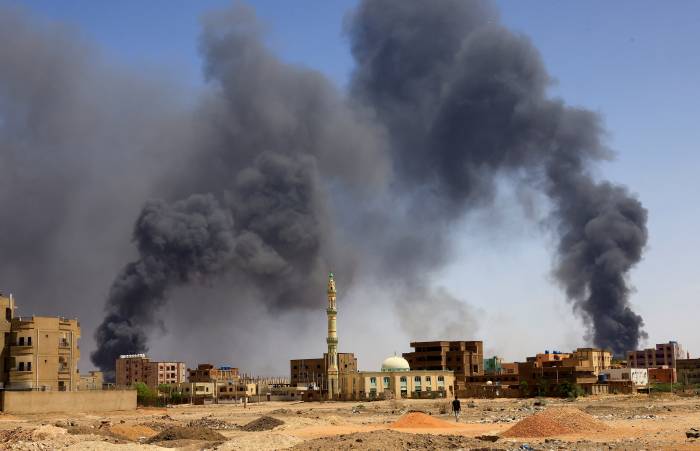
A man walks while smoke rises above buildings after aerial bombardment, during clashes between the paramilitary Rapid Support Forces and the army in Khartoum North, Sudan, May 1, 2023. Photo: REUTERS/Mohamed Nureldin Abdallah
However, the success of Russian businesses in Sudan will depend on several factors, including the political situation and international competition. Sudan attracts interest not only from Russia but also from countries like China, Saudi Arabia, and Turkey. The competition for access to resources is likely to intensify, and Russian companies must be prepared to face these challenges.
Potential participation in Sudan’s energy sector comes with significant risks. Key challenges include:
1.Military conflict and political instability. Even in relatively secure areas, conflict could reignite unexpectedly, jeopardizing infrastructure and investments.
2.International competition. Beyond Russia, countries like China, India, and Gulf states are also eyeing Sudan’s oil reserves. Sudan’s recent cancellation of a contract with the UAE over its support for the RSF illustrates how deeply politics can influence economic decisions.
3.Infrastructure challenges. Sudan’s infrastructure has been heavily damaged by the ongoing conflict. Establishing oil extraction operations under such conditions will require significant financial investments, with uncertain timelines for returns.
4.Sanction constraints. Russian companies continue to face international sanctions, which could limit their ability to operate abroad. A worsening situation in Sudan could prompt additional restrictions, complicating business operations.
Russia’s involvement in developing Sudan’s oil fields could be a significant step toward bolstering its influence on the African continent. In recent years, Moscow has actively pursued strategies to expand its footprint in Africa, offering technology, resources, and military assistance. Given Sudan’s strategic location in East Africa, it could become a pivotal partner in this effort.
However, increased Russian presence in Sudan’s energy sector is bound to draw heightened scrutiny from the West. The United States and European countries are closely monitoring developments in Sudan, wary of Russia’s and China’s growing influence. Should Moscow accept Sudan’s invitation, it may face escalating international tensions and intensified diplomatic pressure.
Despite the complexities of the current situation, Russian companies may view participation in Sudan’s energy sector as a strategic opportunity. However, success hinges on several key considerations:
1.Careful risk assessment. Russian companies must conduct a thorough analysis of the political and military landscape to minimize threats to their investments.
2.Collaboration with international partners. Joint ventures with other countries or organizations could help mitigate risks and distribute financial burdens.
3.Flexibility and adaptability. The ability to swiftly respond to changing circumstances will be critical to success in Sudan’s volatile market.
For Russia, the development of Sudan’s energy sector represents not just an economic opportunity but also a geopolitical challenge. On the one hand, it is a chance to solidify its influence in East Africa and strengthen its position on the global stage. On the other hand, this is a high-stakes endeavor where success depends on strategic foresight and meticulous planning.
Sudan remains a land of both opportunity and high risk for Russian businesses. The question is whether Russia is prepared to take these risks for long-term gains or whether it will choose to leave this complex chess move to other players.
(If you possess specialized knowledge and wish to contribute, please reach out to us at opinions@news.az).


Similar news