Tariffs, oil, and strategy: How Pakistan navigates U.S. pressure


.png)

Editor's note: Faig Mahmudov is an Azerbaijan-based journalist. The article expresses the author's personal opinion and may not coincide with the view of News.Az.
Pakistani authorities are reportedly considering importing crude oil from the United States in a bid to offset the growing trade imbalance that prompted U.S. President Donald Trump to impose steep import tariffs.
A Pakistani government official, speaking on condition of anonymity to Reuters, said oil is among the key commodities under review ahead of an upcoming delegation’s visit to Washington to discuss the newly imposed tariffs. He emphasized that the proposal is being actively debated but would ultimately require approval from the Prime Minister.
The head of one of Pakistan’s major oil refineries also confirmed to Reuters that the government is exploring crude imports from the U.S. in quantities roughly equivalent to Pakistan’s current oil and petroleum imports—valued at approximately $1 billion.

Source: Brecorder
On April 2, President Trump announced sweeping new tariffs on imports from 185 countries and territories. A blanket 10% tariff took effect on April 5, with differentiated rates implemented from April 9. Pakistani goods were hit with a particularly steep 29% tariff.
Despite traditionally strong bilateral ties—Pakistan is designated a major non-NATO ally—Washington’s move has provoked mixed reactions in Islamabad. Officials were reportedly caught off guard, but the issue has not gone unnoticed. The 29% tariff poses a significant burden on Pakistan’s economy, prompting the government to explore oil imports as a potential offset. The final decision, however, lies with the Prime Minister.
Why such focused attention on a developing country with nuclear capabilities? The answer lies in the geopolitical and geoeconomic significance of Pakistan’s location. Economic policy levers are increasingly intertwined with global power dynamics.
Source: Pakistan Today
Pakistan ranks among the world’s largest economies by purchasing power parity and has a population exceeding 207 million—fifth in the world. Though the nation has historically struggled with political instability, rapid population growth, and limited foreign investment, recent reforms have improved its economic outlook.
The country is currently undergoing a process of economic liberalization, including the privatization of state-owned enterprises, with the aim of attracting foreign capital and reducing the budget deficit.
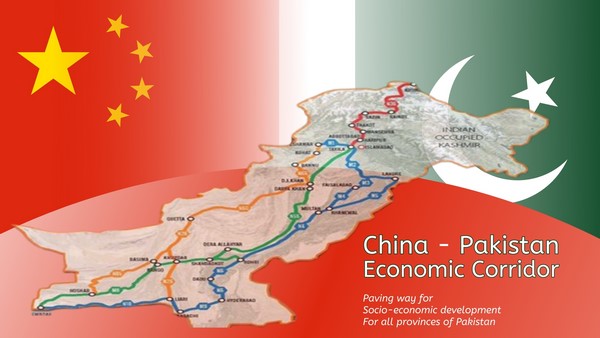
China has already taken a leading role in developing Pakistan’s economic infrastructure. The port of Gwadar—constructed with Chinese funding—is the centerpiece of the $62 billion China-Pakistan Economic Corridor (CPEC). Often likened to the Marshall Plan, CPEC encompasses logistics, energy, and industrial projects. One of its signature initiatives is a planned $10 billion Saudi-backed oil refinery in Gwadar with a capacity of at least 300,000 barrels per day.
Source: Reuters
Pakistani economists estimate that inadequate infrastructure reduces the country’s GDP by 3.5% annually. The CPEC seeks to close that gap, potentially creating 2.3 million jobs by 2030 and boosting GDP growth by 2 to 2.5 percentage points per year.
Remarkably, total capital investment in the corridor exceeds all foreign direct investment Pakistan has received since 1970. Notably, 80% of the funding is structured as investment rather than debt.
However, as the U.S. shifts from Euro-Atlantic priorities to a broader Indo-Pacific strategy, Washington may increasingly oppose initiatives—like CPEC—that challenge its strategic interests. As these projects move forward, countermeasures and destabilization efforts from rival powers are likely to escalate.
Complicating matters further is a recent Washington Post report revealing that sophisticated U.S. weaponry left behind during the 2021 withdrawal from Afghanistan is now appearing on Pakistan’s black market. According to the report, these arms—valued at $7 billion and including 250,000 modern assault rifles, 18,000 night vision devices, and other advanced systems—are increasingly ending up in the hands of Islamist militants and separatist groups.
(If you possess specialized knowledge and wish to contribute, please reach out to us at opinions@news.az).


Similar news