Thailand and Cambodia – a ceasefire without peace


The ceasefire on the border between Thailand and Cambodia, which came into effect on July 28, continues.
Thailand and Cambodia agreed not to deploy more troops on the border after the ceasefire deal. However, reports are already emerging about violations of the agreement.
The Thai outlet The National, citing a statement from Thai Foreign Minister Maris Sangiampongsa, reports that Thailand has informed Malaysia, the US, and China about Cambodia’s violations of the ceasefire. No details have been released. The Thai army accused Cambodia of breaking the truce, stating that attacks continued even after midnight. According to available information, the attacks only stopped after 10 a.m. on Tuesday when meetings between regional commanders of the two countries’ armed forces were held.
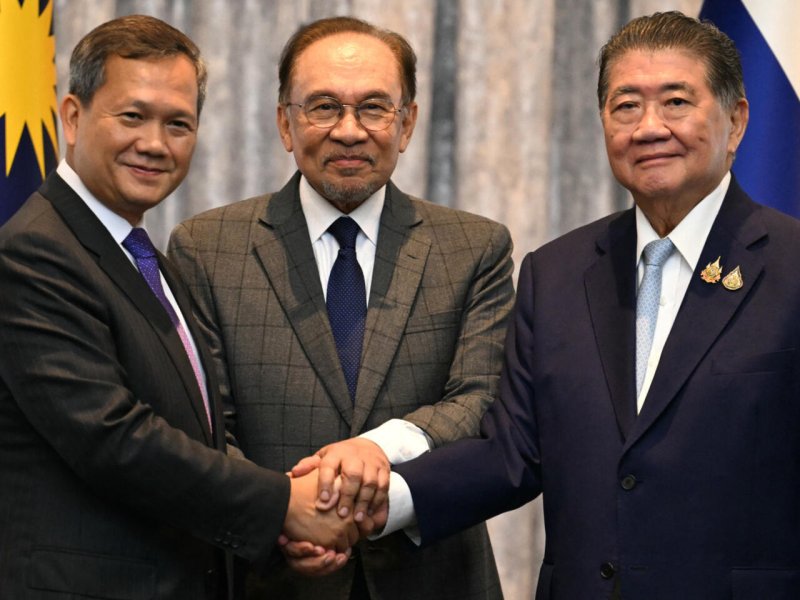
On Monday, with the mediation of Malaysia’s prime minister, Thailand and Cambodia agreed to a ceasefire. The US and China acted as observers.
During a meeting with UK Prime Minister Keir Starmer in Turnberry, Scotland, Donald Trump declared that negotiations mediated by Washington had been successful. “It was an honor for us to intervene, and the [conflict] is essentially resolved. I think they will settle it today. It lasted several days, but it could have gone on for years, and millions of people could have died. We stopped the war, and we are glad about that,” TASS quoted him as saying.
Meanwhile, in a joint statement published after negotiations in the Malaysian capital Kuala Lumpur, the parties to the conflict said that China had contributed to the political resolution of the border dispute. The US also put forward mediation initiatives.
It should be recalled that on the morning of July 24, armed clashes broke out along the Cambodia–Thailand border. The Thai armed forces reported using fighter jets to strike Cambodian positions in response to the use of heavy weapons against residential buildings and hospitals. Cambodia’s Ministry of Defense, in turn, said that the Cambodian army was acting in self-defense in response to Thai troop incursions. According to international agencies, at least 14 civilians and 8 soldiers were killed, 140 people were injured, and 18 Cambodian soldiers were captured.
The Thai PBS television channel, citing a statement from the country’s army command, reported that the Cambodian side twice postponed indefinitely the Tuesday morning meeting between the two countries’ regional military commanders scheduled as part of the ceasefire. Skirmishes have continued along the border. A representative of Thailand’s armed forces stated the day before that, despite the ceasefire, Cambodian troops were attempting to advance towards Thai positions.
The latest reports indicate that it is too early to talk about stability along the border of the two countries.
DW reminds that at the end of May, Cambodian soldiers attempted to dig trenches on a disputed section of the border. As a result, a firefight broke out with Thai troops, killing one Cambodian soldier. After that incident, both sides sent additional forces to the border region. Thailand also summoned the Cambodian ambassador to the Foreign Ministry and recalled its own envoy from Phnom Penh. In addition, Bangkok ordered the closure of several border crossings. Just a day before the latest escalation, several Thai soldiers were injured, some seriously, by landmines. Thailand accused Cambodia of recently planting these mines.
Analysts from the German publication point out that for decades Thailand and Cambodia have been unable to agree on the exact demarcation of their border. The border is more than 800 kilometers long, sparsely populated, largely inaccessible, and poorly mapped.
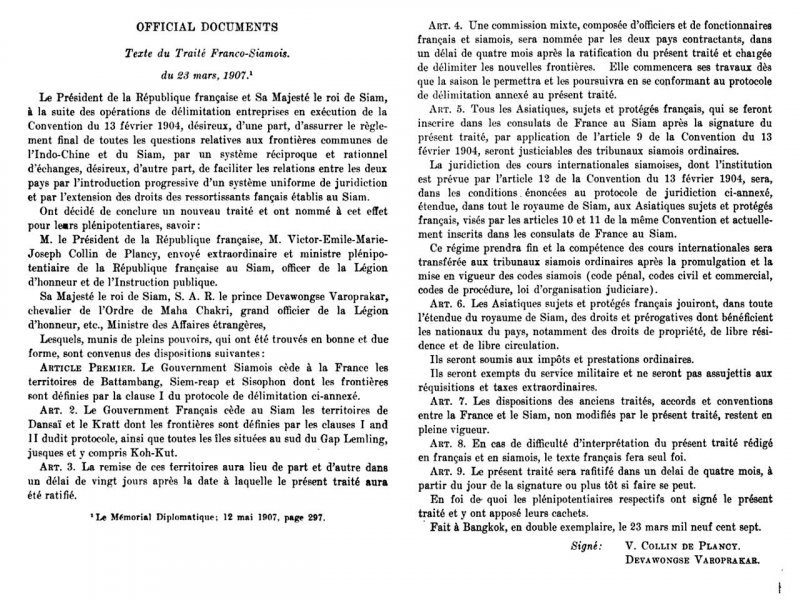
Looking deeper, the current tensions date back to colonial times. Cambodia was a French colony, while Thailand (then Siam) remained independent. In 1907, France unilaterally drew the border, and Siam was forced to accept it. However, the disputes persisted and resurfaced after decolonization.
As DW writes, the border area contains several temple complexes claimed by both countries. The most famous is Preah Vihear, a Hindu complex of the Khmer Empire dedicated to the god Shiva and built between the 10th and 12th centuries. Preah Vihear and its surrounding area are currently controlled by Cambodia but remain the subject of dispute between the two states.
In 1959, the case was referred to the International Court of Justice (ICJ) in The Hague, which three years later recognized Cambodia’s right to the temple complex. When UNESCO sought to designate it a World Heritage Site in 2008, the conflict flared up again, and people died in a border skirmish. Cambodia once again appealed to the ICJ, which again ruled in Phnom Penh’s favor.
In 2000, Bangkok and Phnom Penh created a joint commission to peacefully resolve the border dispute, but no significant progress has been made. In June 2025, Cambodia turned to the ICJ for the third time, requesting a final settlement not only of the territorial dispute around Preah Vihear but also of other border-related issues. Thailand, however, insists on bilateral negotiations. Following the latest clashes, observers believe that agreements between the two countries alone are unlikely.
Experts believe that both countries stand to lose significantly if the conflict escalates further. Trade and economic relations will suffer, and, of course, the tourism industry – on which both economies depend – will also be affected.
In 2024, Thailand’s tourism revenues exceeded $60 billion. The country hosted about 40 million foreign tourists. These figures were much higher than the previous year.
Cambodia depends on the tourism industry much more than Thailand, even though it receives fewer foreign visitors. In 2024, it hosted about 7 million tourists – almost a quarter more than in 2023.
Experts are not yet ready to predict the figures for 2025. The latest escalation could harm both countries and their economic interests.
By Tural Heybatov


Similar news