The era of strength: Azerbaijan’s adaptation to new global realities


Editor’s note: Huseyn Sultanli is an expert at the Center of Analysis of International Relations (AIR Center). The views expressed are the author’s own and do not necessarily reflect those of News.Az.
There can no longer be any doubt that the world order established after the Second World War has collapsed. Its original aim was to uphold a set of norms, rules, and regulations designed to prevent the return of large-scale armed conflict. A cooperative global system, closely regulated by both formal and informal rules, appeared to be the new normal. However, recent years have shown that this system has been gradually, yet profoundly, undermined. Confidence in international law has weakened, particularly due to its selective application and enforcement.
Over time, this has led to a decline in the authority of international institutions, which were intended to ensure that states’ actions were regulated fairly, non-discriminatorily, and based on evidence. This project, or aspiration, has largely failed, with the past few years confirming that the world is slowly but decisively transitioning to a new reality.
There is, however, an important caveat: the precise nature of this “new normal” is not yet fully understood. Nonetheless, certain trends and observations merit careful consideration.
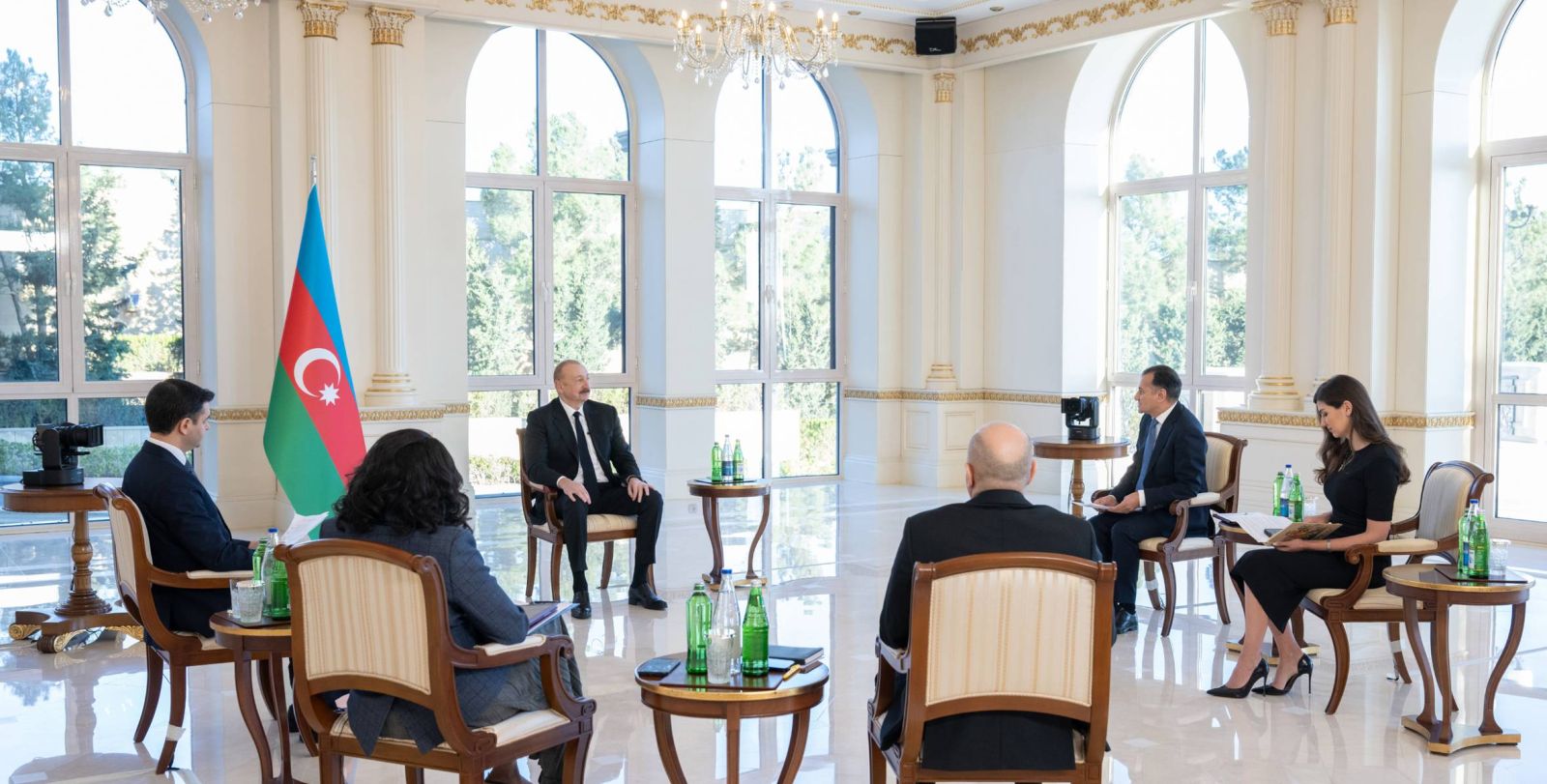
In a recent interview, Azerbaijan's President Ilham Aliyev provided a compelling explanation of the evolving dynamics of the international system. He argued that a new era is emerging in international relations, where the decisive factor in state behaviour is no longer the rule of law, but the rule of strength. Drawing on Azerbaijan’s own experiences since gaining independence, he emphasized that the international stage no longer rewards actors who adopt a passive “comply and wait” approach. Such an approach belongs to the past. Today, it is strength — the ability to protect and assert national interests — that is most clearly and swiftly rewarded. What, precisely, does strength mean in today’s international relations?
Source: AzerTAG
President Aliyev elaborated that states must adapt to these new conditions to survive as independent and capable actors in the international system. This is especially important for smaller countries situated in regions subject to geopolitical competition between major powers, and for states still in the process of fulfilling their potential. In this regard, Azerbaijan serves as a leading example. He highlighted the importance of developing “good relations” with a sufficient number of countries as a key means of ensuring long-term economic and political stability.
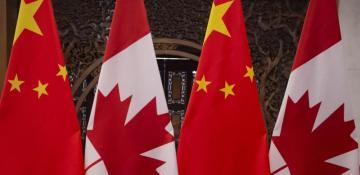
“This should always begin with one’s region, before expanding globally, to ensure that a country’s interests are reflected in as many comprehensive partnerships as possible,” Aliyev said. He noted that Azerbaijan currently has strategic partnership agreements with 10 European Union members, a comprehensive strategic partnership agreement with China, and is actively working to develop relations with the United States to the level of a strategic partnership. Crucially, this process has been carried out strategically over several years, ensuring that Azerbaijan’s national interests are respected in practice at every stage.
Although reaching this point required significant time, and despite what President Aliyev described as “demoralizing” anti-Azerbaijani criticism prevalent in several global capitals, this approach represents a necessary model for navigating today’s international environment. By examining the neo-realist theory of international relations, one can see parallels with the current global status quo. When the structure of a system is unclear or absent — what neo-realists describe as the lack of a supreme authority governing state relations — it is through “self-help” that an actor can guarantee its survival, not just for survival’s sake, but on its own terms.

Source: APA
This reality compels a significant number of states, including both middle powers and emerging powers, to take matters into their own hands and secure their own strength, rather than relying on international institutions. In the current transitional climate, this process is already underway. As international institutions lose relevance, particularly in the context of reduced engagement from a major power such as the United States, alternative forms of cooperation have become increasingly important. New formats, including regional or minilateral arrangements, are gaining strategic significance. Azerbaijan itself benefits from cooperation within the trilateral Azerbaijan–Türkiye–Pakistan framework.
The perspective outlined by President Aliyev is widely recognized by several of Azerbaijan’s close partners, even among countries that are categorized differently in terms of global power status. One example is the United Kingdom. Since the election of the Labour government in July 2024, the UK has faced an extremely challenging international environment, in which its global role was unclear. The government recognized the importance of pursuing an approach that combined proactiveness with caution and realism.
This approach has been termed progressive realism, which accepts the world “as it is” rather than pursuing the world “as it wants to see it.” According to the concept’s official presentation, this is no longer feasible; instead, a strong emphasis on long-term strategy over short-term gains is essential. Former UK Foreign Secretary David Lammy has stated that this approach is the only way for states that are not “great powers” to secure a “seat at the table.” This reasoning closely aligns with President Aliyev’s message, underlining the importance of independently pursuing strategic autonomy in the modern international system.

Source: News.Az
In the UK’s case, the fallout from Brexit, widely regarded as a failure, left the country in a difficult position. Suddenly, London found itself on the periphery of European politics, with a weakened military and a diminishing role in global climate diplomacy and international aid. This required not just short-term political responses, but a carefully considered strategy involving fundamental and often difficult decisions about the direction of its foreign policy.
To date, the Starmer government has focused its approach on several key priorities: an assertive push for deeper relations with the European Union and its individual member states; a leading role in deterring Russia on the global stage; and a substantial investment of time and resources to achieve greater economic independence from traditional allies through strengthened partnerships with a diverse range of global actors. This includes military cooperation with Türkiye, ongoing trade negotiations with India and the European Union, a reassessment of ties with China, and an expanding presence in the South Caucasus — a region central to the Middle Corridor, in which the UK sees significant strategic value. Moreover, a critical consideration for any UK Prime Minister is balancing the “special” relationship with the United States against relations with the European Union. This challenge is more pressing than ever, as transatlantic relations face their deepest crisis in recent history.
Furthermore, the principle of maintaining “good relations” with as many countries as possible is clearly reflected in the bilateral relationship between Azerbaijan and the United Kingdom. The two countries share a historic partnership in the energy sector, with British companies playing a key role in helping independent Azerbaijan connect its natural resources to international markets. However, as was made clear in 2025, both sides intend to expand this relationship well beyond a single sector. Following the announcement that ties would be elevated to the level of a strategic partnership, a comprehensive bilateral agenda was established, featuring high-level meetings between officials across multiple sectors.

Source: Aircenter.Az
According to John Alderdice, the UK’s Trade Envoy to Azerbaijan and Central Asia, the partnership is defined by the intersection of the UK’s expertise with Azerbaijan’s development priorities. This includes, among other areas, sector-to-sector cooperation in clean energy, advanced manufacturing, and life sciences, as well as projects of geopolitical significance. Alderdice also highlighted the UK’s commitment to supporting Azerbaijan in modernizing its transport and logistics infrastructure, recognizing the country’s crucial role in unlocking the full potential of the Middle Corridor.
The areas in which the UK and Azerbaijan cooperate are extensive. More importantly, this relationship exemplifies how the independent national interests of two states can align to produce mutually beneficial economic and political stability. Today, both Azerbaijan and the UK are highly influential actors within their respective regions, having independently recognized the necessity of taking strategic initiative. Azerbaijan plays a decisive role in shaping the post-conflict agenda in the South Caucasus, while the UK is increasingly active in Europe, particularly following its ongoing rapprochement with the European Union. This engagement includes participation in both the Coalition of the Willing and the E3 framework, through which the UK, together with France and Germany, engages in direct dialogue on defence and security matters.
The principles outlined by President Aliyev at Davos, which he identified as essential to a successful foreign policy, have proven to be a model for states that are not considered great powers. In a world where leading actors can afford to “go it alone,” other states must adapt by cultivating strategic autonomy. Achieving this, however, is far easier said than done. It requires careful strategic foresight, national resilience, diplomatic skill, and the courage to implement a clear vision. With national interests at the core, countries must pursue approaches that prioritize cooperation over confrontation, while upholding the principles of reciprocity, respect, and good faith. Azerbaijan exemplifies all of these qualities and is increasingly cited as a global example. Observing how it manages its bilateral relationships, particularly with the United Kingdom, demonstrates that the country has successfully adapted to the evolving realities of the international system.
(If you possess specialized knowledge and wish to contribute, please reach out to us at opinions@news.az).


Similar news