The Sahel revolts: France’s African order collapses


When General Amadou Abdramane declared that Niger was “preparing for war with France,” many dismissed it as rhetoric. Paris quickly rejected the accusation, calling it “information warfare.” But whether French troops are mobilizing is beside the point.
What is unfolding between Niamey and Paris is far more significant than a diplomatic spat. It is the visible fracture of a decades-old postcolonial relationship and perhaps the most dramatic symbol yet of France’s declining influence in the Sahel.
The July 26–27, 2023, military coup that removed President Mohamed Bazoum did more than change Niger’s leadership. It triggered a geopolitical realignment. The new authorities under Abdourahamane Tchiani immediately denounced the 1977 military cooperation agreement with France and demanded the withdrawal of roughly 1,400 French troops. Paris initially refused, insisting the junta lacked legitimacy. By December 2023, however, France had closed its embassy in Niamey and completed its military withdrawal.
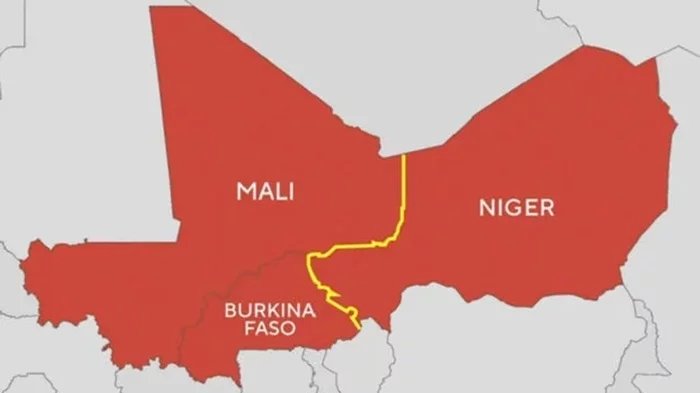
Niger joined Mali and Burkina Faso in pushing French forces out of the Sahel. The message was unmistakable: the old security architecture built around Paris had collapsed.
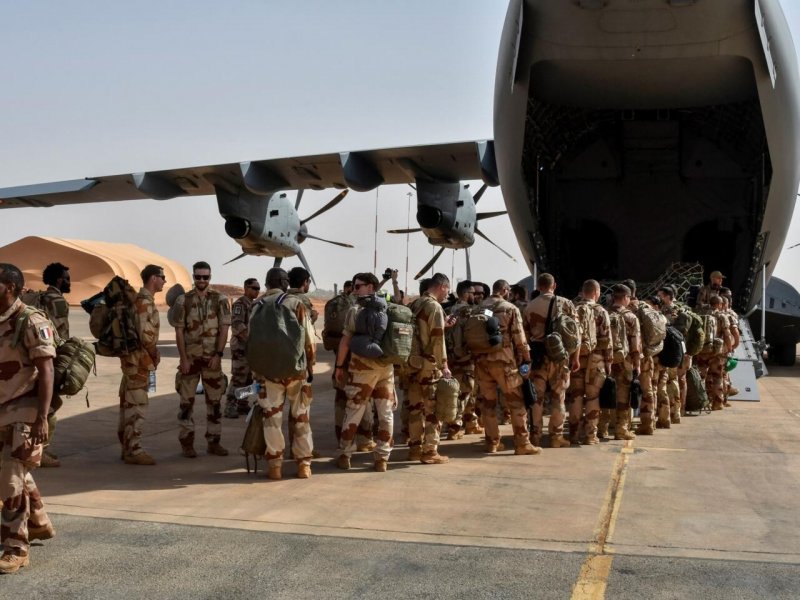 The last French soldiers board a French military plane to leave Niger for good, at a French base in Niamey that was handed over to the Nigerien army on December 22, 2023. Photo: AFP
For years, France justified its regional presence through counterterrorism. Operation Barkhane spanned Mali, Chad, Burkina Faso, Mauritania, and Niger. Yet despite years of deployment and European backing, jihadist violence persisted and in some areas intensified. In Niamey’s narrative, French troops did not bring security; they restricted sovereignty.
Public demonstrations in the Nigerien capital after the coup, marked by anti-French slogans and Russian flags, reflected more than emotional protest. They signaled a shift in geopolitical orientation.
But beneath the political slogans lies the real driver of this rupture: uranium.
Niger is the world’s seventh-largest uranium producer, accounting for about 4 percent of global output. Up to 15 percent of the uranium fueling France’s nuclear power plants came from Niger. Given that nuclear energy generates roughly 65 to 70 percent of France’s electricity, this was not merely trade; it was strategic interdependence.
The 2024 decision by Niger’s authorities to revoke French company Orano’s license to develop the Imouraren deposit, containing approximately 200,000 tons of uranium, marked a decisive break. After more than 50 years of French extraction, Niamey signaled that the era of privileged access was over.
Licenses have since been distributed to companies from China, Russia, the United States, Australia, India, and others. This is not just diversification; it is a redistribution of influence.
Accusations have escalated in parallel. Niger’s leadership has repeatedly accused Paris of interfering in domestic politics and even supporting destabilization efforts. Abdourahamane Tchiani publicly accused President Emmanuel Macron and regional leaders of conspiring against Niger. After the January 2026 attack on Niamey airport, blame was again indirectly directed outward.
France denies all allegations. From Paris’s perspective, the breakdown occurred because Niger’s new authorities abandoned joint counterterrorism efforts.
Yet the crisis has clearly outgrown bilateral explanations. Russian Foreign Minister Sergey Lavrov has accused France of orchestrating regime change in Africa, a claim that amplifies the international dimension of the dispute. At the same time, Russia itself has sought deeper African engagement, including through Wagner-linked structures that also failed to stabilize the region.
The Sahel’s strategic map is being redrawn. In September 2023, Mali, Burkina Faso, and Niger formed the Alliance of Sahel States, an alternative security framework that effectively dismantled France’s regional dominance. Niger expelled the French ambassador, closed its airspace to France, and annulled European Union military agreements.
This is not improvisation. It is systemic reconfiguration.
Whether Paris is truly contemplating military intervention remains uncertain and likely improbable. France faces more immediate strategic concerns. Losing access to Nigerien uranium has forced Orano to announce up to $500 million in planned investments in Uzbekistan and preliminary agreements in Mongolia. But replacing Niger’s supply volumes will not be quick, cheap, or seamless.
General Abdramane’s talk of “war” may be political mobilization. But mobilization rhetoric, severed diplomatic channels, sanctions, and strategic realignments are classic indicators of pre-conflict dynamics, even if the conflict remains economic and geopolitical rather than military.
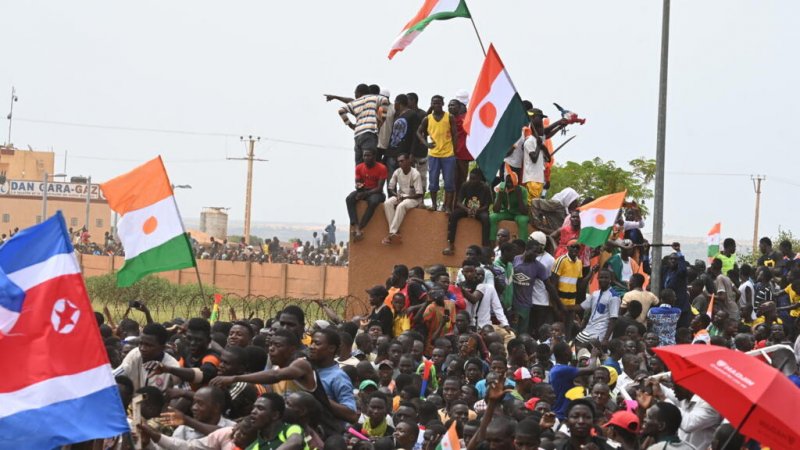 Supporters of Niger's National Council for the Safeguard of the Homeland (CNSP) protest outside the Niger and French airbase in Niamey on September 2, 2023, to demand the departure of the French army from the country. Photo: AFP
The Niger–France confrontation is not simply about one coup or one mining license. It reflects the erosion of a model of influence that once defined France’s African policy.
Niger was long considered one of Paris’s most reliable partners. Today it has become a case study in how swiftly postcolonial dependency can give way to assertive sovereignty.
French troops have left. Contracts have been revoked. Alliances have shifted. Strategic markets are being redistributed.
The era in which historical ties guaranteed political leverage is over.
France now confronts a new African reality, one in which influence must compete rather than presume.
And while war between Niamey and Paris remains unlikely, the economic and geopolitical confrontation is no longer theoretical. It is already underway.
By Tural Heybatov


Similar news