“The U.S. focuses on power, not sustainable development” – Jeffrey Sachs talks to News.Az


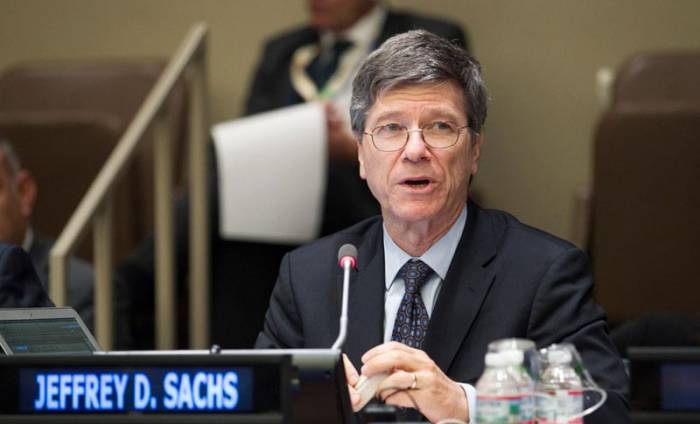
By Rolan Yusufov
In this exclusive interview with News.az, Jeffrey Sachs, American economist, professor at Columbia University and President of the UN Sustainable Development Solutions Network, offers deep insights into some of the most pressing global challenges of our time. From the complexities of achieving the UN Sustainable Development Goals to navigating the geopolitical tensions that hinder international cooperation, Sachs discusses the urgent need for diplomacy, sustainable energy, and comprehensive reforms in global financial institutions. With his vast experience in advising governments and international organizations, Sachs shares his perspective on the path forward for a more equitable and sustainable world, emphasizing the critical role of long-term planning and global solidarity.- Mr. Sachs, you are actively involved in solving global problems such as poverty, climate change, and sustainable development. What do you see as the main obstacles to achieving the UN Sustainable Development Goals, and what can be done to accelerate progress?
- There are three main obstacles. First, these challenges are complex and require long-term governmental planning. However, most governments are not yet equipped to handle such complexities. Second, global politics is dominated by power conflicts, particularly between the U.S. and Russia, and the U.S. and China. The U.S. is not focused on global sustainable development; its priority is global dominance. Third, the institutions of global governance—especially rule-making, enforcement, and financing—are far too weak. We need stronger global institutions, backed by global taxation and finance, to address these problems. This was the core message of the UN's new "Pact for the Future" adopted last week, but whether the U.S. and other countries will adhere to this call for greater global cooperation remains uncertain.
- Your work highlights the importance of international cooperation. In the context of current geopolitical tensions, how do you view the prospects for global coordination in tackling issues like the climate crisis and global inequality?
- If political leaders are wise, they will understand that their own success depends on global cooperation. Unfortunately, the U.S. has been poorly led in recent years, and I’m not optimistic about immediate improvement. For decades, the U.S. has relied on force to solve problems—whether in Serbia, Afghanistan, Iraq, Syria, Libya, Ukraine, Gaza, Taiwan, and beyond. The U.S. must relearn the art of diplomacy, which it seems to have forgotten.
- You often stress the need to transition to sustainable energy sources to combat climate change. How do you assess the readiness of the world’s economies for this transition? Which countries or regions are leading in this area?
- The key steps toward sustainable energy are: (1) zero-carbon power generation through solar, wind, hydro, nuclear, and carbon capture and storage; (2) regional power markets that integrate zero-carbon energy across broad geographical regions; (3) long-distance power transmission to support regional markets; (4) electrification of all forms of transport, including green hydrogen for shipping and heavy vehicles; and (5) a hydrogen-based economy for industrial sectors like steel-making. All these technologies are now commercially viable and can be implemented on a large scale. What we urgently need are long-term national and regional plans, along with significant increases in financing. However, these practical steps are not yet fully in place.
- You have recently criticized the actions of international financial institutions such as the IMF and the World Bank. How do you think they should be reformed to better serve the needs of developing countries and address global economic issues more effectively?
- The primary role of the IMF and World Bank should be to help reform the global financial architecture so that developing countries can access high-quality financing. This means long-term maturities (30 years or more) and affordable interest rates, enabling countries to borrow at investment-grade terms with low-risk premiums. The IMF, in particular, should focus on this objective but is currently not sufficiently engaged in global financial reform.
- You have been a leading advocate for strategies to eliminate extreme poverty. Do you believe the world can still achieve this goal, despite economic crises and the impact of the COVID-19 pandemic? What steps are necessary to make this a reality?
- The keys to ending extreme poverty are clear: universal access to quality education, science-driven national policies promoting R&D and innovation, high-quality infrastructure (including roads, railways, energy, water, and sanitation systems), and open trade and finance for both regional and global integration. This all must be supported by peace and global financial reform to ensure that poorer countries have access to long-term capital.
- You have recently discussed the long-term economic consequences of conflicts and sanctions. How do you think the economic and humanitarian impacts of current geopolitical conflicts, such as the war in Ukraine, can be mitigated?

- There is only one way to minimize these impacts—end the wars and return to diplomacy. The war in Ukraine is a result of the relentless and misguided U.S. push to expand NATO into Ukraine and Georgia. The U.S. operates under a zero-sum mentality, believing that it must dominate others to avoid being dominated. This primitive ideology leads to perpetual wars rather than peace and security.
- You have emphasized the need for a new economic model for the 21st century that takes environmental and social factors into account. How can countries harmoniously integrate economic growth and environmental sustainability into their national strategies?
- The key is to create 2050 plans that place sustainable development at the heart of local, national, and regional strategies. By 2050, the aim should be widespread prosperity, social inclusion, and environmental sustainability. Countries and regions need to identify the strategies to reach these mid-century goals. This primarily involves bold public investments in education, science, clean energy, infrastructure, and digital platforms, alongside peace, cooperation, and joint investments with neighboring countries.


Similar news