The U.S. pushes Asia to arm Armenia



By Tural Heybatov
Armenia is building up its military, but it's doing so in a disorganized, unprofessional, and inconsistent way. Though it's possible there's a hidden strategy behind these seemingly irrational decisions, it's hard to believe. One thing is clear: Armenia is not independently choosing how to strengthen its military. The path it has taken is long, expensive, and uncertain.
Papikyan explained his trip to Seoul on Facebook, saying he attended the opening ceremony of the summit "Responsible Artificial Intelligence in the Military Sphere." The event was organized by the defense and foreign ministries of South Korea, the Netherlands, the UK, Singapore, and Kenya. "The goal is to establish international mechanisms to control the use of AI in military technologies and during combat operations," Papikyan wrote.
Besides attending the summit, Papikyan met with South Korean Defense Minister Shin Won-sik, Foreign Minister Cho Tae-yong, Singapore’s Defense Minister Ng Eng Hen, and Finland’s Defense Minister Antti Häkkänen. Armenian media reported they discussed international and regional security challenges and ways to strengthen bilateral and multilateral relations.
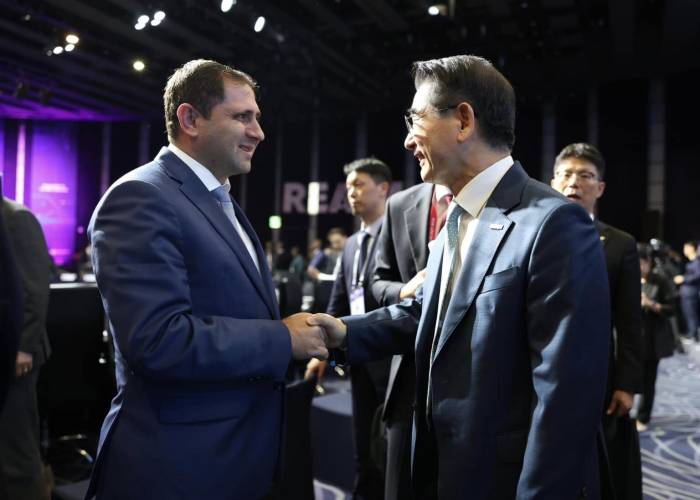
Armenia wasn’t one of the summit’s organizers and had no real connection to the topics discussed, suggesting Papikyan’s visit had other purposes, which Yerevan tried to keep under wraps but failed.
According to information obtained by Caliber.Az from reliable sources, secret negotiations took place in Seoul, where an agreement was reached to supply South Korean weapons to Armenia, including the potential purchase of tanks. The tanks being discussed are believed to be either the K1 or the K2 Black Panther. Caliber.Az notes that the K2 Black Panther is South Korea’s main battle tank, developed by the Agency for Defense Development (ADD) and Hyundai Rotem (a subsidiary of Hyundai Motors).
But that’s not all—Yerevan is also eyeing Japanese weaponry. An Armenian delegation is currently in Japan to negotiate arms deals, though they’re keeping this quiet. The only public mention of Armenian-Japanese military cooperation dates back to a February meeting between Papikyan and Japan’s ambassador to Armenia, where they discussed strengthening military ties.
Soon, there may be no country left that Armenia hasn’t approached for weapons. This chaotic, scattershot approach to building a military is strange. Armenia’s arsenal is turning into a patchwork of weapons from various countries, each based on different technologies. For years, Armenia’s army struggled to effectively use the Russian weapons it was familiar with. Trying to master military equipment from multiple manufacturers will only add to Yerevan’s difficulties.
However, this may not be driven by Armenia’s desires. The U.S. is heavily involved in Armenia's defense planning. Rumors from earlier this year have been confirmed—on April 5, an agreement was reached in Brussels to supply American weapons to Armenia. But the U.S. isn’t stopping there; according to some reports, they are pressuring other countries to arm Armenia as well—countries that are either U.S. allies or owe something to Washington. Armenia is broke, with significant national debt. Serious arms manufacturers wouldn't typically engage with such a customer. The French military equipment sold to Armenia, for instance, is known for its poor performance, equipment that Ukraine had once rejected. Nevertheless, France has been part of the process, and Washington has likely checked off their involvement. It’s becoming clear that the U.S. is leading Armenia’s military build-up, pushing its allies in Europe and Asia to collaborate with Yerevan.
Take South Korea and Japan, for example. Neither country has historically shown much interest in military cooperation with Armenia, although both maintain strong, mutually beneficial relations with Azerbaijan—albeit outside of military affairs.
The reason is that the defense industries of both South Korea and Japan are deeply tied to the U.S. These countries could easily stand on their own with their advanced technologies, but politics come into play. The U.S. holds significant influence over the defense sectors in both countries, with a large portion of their weaponry produced under American licenses and using American technologies. Take the K2 Black Panther, for example—its key combat components were developed by the German company Rheinmetall, 40% of which is owned by North American institutional investors, highlighting the U.S. influence.
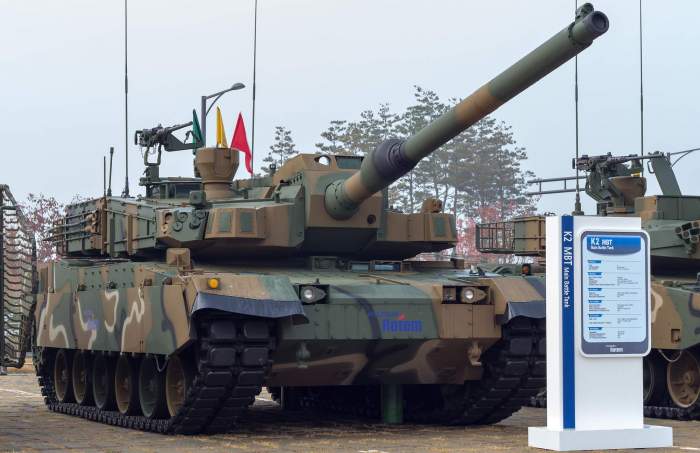
According to recent data, the K2 Black Panther is currently in service only in South Korea (225 units) and Poland (51 units). It is considered one of the most expensive tanks in the world, with a unit cost of around $9 million. Despite this, Washington has decided that Armenia should be the next country to acquire these tanks. Armenia has no funds of its own, but it does have American aid, including $250 million recently approved by USAID. It’s not hard to guess where this money will go. This also fits with Armenia’s decision to send its old Soviet military equipment to Ukraine, clearing space for NATO and other modern weapons.
What does all this mean for the region? This isn’t something Washington seems concerned about, and that’s not surprising. What is surprising is why Yerevan doesn’t seem to be worried either.


Similar news