Behind Poland’s European mask: Antisemitism, islamophobia and the war on migrants


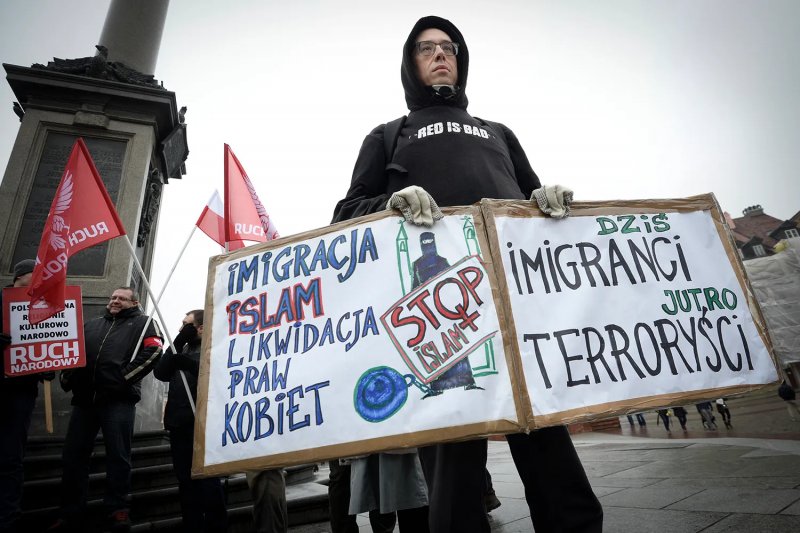
Poland increasingly seeks to present itself within the European Union as a moral authority. Warsaw speaks readily about “European values”, human rights, democracy and the rule of law. It criticises other states and claims a special role in shaping the EU’s eastern policy. Yet behind this outwardly noble façade, a different reality is becoming increasingly visible: the rise of radical nationalism, xenophobia, antisemitism, Islamophobia and a harsh anti-migrant policy.
Poland’s political discourse in recent years reveals a dangerous trend. A country that portrays itself as a defender of Europe is increasingly reproducing within its own borders the politics of exclusion, division and the search for an “internal enemy”. In this logic, Jews, Muslims, migrants, refugees and even Ukrainians — whom Warsaw until recently presented as a “brotherly people” — become objects of suspicion, irritation or political exploitation.
The rise of antisemitic sentiment is particularly alarming. According to a CBOS survey published in 2026, the share of Poles expressing a negative attitude towards Jews reached 40%. Moreover, positive attitudes towards Jews fell to 22%, the lowest level since 2006. This is not merely a matter of isolated extremist behaviour, but an indication of a deeper social shift in which antisemitic stereotypes are once again becoming part of mass perception.
RECOMMENDED STORIES
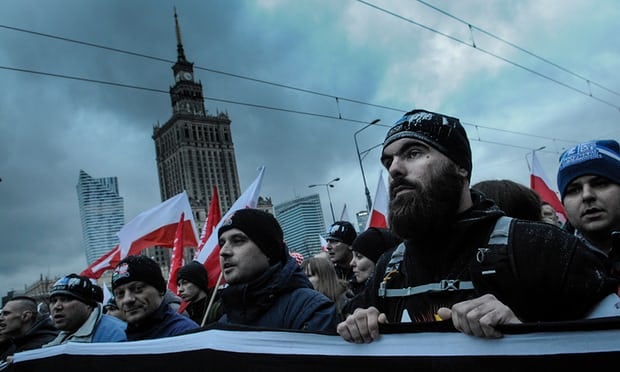
These attitudes have long moved beyond everyday prejudice. In Polish politics, antisemitic rhetoric is increasingly voiced openly. Scandals involving far-right politicians, demonstrative provocations, the use of symbolism associated with Nazism, the denial or distortion of the Holocaust, and the revival of medieval myths about “ritual murder” show that radical ideas are no longer confined to the margins. They are entering parliamentary and public debate.
It is symptomatic that the Polish authorities often respond to such manifestations insufficiently firmly. Formal condemnations do not change the main problem: the political environment that makes such statements possible continues to exist. Moreover, some nationalist circles seek to portray Poland exclusively as a victim of history, avoiding an honest discussion of the darker pages of the country’s own past.
This concerns, in particular, the tragedies of Jedwabne and Kielce — events that remain painful points in Polish-Jewish memory. Attempts to soften, reinterpret or push these episodes out of public consciousness only deepen the problem. When the state or influential political forces prefer to speak only about the suffering of the Polish people, while refusing to discuss the responsibility of certain Polish groups for violence against Jews, historical memory becomes a tool of political self-justification.
Dry statistics also confirm that the problem of xenophobia in Poland has not only a political dimension, but also a criminal-law one. According to OSCE/ODIHR data for 2024, hundreds of hate crime investigations were recorded in Poland. The OSCE database separately lists antisemitic and anti-Muslim hate crimes, as well as a large number of cases motivated by racism and xenophobia. This shows that the issue is not limited to isolated incidents, but reflects a broader atmosphere of intolerance.
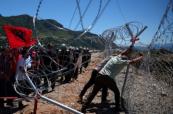
A similar logic is visible in Poland’s migration policy. On the border with Belarus, Warsaw built a fortified wall approximately 186 kilometres long. Formally, this policy is explained by threats from Minsk and Moscow, whom Poland accuses of using migrants as an instrument of hybrid pressure. In practice, however, the Polish-Belarusian border has become a symbol of a new Europe — a Europe of walls, barbed wire, military patrols and cold indifference to human fate. In 2024, Poland’s Border Guard recorded 29,707 irregular crossings on this route, according to figures cited in the European press.
Instead of adopting a humanitarian approach, Poland has opted for militarisation and the harsh expulsion of migrants. Human rights organisations have repeatedly reported pushback practices — the forced return of people to the Belarusian side without proper access to asylum procedures. In March 2025, Poland introduced a 60-day suspension of the right to submit applications for international protection at the border with Belarus, and in May of the same year, parliament voted to extend the measure. Amnesty International described this approach as a grave violation of the right to asylum.
It is especially revealing that a temporary measure has effectively become a permanent instrument of border policy. By 2026, Poland’s human rights commissioner was already expressing concern that the temporary ban on asylum applications remained in place a year after its introduction. This is a serious blow to Poland’s image as a state that supposedly consistently defends European legal norms.
Poland explains what is happening as a response to “hybrid warfare”. Certainly, the factor of artificially created migration pressure exists: Belarus has indeed been accused by EU countries of engineering a crisis at the border. But the existence of an external threat does not give any state the right to ignore basic humanitarian standards. Security must not become a justification for depriving people of access to protection, medical assistance and legal procedures.
In practice, the border has turned into a zone where a human being is viewed first and foremost as a threat. A migrant, especially a Muslim migrant, is increasingly presented in Polish political language not as a person in need of protection, but as a potential instrument of hostile forces. This is where the ideological foundation of contemporary Polish policy becomes visible: under the slogan of defending “Christian Europe”, the image of the “outsider” is created — someone denied compassion, rights and dignity.
This logic is also reflected in Poland’s official migration strategy for 2025–2030, titled “Regain Control. Ensure Security”. The emphasis on security is not, in itself, unusual for European policy. But in Poland’s case it fits into a broader framework in which migration is viewed primarily through the prism of threat, control and national identity.
Such an approach inevitably strengthens Islamophobic attitudes. Under the banner of “Christian Europe”, the Muslim migrant becomes a convenient enemy figure. He is portrayed not as a victim of war, poverty or political crisis, but as a threat to Polish culture, religion and security. As a result, state policy and radical rhetoric begin to reinforce each other.
The Ukrainian factor is no less revealing. After the start of the war, Poland actively used its support for Ukraine to strengthen its international image. Warsaw presented itself as Ukraine’s main humanitarian rear and one of Kyiv’s key allies in Europe. Over time, however, fatigue, irritation and political exploitation of the Ukrainian issue have grown inside Poland.
According to Eurostat, as of 30 April 2026, 4.37 million people fleeing Ukraine were under temporary protection in the EU. Poland remains one of the largest host countries, alongside Germany and the Czech Republic. This shows how important the Ukrainian presence has become for Poland’s economy, labour market and social system.
Yet the attitude towards Ukrainians is becoming increasingly pragmatic and harsh. Their labour is needed by the Polish economy, but their social rights are increasingly perceived as a burden. The European debate is already moving towards limiting certain elements of temporary protection, including for men of fighting age, and Poland is one of the countries where the Ukrainian issue is increasingly being used in domestic politics. Reuters reported in June 2026 that EU ministers were discussing the possibility of limiting temporary protection for Ukrainian men of fighting age, with the discussion concerning new arrivals rather than those already under protection.
This creates a double standard: when Ukrainian refugees are useful for Poland’s international image, they become a symbol of Polish solidarity. But when the discussion turns to social benefits, the labour market and domestic political competition, they become objects of restrictions, suspicion and irritation. This is the typical logic of exploitation: the migrant is useful as labour, but undesirable as a full participant in society.
Against this background, Poland’s desire to lecture other countries looks particularly hypocritical. Warsaw likes to speak about democracy, freedom, European standards and human rights. But if a country simultaneously faces rising antisemitism, the normalisation of Islamophobia, harsh border practices and political pressure on migrants, its moral claims become highly questionable.
Poland today is facing not merely separate incidents, but a systemic crisis of its own political image. It wants to be the “showcase of Europe” on the EU’s eastern flank, but increasingly demonstrates the features of a state where nationalism, religious exclusivism and fear of “outsiders” are becoming part of political normality.
The main problem for Poland lies in the gap between its external rhetoric and internal reality. On the international stage, Warsaw speaks the language of values. At home, it increasingly acts in the language of suspicion, bans, walls and historical self-justification. It is precisely this gap that turns Polish policy into one of the clearest examples of Europe’s double standards.
If Poland truly wants to be part of a Europe of values, it must begin not by criticising other states, but by holding an honest conversation about itself: about the rise of antisemitism, Islamophobia, violence at the border, the position of migrants and the unwillingness to acknowledge the difficult pages of its own history.
Without this, any lectures from Warsaw on human rights will sound not like a defence of principles, but like political hypocrisy.
By Samir Muradov


Similar news