India’s new power game: Why Modi is heading to France and Slovakia


Indian Prime Minister Narendra Modi’s visit to France and Slovakia on 13–18 June should not be viewed as a routine European tour. Officially, the agenda includes India’s participation in the G7 summit in France, talks with French President Emmanuel Macron, and a visit to Slovakia. Behind this diplomatic programme, however, lies a much broader strategic calculation. India is seeking to consolidate its status as a power without which it is no longer possible to discuss global security, the world economy, energy, technology, or crises ranging from Ukraine to the Middle East.
The main destination of the trip is France. For New Delhi, Paris has long been more than simply a European partner; it is one of India’s most reliable Western partners on strategic issues. Unlike some Western countries, France does not seek as aggressively to draw India into a bloc-based confrontation with Russia or China. This is particularly important for New Delhi. India wants to deepen relations with the West, but it is not prepared to become a junior partner to either Washington or Brussels. France is a convenient partner in this regard, as it also seeks strategic autonomy and understands India’s desire to pursue a multi-vector foreign policy.
The economic foundation of the relationship is also strengthening. Bilateral trade between India and France has more than doubled over the past decade. In 2025–26, it reached €13.59 billion, or approximately $15.81 billion. France is now India’s third-largest trading partner within the European Union, after the Netherlands and Germany. Indian exports to France amounted to €6.1 billion in 2025–26, while cumulative French foreign direct investment in India reached €10.5 billion between April 2000 and December 2025. Around 38 of the 40 companies in France’s CAC 40 index are already present in India, demonstrating that the relationship extends well beyond diplomacy and defence.
RECOMMENDED STORIES
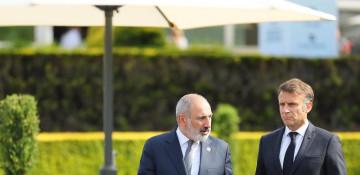
This is why Modi’s meeting with Macron matters beyond the G7 context. It is about testing the entire architecture of the Indo-French partnership. Defence, aviation, nuclear energy, space, artificial intelligence, clean energy, digital infrastructure and the Indo-Pacific have long been at the heart of relations between the two countries. For France, India is key to strengthening its influence in Asia and the Indian Ocean. For India, France is a source of technology, investment, industrial cooperation and political support in the West.
 Source: Getty Images
Several major projects help explain why the relationship has acquired strategic depth. The Jaitapur Nuclear Power Plant project remains one of the most ambitious elements of Indo-French energy cooperation. If fully implemented, it could become one of the world’s largest nuclear power projects and a symbol of long-term French participation in India’s energy transition. The two countries are also cooperating on small modular reactors and advanced modular reactors, a field likely to become increasingly important as India seeks cleaner and more reliable sources of energy.
Space cooperation is another major pillar of the relationship. India’s ISRO and France’s CNES have worked together for more than five decades. Their cooperation now includes Earth observation, maritime domain awareness, space situational awareness and future launch vehicle technologies. The TRISHNA Earth observation mission is one of the most prominent examples of this partnership. In 2024, Arianespace and India’s NSIL also signed an agreement to jointly address global satellite launch demand using both Indian and French launch capabilities.
Digital cooperation is expanding as well. India’s UPI payment system has already gone live in France, initially at the Eiffel Tower before expanding to other locations such as Galeries Lafayette. This may appear symbolic, but it reflects a broader trend: India seeks to export not only goods and labour, but also its digital public infrastructure. France has become one of the first major European testing grounds for this ambition.
The visit is taking place at a particularly complex moment. The G7 summit will be held against the backdrop of several simultaneous crises. The war in Ukraine remains a central concern for Western countries. Rising tensions in the Middle East are increasing risks for energy markets and maritime trade routes. Relations between the West and China are becoming increasingly competitive. Meanwhile, the global economy faces trade disputes, technology restrictions and competition over supply chains. In all these areas, India can no longer remain a bystander.
For Modi, participation in the G7 is an opportunity to demonstrate that India represents not only itself but also the broader Global South. New Delhi has long sought to speak on behalf of countries that do not wish to choose between the West, Russia and China. India cooperates with the United States, maintains defence and energy ties with Russia, competes with China while continuing to trade with it, develops relations with Europe and expands its presence in the Middle East. This position often frustrates some Western partners, but it is precisely what makes India important. It must be taken into account because it does not fit neatly into any geopolitical camp.
A possible meeting between Modi and US President Donald Trump on the sidelines of the G7 is also significant. For India, relations with Washington remain strategically important, but a number of issues have accumulated between the two sides. These include trade disputes, tariffs, visa policy, the H-1B programme for Indian professionals, energy cooperation and the sensitive US-Pakistan track. For Modi, it is important to prevent current disagreements from undermining the broader strategic partnership. For Trump, India is equally important — as a market, as a counterweight to China and as a country without which a sustainable strategy for Asia cannot be built.
The Slovak leg of the trip is no less interesting. At first glance, Slovakia may appear less significant than France or the G7. However, it is here that New Delhi’s more subtle diplomatic logic becomes visible. Modi’s visit to Bratislava is part of an effort to expand India’s presence in Central Europe. India has long worked closely with France, Germany, Italy and the United Kingdom, but Central European countries have traditionally remained a secondary focus. That is now changing.
The numbers help explain why Slovakia matters. Bilateral trade between India and Slovakia exceeded the €1 billion mark for the first time in 2024, reaching €1.28 billion. Indian exports to Slovakia rose by more than 55 per cent to €1.057 billion, while imports from Slovakia reached €224.9 million. In the first quarter of 2025 alone, total trade amounted to €556.7 million, with Indian exports more than doubling year-on-year. Although these figures remain far below India’s trade with France, the pace of growth is politically significant.
The structure of trade also highlights the direction of the relationship. India exports mobile phones, automotive components, footwear, garments, tyres, pharmaceuticals, seats and electrical equipment to Slovakia. Slovakia exports motor vehicles, machinery, mechanical appliances, pumps, transmission shafts, measuring instruments and bearings to India. In other words, this is not merely a political relationship. It is closely linked to industry, manufacturing, automobiles and engineering — sectors that are central to India’s modernisation agenda.
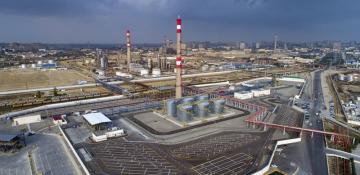
Investment ties are also expanding. One of the most significant Indian investments in Slovakia is Tata Motors’ Jaguar Land Rover plant in Nitra, which produces the Land Rover Discovery and Defender models. Indian companies such as Tata Consultancy Services, the CK Birla Group through Kinex Bearings, Dhoot Transmission, the Samvardhana Motherson Group and the Alicon Group are also present in Slovakia. On the Slovak side, companies are active in areas such as rail freight wagons, engineering, human resources, ethanol production and electric vehicle batteries. Amara Raja Energy & Mobility holds a stake in InoBat, a Slovakia-based battery company, adding a green technology dimension to the relationship.
This explains why Modi’s visit to Slovakia should not be underestimated. Slovakia is a member of both the EU and NATO, with a developed industrial base, a strong automotive sector, engineering expertise and a favourable location in the heart of Europe. For India, it is a potential partner in manufacturing, investment, technology, automotive production, green energy and logistics. Through Slovakia, New Delhi can strengthen ties not only with a single country but also with the broader Central European region.
 Source: Shutterstock
There is also a political dimension. Slovak Prime Minister Robert Fico has adopted a more pragmatic position on several international issues, including the war in Ukraine and relations with Russia. For India, which seeks to maintain ties with Moscow while preserving its partnership with the West, such European leaders are of particular interest. Bratislava may not be New Delhi’s primary channel within the European Union, but it can serve as a useful one.
More broadly, Modi’s trip demonstrates that India has moved beyond the role of a regional power in South Asia. It increasingly acts as an independent global centre of power. It engages with the G7 without being part of it. It cooperates with the West without submitting to Western discipline. It competes with China but does not wish to become merely an instrument of an anti-China strategy. It maintains relations with Russia while continuing to develop ties with Europe and the United States.
This is the broader significance of the visit. Modi is travelling to France and Slovakia not only to attend a summit and hold bilateral talks, but also to consolidate India’s emerging role in world politics. That role is built on a simple formula: India is prepared to cooperate with everyone, but does not wish to depend on anyone.
For France, this is an opportunity to strengthen its special partnership with the world’s largest democracy and a key Indo-Pacific player. For Slovakia, it offers a chance to elevate relations with India to a new level. For the G7, it is a reminder that the Western club can no longer address global challenges without the participation of major non-Western powers. And for India itself, the visit is another step towards being seen not as an invited guest, but as one of the architects of the emerging global order.
By Murad Samedov


Similar news