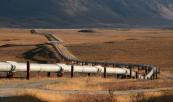
Why Azerbaijan needs a new oil refinery now - News.Az explains


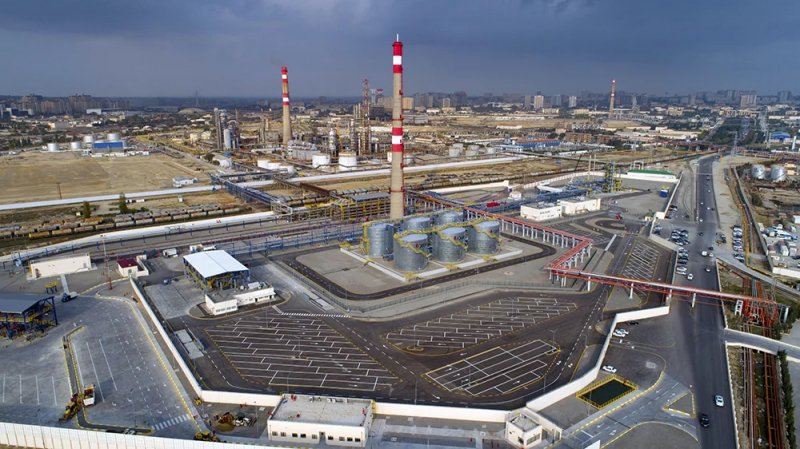
A new oil refinery will be built in Azerbaijan, Economy Minister Mikayil Jabbarov announced in an interview with television channels.
He said that an agreement had been reached some time ago and a decision made to construct a new refinery. The project is expected to become one of Azerbaijan’s largest investment initiatives in recent years. Construction is projected to take five to six years, after which the country will have what the minister described as a fully modern refinery meeting the highest technological standards.
The facility will produce not only liquid fuels but also next-generation petrochemical products. According to Jabbarov, SOCAR has already begun implementing the project under the coordination of the relevant government commission and with state support.
The exact location of the refinery has not yet been specified. Sangachal was previously mentioned as a possible site, while Sumgayit has also been discussed as a potential location.
RECOMMENDED STORIES
It should be noted that the Baku General Development Plan through 2040 provides for relocation of existing environmentally harmful petrochemical facilities, occupying a total area of around 510 hectares, outside the capital.
The issue of relocating oil refining facilities from central Baku has been under discussion for many years. As far back as 2008, plans were being considered to move the two refineries operating in Baku at the time — Azneftyag and the Heydar Aliyev Oil Refinery — outside the capital, while simultaneously building a new oil refining, gas processing and petrochemical complex. Operations at Azneftyag ceased in 2015 after it was merged with the Heydar Aliyev Oil Refinery.
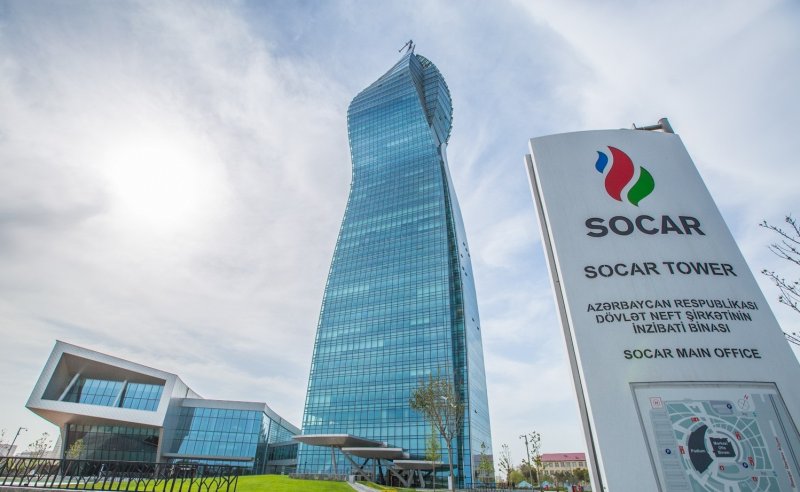 Source: SOCAR
The Heydar Aliyev Oil Refinery was commissioned in 1961. According to previous media reports, the operational lifespan of a refinery typically does not exceed 40 years. In the 2000s, a British company that assessed the facility reportedly concluded that it could not be fully restored. The lengthy modernisation process is believed to be linked to technical challenges. In practice, the refinery is being rebuilt almost from scratch. In 2025, dismantling began on equipment that had already been taken out of operation. Experts say that once modernisation is complete, the refinery will be able to operate for another 25 years.
Modernisation of the Heydar Aliyev Oil Refinery is still ongoing. Last year, 461.5 million manats were allocated from the state budget for the project.
It is now clear that relocating oil refining facilities outside the capital is no longer under consideration. Once modernised, the Heydar Aliyev Oil Refinery is expected to meet the highest technological, environmental and production standards, eliminating any need to move the facility beyond Baku’s boundaries.
Economic analyst Ilham Shaban noted on Facebook that in May 2008 the president instructed the government to resolve the issue of relocating Baku’s two refineries and constructing a new integrated refining complex. The government assigned the task to SOCAR, which prepared a large-scale project planned for a site located five kilometres southwest of the Sangachal Terminal.
However, despite several revisions, the project was never approved. In 2015, a decision was made instead to modernise the Heydar Aliyev Oil Refinery. At the time, completion was scheduled for 2019, and decommissioning of the refinery on 8 November Avenue was expected to begin at the end of 2018. The work was subsequently delayed, and full modernisation is now expected to be completed in 2027.
According to Shaban, the announcement of a new refinery only in June 2026 means Azerbaijan may have to continue importing high-octane petrol until around 2032.
SOCAR cited the decline in oil prices as the official reason for shelving the original project in 2015.
A review of reports from previous years provides additional context. During the period of peak oil production, experts argued that Azerbaijan had little need for a new refinery, as exporting crude oil generated higher revenues. More recently, the issue was viewed through the lens of global decarbonisation policies. As the world moved away from fossil fuels, investing billions of dollars in a new refinery appeared increasingly difficult to justify. However, shifting trends in global energy markets have pushed the green agenda somewhat into the background, while fossil fuels have regained importance. This likely explains why plans for a new refining complex have returned to the agenda.
Following Jabbarov’s announcement, many have questioned why Azerbaijan needs a second refinery at a time when its oil reserves are declining.
The economy minister addressed the issue in his interview. He acknowledged that Azerbaijan passed its oil production peak in 2010, when output reached 51 million tonnes. Last year, production stood at 27.7 million tonnes, nearly half that level. Nevertheless, Azerbaijan still possesses substantial oil and gas reserves, Jabbarov said.
He pointed to a number of projects expected to support future production, including deep gas development at the Azeri-Chirag-Gunashli field, full-scale development of the Absheron field, production at the Babek field, the second phase of development at the Umid field, the development of resources under the Bahar and Gum Deniz projects, and the Karabakh project.
These projects will help ensure that Azerbaijan remains a reliable producer and exporter of oil and gas for many years to come.
It is also worth noting that many countries operate multiple refineries despite having little or no domestic oil production.
Türkiye provides a notable example. Azerbaijani oil is processed at Turkish refineries, including the SOCAR-owned STAR Refinery, the country’s first petrochemically integrated refinery. The facility meets up to 20% of Türkiye’s demand for petroleum products. The country's largest refining company, Tüpraş, operates four refineries that process millions of tonnes of crude oil imported from various countries.
France, meanwhile, operates five major refineries owned by companies including TotalEnergies, ExxonMobil and Petroineos.
Even Switzerland, which has no significant oil reserves, operates the Cressier Refinery, which supplies petroleum products to parts of Central Europe using crude oil delivered through international pipeline networks.
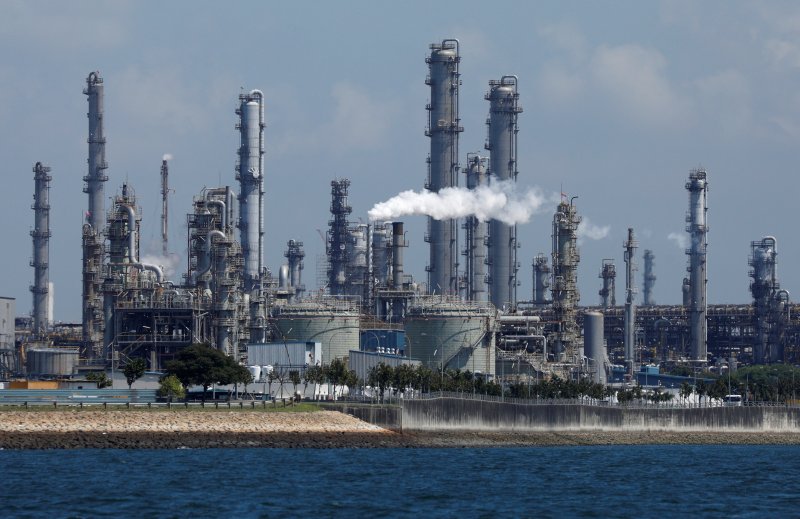 Source: Reuters
Singapore is one of the world's leading oil refining hubs, with total capacity exceeding 1.5 million barrels per day. Major ExxonMobil and Shell facilities process crude oil imported from the Middle East, despite the city-state having no oil production of its own.
Pakistan also operates several major refineries, including Pak-Arab Refinery Limited and National Refinery Limited, processing crude oil imported by sea.
Azerbaijan’s neighbours are also investing in refining capacity. In February 2026, US industrial conglomerate Honeywell International and Black Sea Petroleum signed an agreement to build an oil refinery in the Georgian Black Sea settlement of Kulevi. The facility is expected to produce aviation fuel, petrol, diesel and marine fuel meeting international standards.
For an oil- and gas-producing country such as Azerbaijan, the need to develop modern refining capacity and export higher value-added products rather than raw materials has long been evident. Why should Azerbaijani oil be refined abroad? Why should the country import expensive fuel products when it has the resources and capability to produce them domestically?
In that sense, the decline in oil production may strengthen rather than weaken the case for building a new refinery. Better late than never.
By Tural Heybatov


Similar news