Macron talks peace, but arms Armenia


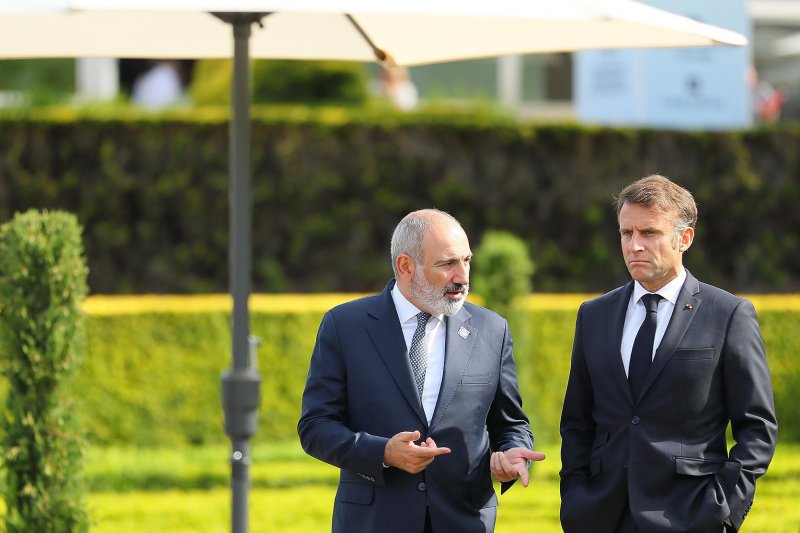
The South Caucasus is going through one of the most sensitive political periods in recent decades. After Azerbaijan restored its sovereignty over Karabakh, the region was presented with a historic opportunity to move from the logic of war to the logic of peace, from closed borders to open communications, and from mutual claims to legally established interstate relations. Yet at precisely this moment, France under President Emmanuel Macron is increasingly turning the Armenian track into an instrument of its own geopolitical game.
Paris presents its policy as support for Armenia’s sovereignty, democracy and security. But the facts point to a different reality: France is not limiting itself to diplomatic statements or humanitarian initiatives. It is systematically expanding military-political cooperation with Yerevan, supplying and promising to supply weapons, strengthening Armenia’s defence infrastructure and thereby objectively undermining trust in the peace process between Baku and Yerevan.
The most alarming element of this policy has been French arms supplies to Armenia. As early as autumn 2023, France agreed to new contracts for the delivery of military equipment to Yerevan. In November of the same year, Azerbaijan openly warned about the consequences: President Ilham Aliyev said that France, by arming Armenia, was effectively creating conditions for a new war in the South Caucasus. Reuters reported at the time that Baku viewed France’s approach as a destabilising factor in the region.
RECOMMENDED STORIES
This is not about abstract “security support”, but about specific military supplies. In November 2023, reports emerged about the transfer of French Bastion armoured vehicles to Armenia. According to Civil Georgia, these armoured vehicles had originally been intended for Ukraine but were later sent to Armenia. The same reports noted that France had sold Armenia three Ground Master 200 radars produced by Thales and had signed a memorandum on the possible supply of Mistral air defence systems.
French military support later became even more substantial. In June 2024, France signed a contract to sell CAESAR self-propelled howitzers to Armenia. The announcement was made by French Defence Minister Sébastien Lecornu after a meeting with his Armenian counterpart, Suren Papikyan. Reuters noted that the deal was part of Armenia’s deepening military ties with Western suppliers amid Yerevan’s growing distance from Russia.
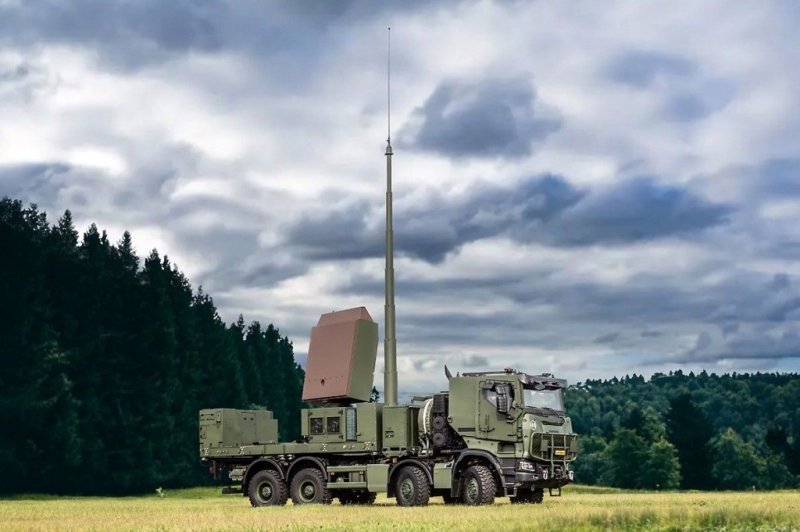
The CAESAR system is not symbolic equipment or a tool of a policing nature. It is a modern artillery system capable of significantly strengthening an army’s firepower. Therefore, in the context of an unfinished peace process, its supply to one side of a former conflict is inevitably perceived as a step that alters the military-political balance and creates additional risks.
Notably, the announcement of the CAESAR deal immediately triggered a new diplomatic crisis. Hikmet Hajiyev, Assistant to the President of Azerbaijan, described France’s policy towards the South Caucasus as harmful and said it was damaging the normalisation process between Azerbaijan and Armenia. Reuters noted that this happened at a time when Baku and Yerevan were trying to move towards a peace agreement.
Therefore, the problem is not only the volume of equipment being transferred. The problem lies in the political signal. When one of Europe’s leading powers, with an openly pro-Armenian position, begins arming Armenia in the post-conflict period, this cannot be perceived as a neutral contribution to security. It is seen as encouragement of revanchist expectations and as an attempt to provide Yerevan with external military backing.
France could have played a constructive role if it had supported direct dialogue between Baku and Yerevan, the early signing of a peace treaty, border delimitation and the opening of regional communications. Instead, Paris has chosen a different path. It is effectively betting on Armenia’s military strengthening while trying to establish itself in the South Caucasus as a separate centre of influence.
This line became even clearer after the signing of the joint declaration on strategic partnership between France and Armenia in May 2026. The document was adopted following Emmanuel Macron’s state visit to Armenia. In it, the two sides recorded their intention to develop cooperation in security and defence, including military-technical and defence-industrial cooperation.
This means that the deliveries of Bastion armoured vehicles, Ground Master 200 radars, the memorandum on Mistral systems and the CAESAR contract are not isolated episodes. They are part of a broader French strategy to turn Armenia into its key security partner in the South Caucasus. But such a strategy inevitably comes into conflict with the interests of regional peace.
What makes this policy particularly dangerous is that it creates an illusion among parts of Armenia’s political class that external military support can replace difficult political decisions. Peace with Azerbaijan requires from Yerevan not new weapons, but a clear rejection of territorial claims, readiness for final normalisation, recognition of the new realities and progress on the issue of communications. If external players send Armenia the message that its security can be built through new arms contracts and external guarantees, this objectively weakens incentives for compromise.
France’s approach is also dangerous because it turns the South Caucasus into an arena of rivalry between external powers. After Russia’s position in Armenia weakened, Paris is trying to occupy the vacant space. But replacing one external dependency with another does not make the region more stable. On the contrary, it creates a new configuration of competition in which Armenia risks becoming not an independent actor for peace, but an instrument of geopolitical rivalry.
Macron publicly speaks about supporting peace and open borders in the Caucasus. Yet his actions produce the opposite effect. France is arming one side, strengthening its defence capabilities, formalising a military-technical partnership and, at the same time, trying to exert political influence on Armenia’s domestic agenda. During his visit to Yerevan in May 2026, Macron effectively supported Nikol Pashinyan’s pro-European course ahead of the parliamentary elections. The Guardian described this as the French president backing the Armenian prime minister.
Thus, Paris is operating simultaneously on several tracks: political, diplomatic, military and informational. This is no longer the position of an external partner interested in stability. It is active intervention in the regional balance.
After the 2026 parliamentary elections, Armenia gained an opportunity to continue moving towards peace. Reuters reported that Pashinyan’s party won the election, while the Armenian prime minister linked his political course to regional cooperation and the peace agenda. However, key issues, including constitutional changes and the final removal of obstacles to a peace treaty, remain complex and politically sensitive.
That is why the external militarisation of Armenia is especially dangerous at this stage. If Yerevan truly wants peace, it needs political will, not new artillery systems. If France truly wants stability, it should support the swift conclusion of a peace agreement between Azerbaijan and Armenia, not the military strengthening of one side.
Paris, however, is acting differently. First came the Bastion armoured vehicles, then the Ground Master 200 radars, then the memorandum on Mistral air defence systems, then the CAESAR contract, and finally a strategic partnership with a defence component. Taken together, this looks like a consistent policy aimed at France’s military entrenchment in Armenia.
For Azerbaijan, such a policy cannot be considered neutral. Baku sees that a country which for years has demonstrated one-sided political sympathy towards Armenia is now moving towards the practical military strengthening of Yerevan. This inevitably reduces trust in France as a possible participant in any peace initiatives and confirms that Paris has long since lost the role of an impartial external actor.
The main threat posed by French policy is that it may push the region back towards the logic of military balance instead of the logic of a peace treaty. The South Caucasus has already gone through decades of war, occupation, displacement, closed borders and disrupted communications. Today, the region has a chance to escape this historical trap. But for that to happen, external actors must help secure peace, not arm one side.
France has the right to develop relations with Armenia. But when these relations acquire an explicitly military-political character, they cease to be ordinary bilateral cooperation. In a post-conflict environment, such steps become a risk factor. They deepen mistrust, create fertile ground for revanchist sentiments and may complicate the signing of a final peace agreement.
The South Caucasus today needs de-escalation, not militarisation. It needs regional responsibility, not new lines of external influence. It needs practical support for direct dialogue between Baku and Yerevan, not Macron’s symbolic gestures in Yerevan. Any policy that moves the parties away from this logic is destructive.
If France is truly interested in peace, it should abandon its policy of arming Armenia and support normalisation without double standards. Otherwise, Paris will be seen not as a defender of stability, but as an external player that, under attractive slogans about democracy and security, is creating new threats to the South Caucasus peace agenda.
By Tural Heybatov


Similar news