The U.S.-Russia dialogue: A fragile balancing act


Editor's note: Dmitry Solonnikov is a director of the Institute of Contemporary State Development, Russian political scientist. The article expresses the personal opinion of the author and may not coincide with the view of News.Az.
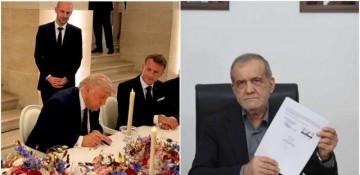
The recent phone conversation between Russian President Vladimir Putin and U.S. President Donald Trump lasted nearly two and a half hours, but much of its content remains undisclosed. The official statements from both sides offered only vague outlines of the discussion, reinforcing the idea that the most significant issues remain behind closed doors. This secrecy suggests that the talks touched on critical geopolitical matters, which, for now, are not meant for public scrutiny. The aftermath of the call speaks volumes. Trump abruptly canceled a scheduled press briefing, while the Kremlin issued only reserved remarks, emphasizing positive details—such as an oddly placed mention of a hockey match. This indicates that the negotiations are ongoing, with no clear resolution in sight. As expected, both Washington and Moscow described the conversation as "productive," though this diplomatic nicety does not rule out future escalations, including the imposition of additional sanctions.
Europe’s waning influence
One of the most telling aspects of these talks is the diminished role of Europe in U.S.-Russia relations. Despite European leaders’ attempts to assert their relevance, their voices remain largely ignored. Moscow appears indifferent to their commentary, while Washington treats them with restrained acknowledgment at best. Yet, the U.S. has hinted that Europe will eventually need to play a role in implementing future agreements—though under American terms. This is yet another signal of Europe’s declining agency in global affairs. A discussion on Black Sea navigation rights also made its way into the conversation, though it appears to have been more symbolic than substantive. Despite political rhetoric, maritime operations continue largely unhindered, with NATO ships routinely entering the Black Sea and Türkiye, Bulgaria, and Romania facing no significant restrictions.
The limits of military restraint
A critical point of discussion was Ukraine’s energy infrastructure, a target of Russian precision strikes since the start of the war. Moscow has carefully avoided total destruction, limiting attacks to transformers and power lines, ensuring only temporary blackouts rather than full-scale devastation. The call likely solidified an understanding that this calculated approach will persist. Interestingly, the conversation also touched on the possibility of a hockey match between Russian and American teams. While sports diplomacy has historically played a role in thawing tensions—think of the 1972 Canada-USSR Summit Series—such an initiative feels detached from reality amid the ongoing war in Ukraine. If anything, it underscores the lack of substantive breakthroughs in U.S.-Russia relations.
The myth of halting military aid to Ukraine
The idea that the West might cut off military assistance to Ukraine is, for now, unrealistic. European officials continue to insist that arms deliveries will not be halted under any circumstances. Even if a temporary pause were implemented—say, for 30 days—alternative supply routes would likely emerge. Instead of direct shipments of weapons, Ukraine could receive critical components, spare parts, and logistical support. Local defense industries could also ramp up production, ensuring a steady supply of military equipment without direct Western intervention. Moreover, Europe has the capability to stockpile weapons on its own soil, ready for rapid transfer should the situation demand it. A temporary suspension, therefore, would be little more than a strategic delay rather than a genuine shift in policy. This tactic is not new—it has been employed before, and it will be used again if necessary.
Who can guarantee a ceasefire?
One of the biggest challenges in any future peace negotiations will be ensuring that both sides adhere to agreed terms. History suggests that such guarantees are virtually impossible to enforce. The broken ceasefires between Israel and Hamas, despite U.S. mediation, serve as a recent example of how agreements can collapse overnight. Even in conflicts where one side is heavily reliant on an external guarantor—as Israel is on the U.S.—peace deals remain fragile. With Ukraine, the challenge is even greater. Moscow is acutely aware that Kyiv might break any agreement the moment it becomes politically expedient. International observers are unlikely to be effective, as demonstrated by past cases where OSCE representatives allegedly provided intelligence to Ukrainian forces. Given this precedent, Russia has little reason to trust external monitoring mechanisms. The reality is that no ceasefire agreement can be enforced with absolute certainty. The ongoing tensions between Armenia and Azerbaijan illustrate this point well—despite the presence of European observers, border clashes continue. In the case of Ukraine, a monitoring force would likely be viewed with skepticism by both sides, making its effectiveness highly questionable.
Competing visions for the future
The future of U.S.-Russia relations remains deeply uncertain, shaped by competing visions of the global order. The Western-led liberal internationalist model—where supranational institutions dictate global rules—faces increasing resistance. While its proponents still hold sway in Europe and North America, their influence is waning as alternative power centers emerge. President Trump, should he return to office, appears to favor a different model—one in which the U.S. acts as the sole arbiter of international affairs, dictating terms to allies and adversaries alike. This "Pax Americana" approach would seek to reestablish U.S. dominance but could lead to deeper geopolitical fractures. On the other side of this debate is the multipolar world vision advocated by Russia. This model envisions multiple centers of power, each with its own sphere of influence and governance structures. Rather than a single set of rules dictated by Washington, it promotes a more fragmented but arguably more balanced global order. The battle between these competing frameworks is ongoing, with no clear resolution in sight. The U.S. continues to leverage economic sanctions and political pressure to maintain its primacy, while Russia and other emerging powers push back against the remnants of the unipolar era.
A world in transition
The takeaway from the latest U.S.-Russia talks is that both sides recognize the need to manage their rivalry but remain far from reaching any meaningful consensus. Their competing visions for the world order are fundamentally at odds, and neither side appears willing to compromise. What is clear, however, is that outright confrontation is in neither country's interest. With global instability rising and economic uncertainty deepening, both Washington and Moscow have incentives to avoid escalation. The question remains whether they can find a path to coexistence—or whether the world is heading toward an era of even deeper division.
(If you possess specialized knowledge and wish to contribute, please reach out to us at opinions@news.az).


Similar news