The world is forgetting the fear of nuclear war


Editor's note: Vladimir Bekish is a Russian military-political analyst and an expert in strategic security, with specialization in the Middle East and Africa. The article expresses the personal opinion of the author and may not coincide with the views of News.Az.
The world today speaks with increasing frequency and anxiety about nuclear weapons and the possibility of nuclear war. These conversations are not limited to the apocalyptic specter of a Third World War but to something perhaps even more dangerous — a war that includes the actual use of nuclear strikes. For decades, no country has dared to resume nuclear testing. That restraint has been seen as a sign of collective understanding: all nuclear powers recognize the catastrophic consequences that testing, let alone the use of such weapons, would bring — not only to humanity but to their own political stability and survival.
And yet, two opposing realities are emerging. On the one hand, the absence of tests symbolizes prudence and self-preservation. On the other, it raises a practical and uncomfortable question: how reliable are weapons that have not been tested in decades?
Imagine you possess a nuclear arsenal meant to guarantee your country’s defense — the ultimate insurance policy against destruction. You know that, under certain extreme circumstances, you may have to use it. But can you be absolutely sure it will work? Technology degrades, components age, and even the most sophisticated systems can fail without testing. And what if, when that critical moment comes, the weapon fails to detonate? What if your deterrent, on which your entire strategic posture is built, turns out to be a hollow threat? That would not just be a military failure — it would be the collapse of your entire national strategy.
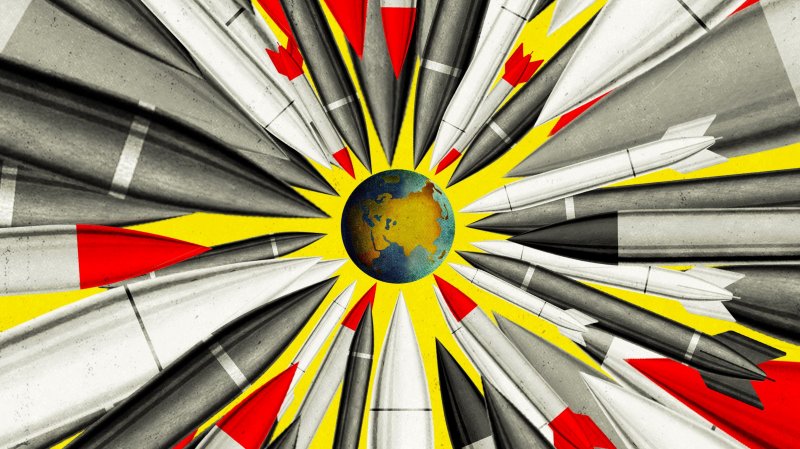 Image: Shutterstock
That is why some nations, quietly and logically, may be tempted to test their nuclear weapons again. They may see testing not as aggression, but as verification — a way to ensure that their security doctrine still rests on something real. This reasoning, in itself, poses a grave danger to the world, because every such test weakens the already fragile psychological barrier that has prevented nuclear escalation for decades.
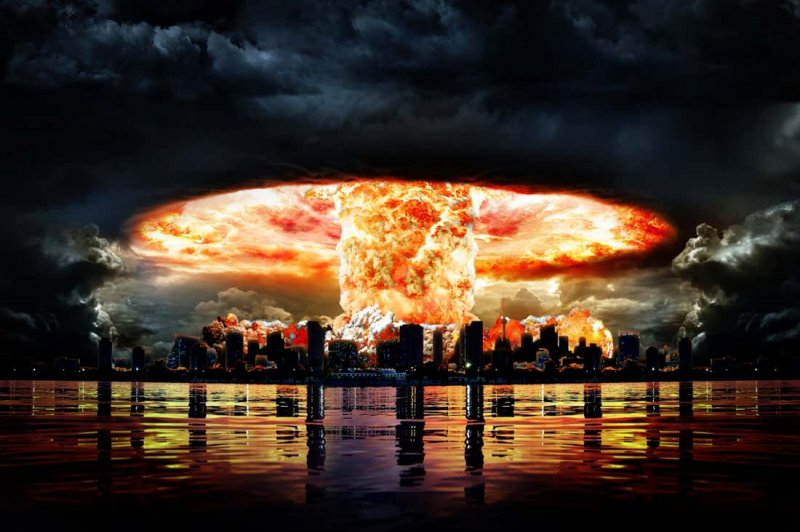
There is another, less technical but equally dangerous factor. The world has changed profoundly since the 1940s and 1950s, when images of mushroom clouds and radiation scars were seared into collective memory. New generations have grown up far removed from the reality of Hiroshima and Nagasaki. They have never seen, even on television, the horror of open-air nuclear tests that shook deserts and islands. The world’s sense of fear — its visceral understanding of what “nuclear explosion” means — has eroded.
Technological progress has also created a dangerous illusion: that humanity could somehow “manage” a nuclear event. Today’s societies believe in their own resilience, in bunkers, filters, warning systems, and advanced medicine. The idea of surviving a nuclear blast — even if absurd — has become part of popular culture. “Yes, there might be an explosion,” some imagine, “but we will hide, rebuild, and move on.” That psychological shift — the normalization of the unthinkable — is perhaps more perilous than any technical advancement.
Among today’s major powers, it is Russia that most often speaks openly about its nuclear capability and its readiness to use “all available means.” This language is not new, but in the current geopolitical environment it resonates differently. Russia’s updated nuclear doctrine, combined with the rhetoric of its political and military elites, has made the nuclear question part of mainstream political discourse again. The danger is not just in the words, but in the perception that these are not mere threats — that they could, under certain conditions, translate into action.
At the same time, the evolving transatlantic relationship adds a new layer of instability. Europe remains dependent on the United States for its ultimate security guarantee. Yet Washington’s political climate is shifting. Under the “America First” logic championed by Donald Trump, NATO commitments are seen through the lens of U.S. self-interest. Trump’s stance can be summarized bluntly: “America will defend its allies, but only insofar as it does not endanger America itself.”
In practice, that means that if the U.S. were struck by nuclear weapons, there would be retaliation without hesitation. But if a nuclear strike targeted a European ally — Germany, for instance — would Washington risk a counterstrike that could bring nuclear war to American soil? The answer, many suspect, is no. And that suspicion, however theoretical, could prove decisive in Moscow’s calculations.
If Russia concludes that the United States would not respond with full nuclear force to an attack on Europe, it could interpret that as a green light — a chance to deliver a limited, demonstrative strike aimed at breaking Western unity and forcing political concessions.
Let us imagine such a scenario. Russia, in the midst of escalating conflict, decides to strike a single European capital — say, Berlin — with one 200-kiloton nuclear warhead. The result would be almost beyond comprehension: total destruction within a radius of 10 kilometers; fires and shockwaves devastating everything for tens of kilometers beyond; energy systems, communications, and hospitals annihilated. Within minutes, six to eight million people could die, most instantly, others in the following weeks from radiation, burns, and hunger. A country once defined by order and industry would collapse into chaos.
Now imagine NATO’s response. To preserve credibility, it cannot remain silent. Britain or France might respond with a comparable strike on Moscow. The destruction there would be similar: millions dead, a city in ruins, radioactive contamination spreading across the heart of Russia.
And yet, Russia’s historical narrative of endurance — its deeply ingrained belief in survival through suffering — might transform this catastrophe into something else. The response might not be surrender but defiance: “We have lost millions before and rebuilt. We can lose Moscow, but Russia lives.” That mindset, shaped by centuries of wars, famines, and revolutions, is a crucial but often misunderstood part of Russia’s strategic culture.
I remember something that captures this psychology vividly. Decades ago, as a student at the Moscow Institute of Physics and Technology, I entered a government program that included military training at a leading academy in Leningrad. Around that time, a major power outage hit the United States, leaving parts of New York in darkness for just a few hours. The news described chaos — traffic lights failed, elevators stalled, and panic spread.
During one of our first lectures, a general addressing our group referred to that blackout. “Look at them,” he said. “A few hours without electricity, and they panic. Heart attacks in elevators, confusion in the streets. But we Russians? We can live for months without baths or clean water. We don’t panic. We endure.”
That statement stayed with me. It wasn’t mere bravado — it was an expression of a cultural truth: that hardship is not an exception in Russian life, but part of its identity. And that, in the nuclear age, is a terrifying form of strength.
This contrast — between societies that fear collapse and those that consider it survivable — may one day determine how leaders calculate the risk of escalation. The West’s deterrence model rests on rational fear: that no one would dare to start a nuclear war because everyone would lose. But deterrence works only if all sides share the same sense of what “loss” means.
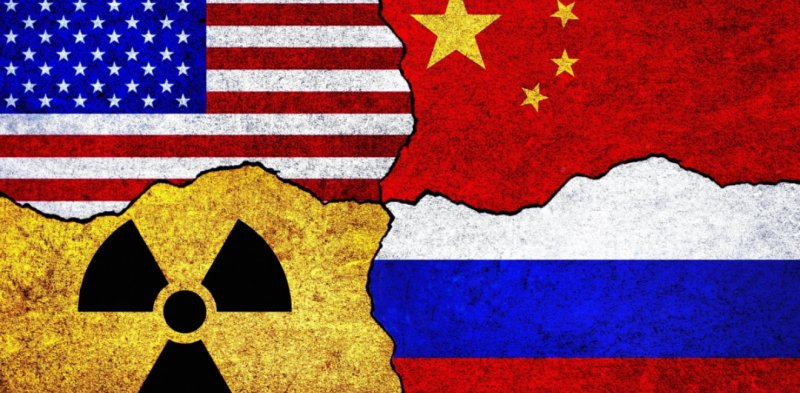 Image: Shutterstock
The tragedy is that the further we move from the memory of Hiroshima, the weaker that shared understanding becomes. The images fade; the horror becomes history, then abstraction, then strategy. The very success of nuclear deterrence — its decades-long ability to prevent war — has dulled the world’s collective imagination about what nuclear war actually is.
And so we drift closer to a world where the taboo is eroded, where nuclear testing resumes under the guise of “modernization,” where political leaders talk casually about “limited strikes” and “controlled escalation.” The risk is not that someone plans Armageddon, but that someone convinces themselves it can be contained.
The greatest danger today is not technology or even geopolitics — it is amnesia. The world is forgetting what it means to fear nuclear war. We are losing the sense of horror that once restrained the powerful from pressing the button.
It is good that nuclear weapons have not been used again since 1945. But good fortune is not the same as safety. The longer peace lasts, the easier it becomes to believe that it will last forever — until one day, someone decides to test that belief.
(If you possess specialized knowledge and wish to contribute, please reach out to us at opinions@news.az).


Similar news