Turkey on the verge of creating an International Gas Hub


By Sabina Alizade
Turkey is at a crucial stage in implementing an ambitious energy strategy aimed at establishing an international gas hub on its territory. Alparslan Bayraktar, the head of the Turkish Ministry of Energy, recently announced that the country is close to achieving this goal, emphasizing the existing infrastructure and significant steps taken in this direction. The successful implementation of this project has the potential to significantly reshape the energy landscape of Europe and Asia.The creation of a gas hub in Turkey will not only enhance the energy infrastructure but also transform the country into a strategic center for gas pricing in the region. The project aims to increase gas imports to 70-80 billion cubic meters, necessitating significant investments in infrastructure and coordination with international partners.
Turkey has already begun negotiations with Bulgaria to expand the interconnector between the two countries, which will be crucial for the successful operation of the hub. This cooperation underscores Turkey's strategic role as a key transport node in the European energy network.
An important milestone in the project's implementation was Russian President Vladimir Putin's proposal in October 2022 to create a gas hub in Turkey to compensate for the lost transit volume through the "Nord Stream" pipeline. This move was part of Russia's broader strategy to strengthen energy cooperation with Turkey. Russian Deputy Prime Minister Alexander Novak stated that the project could start in 2024, indicating a high level of readiness and interest from both sides.
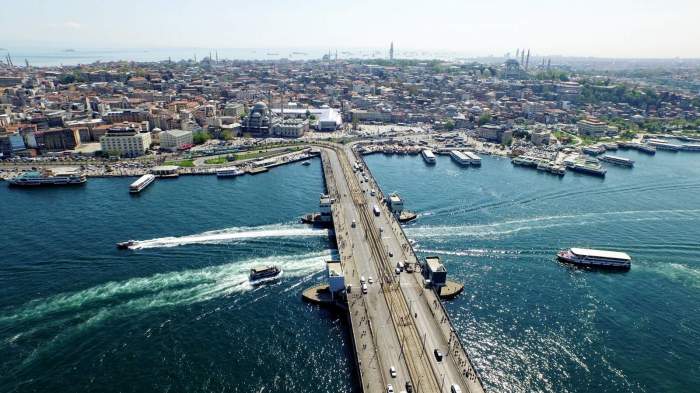
The project involves the participation of the Turkish company BOTAŞ and Russia's Gazprom, highlighting the importance of bilateral cooperation in the energy sector. Bayraktar also mentioned plans to create a financial center in Istanbul as part of the project, further enhancing Turkey's role in the global energy market.
Despite significant progress, the creation of the gas hub faces several challenges. Among them is the security of pipeline infrastructure in the context of current geopolitical tensions. Russia has already enhanced the security of the "Turkish Stream" and "Blue Stream" pipelines and expects Turkey to take similar measures to ensure security on its territory.
Igor Yushkov, an expert from the Financial University and the National Energy Security Fund, noted in an interview with news.az that the idea of the gas hub was more likely proposed by Russia than Turkey. According to him, when discussions of this project began in 2022, Russia needed such a project to depoliticize its gas in Europe.
"The purchase of Russian gas by European companies is not prohibited by any sanctions. However, many European companies avoided it, considering Russian gas 'toxic.' To depoliticize Russian gas, the idea of a gas hub in Turkey was proposed. In this case, European companies could say they are buying gas not from Russia but at the Turkish hub, where different suppliers, including Russia, Iran, Azerbaijan, and LNG suppliers, trade gas. This would make Russian gas anonymous and eliminate its 'toxicity,'" the expert noted.
Yushkov believes that Russia's need for the Turkish gas hub has decreased since Europeans now readily accept Russian gas delivered through Ukraine and the "Turkish Stream."
"In 2024, transit through Ukraine is operating at full capacity, and the 'Turkish Stream' is also operating daily with record volumes. Therefore, Turkey has no additional opportunities for gas trading on the market," Yushkov added.
Furthermore, the expert noted that despite the absence of an official announcement, the Turkish gas hub effectively exists as a point for reselling Russian gas. For example, gas arriving via the "Turkish Stream" is already sold to various traders, mainly Turkish companies, who then resell it to Europe.
Discussing the potential role of Azerbaijan and Iran in the project, Yushkov noted that Azerbaijan's participation in the gas hub is unlikely to be significant as the country is already successfully supplying gas to Europe. Iran, on the other hand, may be interested in participating as it faces difficulties in selling its gas.
Turkey has announced plans to become self-sufficient in gas in the near future through fields discovered in the Black Sea. However, it remains unclear to what extent this will be possible and how it will affect global gas markets.
Thus, despite ambitious plans and significant progress, the Turkish gas hub project continues to face several challenges and uncertainties related to security, investments, and geopolitical factors.


Similar news