Türkiye–Bulgaria gas corridor opens door to alternatives, not more Russian supplies


Editor’s note: Iqor Yushkov is leading analyst of the National Energy Security Fund, expert of the Financial University under the Government of the Russian Federation. The article expresses the personal opinion of the author and may not coincide with the view of News.Az.
Amid Europe’s ongoing efforts to diversify its energy supplies and enhance energy security, the issue of increasing gas transit volumes through Bulgaria is gaining growing importance. This is especially true as Türkiye is becoming a key hub for various gas suppliers — from Russia and Azerbaijan to even Iran. But does this mean Europe will receive more Russian gas? Quite the opposite. In my view, boosting gas transit through Bulgaria by expanding flows between Türkiye and Bulgaria will not lead to a significant increase in Russian gas deliveries.
Why? It all comes down to the limited technical capacity of the gas transmission infrastructure itself. To increase supply, volumes flowing through the TurkStream pipeline would need to be ramped up. However, this route is currently operating at — or even above — its design capacity.
The problem isn't that Russia has unused capacity for additional exports — on the contrary, TurkStream is almost fully loaded. But even if spare capacity were available, there’s a bottleneck further along the route: the system’s limited ability to receive and transport additional volumes.
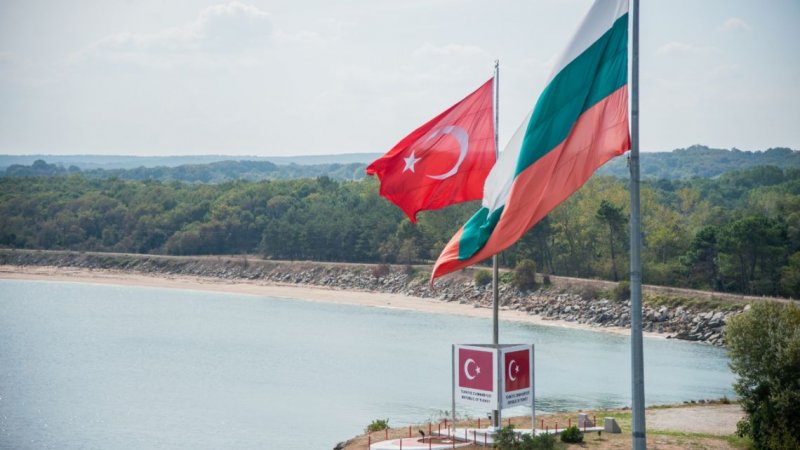 Photo: Getty Images
Today, the volumes that can technically be transported from Türkiye to Bulgaria already exceed the throughput capacity of one European string of TurkStream. This string is designed for 15.75 billion cubic meters per year and is directed toward Europe. It is possible that part of the second string, originally intended for the Turkish market, is currently being used. If Gazprom has increased flows through the Blue Stream pipeline, the freed-up capacity on the second string may have been redirected toward Europe.
In effect, current volumes already surpass the capacity of a single string, and additional Russian gas deliveries are currently not feasible. This has become possible in part due to the modernization of the Trans-Balkan pipeline — once used to deliver gas to Türkiye via Ukraine and Bulgaria. Sections of this pipeline are now operating in reverse mode, allowing gas to flow from Türkiye into Bulgaria.
However, the essence of these changes lies not in strengthening Russia’s position on the European gas market, but rather in creating new routes for the delivery of alternative gas sources.
First and foremost, this refers to Azerbaijani gas. Azerbaijan’s exports are already exceeding contractual commitments. For example, Bulgaria was supposed to receive 1 billion cubic meters annually, but last year it received 2 billion. If Azerbaijan boosts production, its exports could increase even further.
Iranian gas, which could enter the market under the guise of other supplies, should not be ruled out either, nor should the potential for liquefied natural gas (LNG) imports. Türkiye is equipped with LNG terminals capable of regasifying fuel and directing it both to the domestic market and for export.
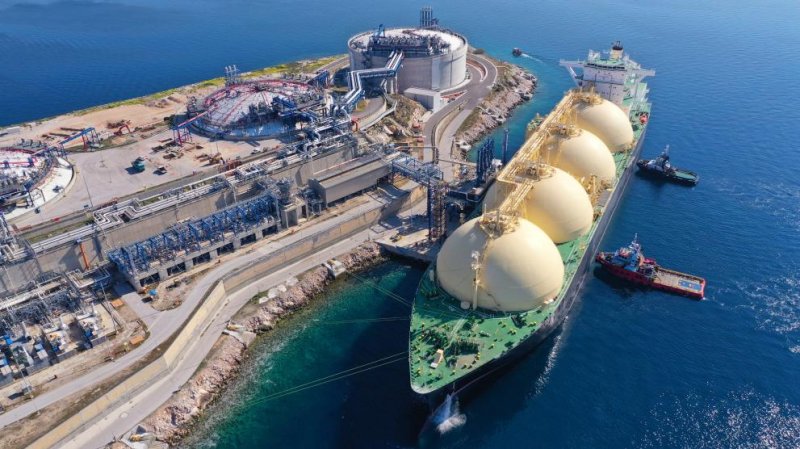 Photo: Adobe Stock
In this context, Moldova and Ukraine also deserve mention. Moldova has completely stopped purchasing gas from Gazprom, and Ukraine has nearly depleted its gas reserves. Both countries are ramping up imports from Europe, adding pressure on existing infrastructure. As a result, European nations are increasingly interested in new routes and supply sources.
In conclusion, expanding the capacity between Türkiye and Bulgaria is not a means to strengthen Russia’s foothold. It is primarily a step toward developing infrastructure for gas deliveries from Azerbaijan, Iran, and in the form of LNG. Europe is seeking flexibility and reliability — and appears to be relying less and less on traditional supply routes.
(If you possess specialized knowledge and wish to contribute, please reach out to us at opinions@news.az).


Similar news