UAE to build solar and wind plants in Azerbaijan


By Sabina Alizade
The recent meeting between Azerbaijan's Minister of Energy Parviz Shahbazov and a delegation from the UAE, led by Chairman of the Masdar Board and Minister of Industry Sultan Ahmed Al Jaber, marked a significant step in the development of green energy in the region. The discussions on onshore and offshore projects, as well as cooperation plans within the framework of COP29, highlight both countries' commitment to transitioning to a sustainable energy future.
However, the insufficient development of network infrastructure poses challenges for integrating additional electricity into the national grid. In this context, the laying of a 1-gigawatt high-voltage transmission cable from the Caspian Sea to the Black Sea and Europe represents a crucial step in overcoming these difficulties and creating a green corridor for renewable energy.
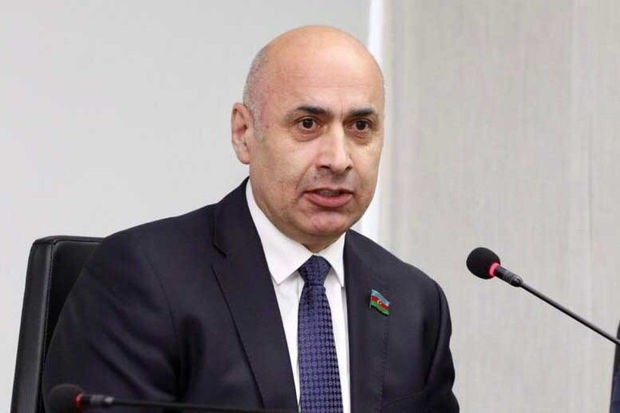
In his commentary for News.Az, economic expert Azer Badamov noted that the creation of solar and wind power plants introduces innovations in the process of electricity production. If previously we used gas and hydropower for electricity generation, now we are harnessing all the opportunities provided by nature.
"Using wind and sunlight, we will produce energy," Badamov explained. "Here arises the question: will the production of renewable energy create difficulties for the national grid? I believe that connecting new production capacities to the national grid will not cause significant difficulties. The only challenge, in my opinion, will be related to forming the export market since the new capacities need to be directed to new markets. In this regard, thanks to our president's foresight, the Green Cable project through the bottom of the Black Sea for exporting our green energy is being implemented. By the time we have additional production capacities, our export route will be ready, and we will be able to enter European markets with our renewable resources," he said.
On the question of prospects for the development of offshore wind energy in Azerbaijan, the expert replied that Azerbaijan's offshore renewable energy potential is estimated at 157 gigawatts. "Of course, this is a significant capacity," Badamov noted. "If earlier the wind bothered us as a natural phenomenon, now we see it as a source of income. High wind activity on land and at sea gives us an advantage in the production of renewable energy. Therefore, I see great prospects in the construction of offshore wind farms," he added.
Badamov also noted that reducing emissions into the atmosphere is a major global challenge. "Azerbaijan will host COP29 this year. The main goal of the conference is to organize coordinated efforts to combat climate change and achieve global solidarity on this issue. This should concern the entire world. Azerbaijan has voluntarily committed to replacing 30% of the electricity produced with renewable energy by 2023 , which will reduce the use of fossil fuels. The state also implements incentive measures to update the vehicle fleet, such as providing incentives for the import of electric vehicles, which increases the interest of importers in these vehicles. We are also modernizing our production capacities, giving preference to environmentally friendly technologies. All these steps are aimed at reducing CO2 emissions into the atmosphere," he said.
Azerbaijan's plans to reduce CO2 emissions by 35% by 2030 and 40% by mid-century underscore its commitment to sustainable development. In this context, the development of offshore wind energy becomes a key factor in achieving these goals. ACWA Power CEO Selim Guven emphasized the importance of utilizing offshore wind resources for the production of green hydrogen and electricity, which can be a strategic decision not only for Azerbaijan but for the entire region.
The Trans-Caspian Energy Corridor , connecting Central Asia and Europe, is a promising project for balancing long-distance energy supply and demand and developing renewable energy sources in the Caspian countries.
Overall, cooperation between Azerbaijan and the UAE in the field of green energy will contribute not only to the production of clean energy but also to the sustainable development of the region and the achievement of global climate goals.


Similar news