U.S. government on edge of shutdown as markets brace for impact


.png)
Editor’s note: Faig Mahmudov is a journalist based in Azerbaijan. The views expressed are the author’s own and do not necessarily reflect those of News.Az.
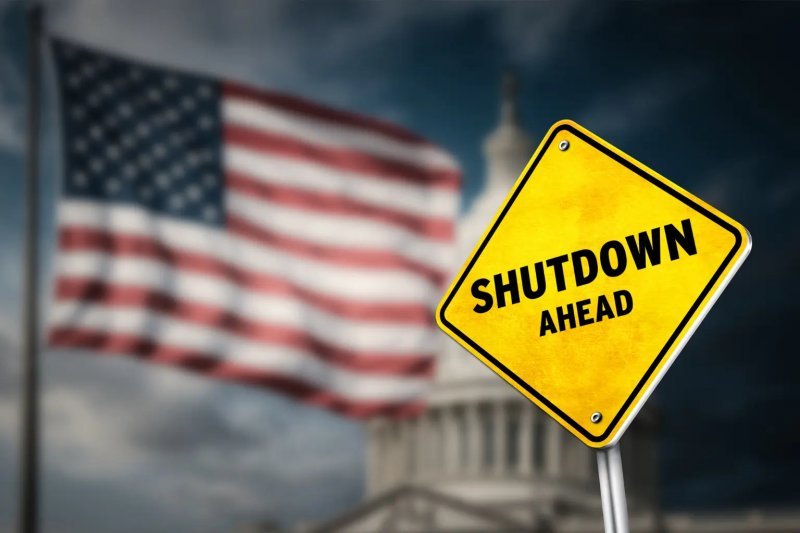
The United States is once again facing the possibility of a government shutdown as Congress struggles to pass a continuing resolution to keep federal agencies funded. With the deadline approaching, the political standoff in Washington has heightened uncertainty both at home and abroad. For observers and investors alike, the central questions are: How realistic is the threat of a shutdown, and what should markets expect if it happens?
A shutdown becomes a risk whenever Congress and the White House fail to agree on spending bills or temporary funding measures. This year, the sticking points are especially sharp. House Republicans are pushing for policy riders, including revisions to health care subsidies, that the Senate and White House strongly oppose. While last-minute deals are common in Washington, the fact that agencies are already activating contingency plans signals that lawmakers themselves see a real possibility of a funding lapse. Aviation authorities, for example, have warned of potential disruptions if air traffic controllers and TSA staff are required to work without pay, while certification and training programs would be suspended.
The odds of at least a short shutdown are high. With partisan divisions unresolved on the eve of the deadline, history suggests a lapse of several days is possible. A same-day compromise cannot be ruled out, as Congress has a long tradition of negotiating until the final hour. But the rhetoric and preparations now underway indicate that this time, the threat is more than just political theater.

Source: ABC News
A shutdown does not equate to a U.S. default. Treasury debt payments continue, and Social Security checks still go out. However, the impact is felt in other areas. Many federal employees face furloughs or work without pay, regulatory agencies like the SEC and CFTC reduce operations, and some key economic data releases are delayed. The effect cascades into markets: IPOs and corporate filings get held up, enforcement actions slow, and industries dependent on federal oversight — from aviation to energy contractors — see operational disruptions.
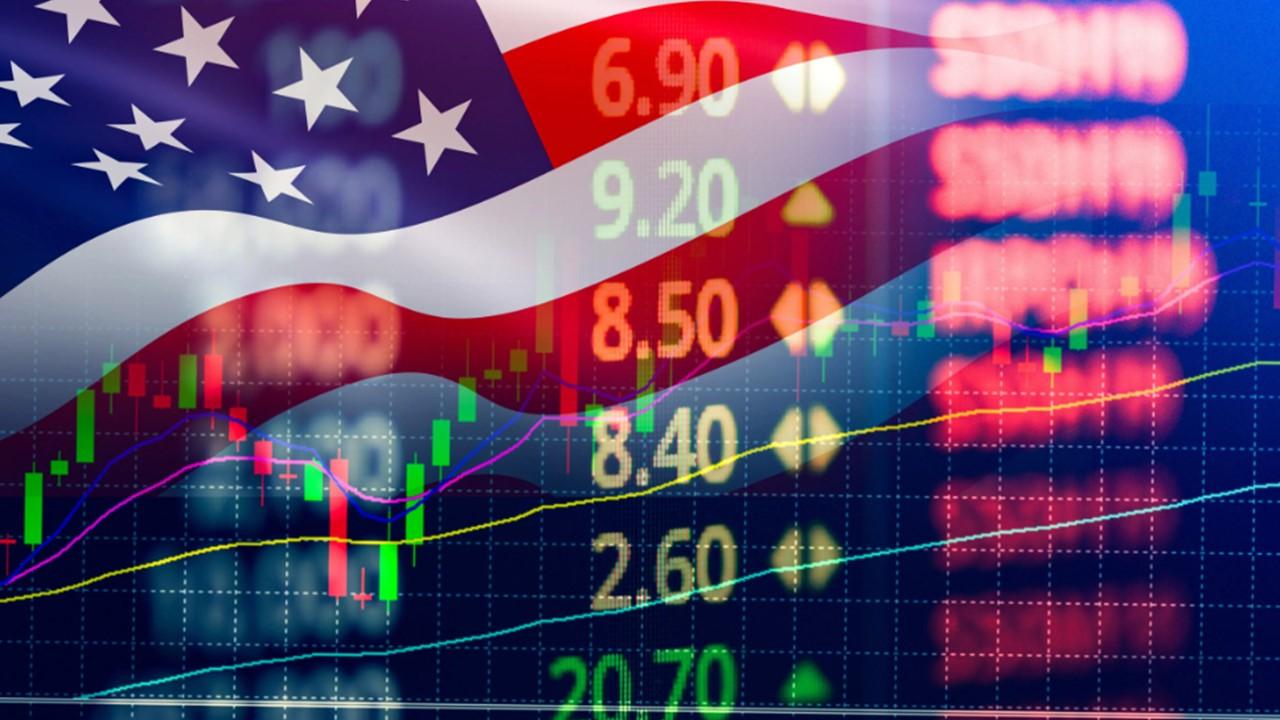
Markets have a long record of weathering shutdowns with limited damage. Since the 1970s, the S&P 500 has delivered roughly flat average returns during shutdown periods. Investors typically sell risk assets at the onset, only to buy back once it becomes clear that the lapse will be resolved. Treasury yields, on the other hand, tend to dip as investors seek safety, while the dollar sometimes strengthens modestly as a short-term safe haven. Economic growth does take a hit, with about 0.1 percentage point shaved off quarterly GDP for each week of shutdown, but much of this activity is recouped later once the government reopens.
For equities, history suggests the impact is short-lived unless the shutdown drags on for several weeks. Large-cap U.S. stocks tend to stabilize quickly, but small caps, which depend more on government contracts and domestic demand, can underperform. Sectors with high federal exposure such as defense contractors, aerospace, and transportation may face delays in awards or approvals, while more defensive industries like utilities, staples, and healthcare often hold up better. Technology and growth stocks are less directly exposed but can suffer from risk-off sentiment in the early stages.
Source: Marketrealist
In the fixed-income market, Treasuries typically benefit from safe-haven flows. The initial reaction is usually a dip in yields, particularly at the 10-year maturity, as investors park cash in government bonds. However, with yields already elevated in 2025 and supply pressures still in focus, the magnitude of this rally may be smaller than in past cycles. Corporate credit spreads can widen modestly as investors demand extra compensation for holding riskier debt, though this effect is usually contained if the shutdown is short.
For the U.S. dollar, shutdowns often trigger a temporary bid as global investors treat the greenback as a safe haven. The dollar may rise against cyclical currencies such as the euro, pound, or emerging-market FX, though gains usually reverse once Washington signals progress. Gold can also see inflows as a hedge against political dysfunction, particularly if the shutdown appears likely to drag on.
In commodities, the effects are indirect. Energy markets may experience noise if data releases are delayed, for example, the Department of Energy’s inventory reports could be disrupted. Agricultural markets could also suffer from delayed USDA crop reports, increasing uncertainty for traders and producers. This lack of government data can add volatility even if fundamentals remain unchanged.
For capital markets activity, a shutdown directly slows the pipeline. The SEC, operating with reduced staff, cannot process IPO filings or corporate registrations at the usual pace. This means companies planning equity or debt offerings may have to delay, which can dent short-term momentum in financial markets. Trading itself continues normally, but news flow and regulatory oversight become more limited, creating uncertainty.

Source: Alpin
Cryptocurrencies and digital assets may see a mixed impact. On the one hand, reduced regulatory oversight temporarily lowers headline risk from enforcement actions. On the other, progress on legislation or rulemaking for the sector halts, leaving investors with more uncertainty about long-term frameworks.
There are factors that make this shutdown cycle riskier than past ones. U.S. interest rates are already elevated in 2025, and financial conditions are tight. This may limit the size of any Treasury rally and increase volatility if growth expectations deteriorate. A blackout of federal data releases complicates the Federal Reserve’s decision-making, leaving markets to rely on private indicators. Regulatory delays could weigh more heavily on capital markets than in the past, especially with a busy IPO calendar. In real economic terms, disruptions in aviation or delays in defense contracting could ripple through affected sectors more quickly if the shutdown is prolonged.
Key risk markers include the mechanics of any House and Senate votes, agency guidance on furloughs and operational cuts, delays to major economic reports, and real-time market reactions. Investors should watch for moves in Treasury futures, volatility indexes, and relative underperformance of small caps, all of which have historically served as market “footprints” during shutdown periods.
While a U.S. government shutdown is not the same as a debt default, it remains a disruptive political event that can create turbulence for markets. The likelihood of at least a brief shutdown is high given current conditions, and while markets often treat such episodes as short-lived noise, the elevated rate environment, data blackout risks, and regulatory bottlenecks in 2025 suggest that this round may carry more significant consequences than usual. For investors, the watchwords are patience and selectivity: expect volatility, but also expect that Washington’s standoff will eventually resolve just as it always has in the past.
(If you possess specialized knowledge and wish to contribute, please reach out to us at opinions@news.az).


Similar news