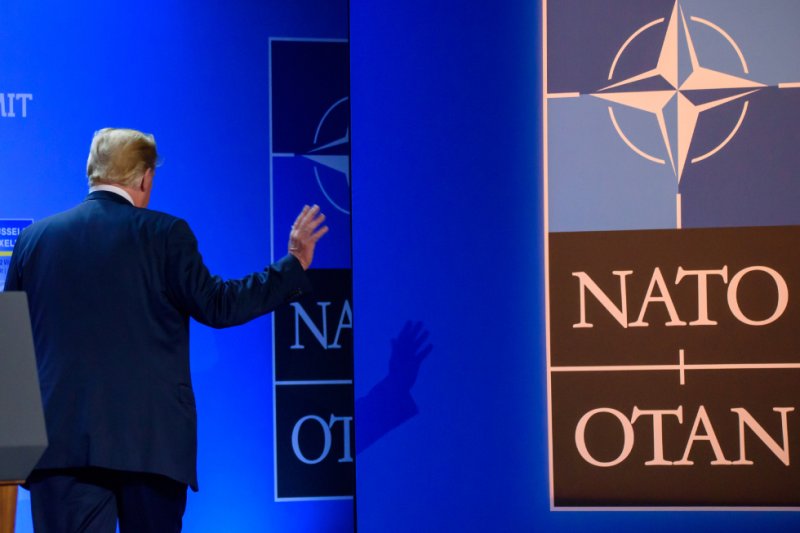
For decades, the idea of the United States withdrawing from NATO was dismissed as political fantasy — an abstract scenario used mostly by academics and think-tank analysts. Yet the steady rise of isolationist sentiment in Washington, the growing divide in American politics, and increasing fatigue with global commitments have pushed this conversation from the margins into the mainstream. If the U.S. were to formally leave NATO, the world would face the most profound geopolitical shock since the end of the Cold War. The consequences would be far-reaching, destabilizing, and irreversible.
The first impact would be psychological and political. NATO’s collective defense guarantee — Article 5 — has always rested not on the symbolic unity of its members, but on the unparalleled military power of the United States. No European state, whether individually or collectively, possesses the strategic, nuclear, logistical, or intelligence capabilities that the U.S. brings to the Alliance. The moment Washington announces its departure, the entire foundation of European security collapses. Allies from Tallinn to Berlin would immediately understand that the security environment in Europe has changed forever.
Panic would spread most quickly across Eastern Europe. Poland, the Baltic states, Romania, and others have built their security almost entirely on U.S. protection, viewing Russia as a persistent and unavoidable threat. Without American guarantees, these countries would have to confront the frightening reality of defending themselves with far fewer resources and far less deterrence. Their response would be immediate: calls for accelerated militarization, demands for new security pacts, and urgent efforts to bring the United Kingdom or regional powers into new security arrangements.
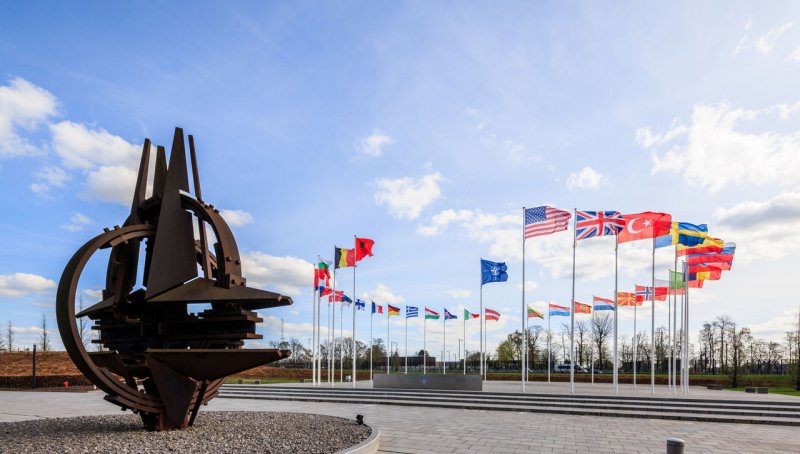 Photo: Getty Images
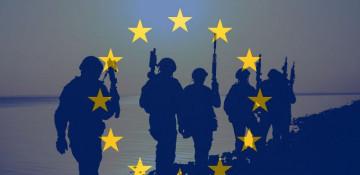
The internal fragmentation of Europe would deepen dramatically. The European Union already contains two competing schools of security thinking: the “continental” vision of Germany, France, and Italy, which prefers diplomacy and gradual military development, and the “front-line” approach of Poland, the Baltics, and the Nordic states, which prioritizes hard power and credible deterrence. A U.S. withdrawal would widen this divide into an unbridgeable rift. Eastern European countries would push for a tougher, more militarized posture, while Western Europe would be consumed by debates over how to avoid a direct confrontation with Russia in a world without the American umbrella.
In this chaos, the United Kingdom would rise as a natural alternative. London, outside the EU yet possessing nuclear weapons, a robust military, and a strategic worldview, would attempt to form new regional coalitions. A “Northern Alliance” of the UK, the Baltic states, Poland, and Scandinavia could emerge far more quickly than any EU-led defense structure. This would fundamentally reshape Europe’s internal balance of power, weakening Brussels and empowering states that were once considered peripheral.
Meanwhile, NATO would continue to exist on paper but collapse as an effective military alliance. The institutional deficit created by the departure of the United States would be enormous. American officers currently lead or hold critical roles across NATO’s command structure. U.S. intelligence provides most of NATO’s situational awareness. American logistics and airlift capacity make joint operations possible. Washington supplies key elements of missile defense, cyber defense, nuclear deterrence, and strategic planning. Removing this infrastructure would leave NATO hollowed out, forcing the remaining members to redesign the Alliance almost from scratch.
 Photo: Getty Images
This structural collapse would create a vacuum of power, and Moscow would immediately notice. Russia has long viewed NATO as its main geopolitical adversary, primarily because of Washington’s role. A NATO without the U.S. is, from the Kremlin’s perspective, no longer a strategic counterweight. Moscow would interpret America’s departure as proof that Western unity is broken and that Europe is entering a prolonged period of confusion. This perception, accurate or not, would embolden Russian foreign policy, increasing pressure on neighboring states and encouraging Moscow to seek political, economic, or even military gains.
But with this opportunity comes danger. The collapse of deterrence increases the likelihood of miscalculations. With Europe divided and NATO weakened, Moscow might overestimate its own capabilities or underestimate the willingness of certain European states to respond. History shows that wars often begin not from strength but from misjudgment. A fragmented European security landscape could easily produce such errors.
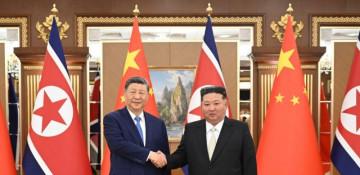
The global consequences would be equally dramatic. China would view a U.S. withdrawal from NATO as confirmation that America is no longer a reliable guarantor of international stability. Beijing would use this narrative to deepen its influence in the Global South, arguing that countries can no longer depend on Washington for long-term security. In Asia, U.S. allies such as Japan, South Korea, and the Philippines would face unprecedented uncertainty. If the U.S. can step away from NATO, what prevents it from reconsidering its commitments in the Pacific? At the same time, Washington, no longer tied to major obligations in Europe, would likely shift nearly all its strategic resources toward countering China in the Indo-Pacific. But this would transform the U.S. from a global leader into a regional power focused primarily on its rivalry with Beijing.
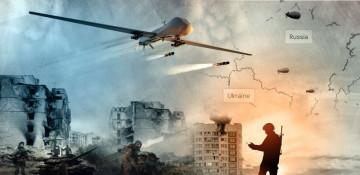
Regional conflicts would quickly become more dangerous. Ukraine, dependent on U.S. military aid, intelligence, logistics, and diplomatic leadership, would be thrust into a precarious position. Even if Washington continues bilateral support, the absence of coordinated NATO structures would drastically weaken the Western effort. Decision-making would slow, disagreements would multiply, and Europe’s ability to respond to crises would erode. Other unstable regions, such as the Balkans, the Eastern Mediterranean, and the South Caucasus, would become more vulnerable to escalation without the stabilizing role NATO traditionally played.
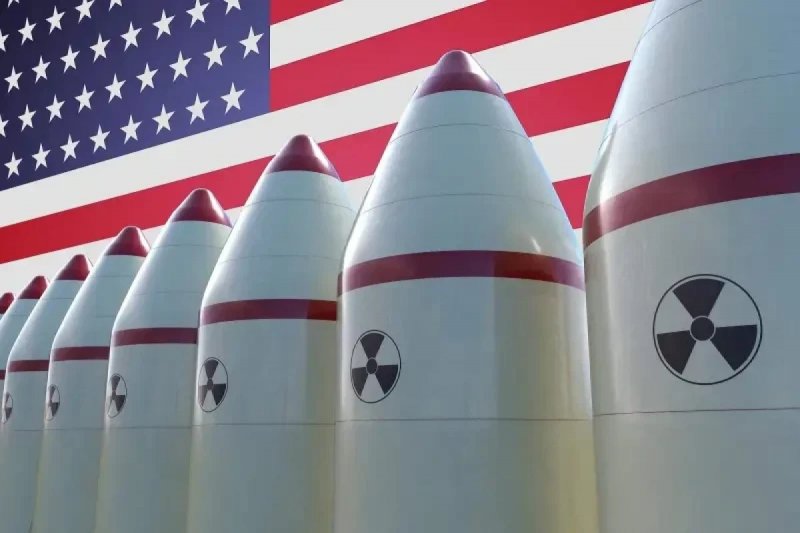 Photo: Shutterstock
The long-term effects would extend to nuclear policy. Europe has relied for decades on the U.S. “nuclear umbrella.” Without it, debates about nuclear rearmament would erupt across the continent. France and the UK remain nuclear powers, but France has never been willing to place its deterrent under a joint command, and Britain alone cannot guarantee continental security. As threats grow, it is entirely plausible that Germany, Poland, and even Türkiye could begin reconsidering their nuclear options. This would mark the beginning of a new global proliferation era and a fundamental erosion of the post-Cold War order.
Economically, the consequences would be severe. The EU would be forced to increase defense spending dramatically, diverting funds from social programs and economic development. Europe would also face the challenge of building its own defense industry to replace American systems — an expensive and time-consuming process. Transatlantic sanctions regimes, which rely heavily on U.S. leadership and financial power, would weaken significantly. Russia, China, and Iran would take advantage of these fractures to expand their influence across Eurasia, the Middle East, and Africa.
Technologically, the fragmentation would deepen. NATO has been a platform for standardizing military technologies, cyber systems, communications infrastructure, and intelligence cooperation. Without U.S. participation, Europe would lose access to critical American innovations in missile defense, cyber offense, artificial intelligence, satellite systems, and high-precision weapons. The result would be an increasing mismatch between European and American capabilities, making future cooperation far more difficult.
In sum, a U.S. withdrawal from NATO would dismantle the most successful military alliance in history and usher in a new era of global uncertainty. The world would shift from a relatively coherent security system, anchored by American power, to a patchwork of regional blocs, temporary coalitions, and fragile alignments. Conflicts would become harder to predict and easier to escalate. Even small incidents could spiral into larger confrontations. Without the stabilizing force of the United States, Europe would be more vulnerable, Russia more assertive, China more confident, and the global order significantly more fragile.
By Tural Heybatov
News.Az