U.S. debate over NATO exit sparks European alarm


U.S. Representative Thomas Massie, a Republican from Kentucky, has introduced a bill calling for the United States to withdraw from NATO. The bill, HR 6508, is proposed under the title Not A Trusted Organization Act — the NATO Act.
The congressman’s office confirmed the news to journalists. Earlier, Massie wrote on X: “NATO is a relic of the Cold War. The United States should withdraw from NATO and use that money to defend our own country, not socialist countries.”
According to the bill’s author, the U.S. Constitution does not permit constant intervention in foreign affairs, and Washington should not be responsible for the security of “the entire world, especially when wealthy countries refuse to pay for their own defense.”

It is worth recalling that Donald Trump repeatedly threatened to leave NATO if European partners failed to increase defense spending. Under pressure from Washington, alliance members agreed to raise defense expenditure to 5 percent by 2035, but even this timeline did not satisfy Trump.
Reuters reports that the United States has demanded that European countries assume a much larger share of NATO defense obligations by 2027, including missile production and intelligence gathering. Washington has warned it may scale back U.S. participation in certain NATO defense mechanisms if this requirement is not met.
The Financial Times cites U.S. Deputy Secretary of State Christopher Landau, who accused European politicians of “civilizational suicide.” According to him, Americans can no longer pretend to be partners of the European Union, whose policies contradict U.S. interests.
The idea of a U.S. withdrawal from NATO has clearly been circulating for some time. It is no coincidence that under President Joe Biden, Congress passed a bill prohibiting any U.S. president from unilaterally withdrawing from the alliance. Notably, one of the co-authors of that initiative was the current Secretary of State, Marco Rubio. However, analysts argue that Trump could bypass this restriction if the newly introduced Republican bill is adopted.
The draft legislation states that NATO membership no longer aligns with U.S. national security interests, and that under Article 13 of the North Atlantic Treaty, the U.S. president must notify NATO of Washington’s withdrawal no later than 30 days after the law comes into force.
The new U.S. National Security Strategy explicitly stresses the need to prevent NATO from being perceived as an “ever-expanding alliance.” While the document acknowledges that partnership with Europe remains important for Washington, the U.S. will no longer “hold up the entire world order like Atlas.”
The strategy, published on December 5, triggered a sharp reaction in Europe, particularly regarding its provisions on the future of the EU and the role of European states as U.S. allies. As Politico reports, the updated doctrine, which defines the foundations of Washington’s foreign policy, no longer lists Russia as a direct threat to the United States. At the same time, it reflects a major reassessment of U.S. approaches to several key issues in international relations. It is unsurprising that the doctrine was welcomed in Moscow: Russia’s Security Council Deputy Chairman Dmitry Medvedev called it “a more realistic assessment of many contemporary challenges.”
The likelihood of such a bill being approved remains low. Most analysts view it as a form of political blackmail designed to force Europe to comply with Trump’s demands. Others, however, express serious concerns about potential U.S.–Russia rapprochement should Trump move from rhetoric to action. Such a development is particularly alarming for Europe, where many expect intensified pressure on the EU — this time potentially involving military force. With Washington allied with Moscow, the U.S. could turn a blind eye to Russian expansionist actions.
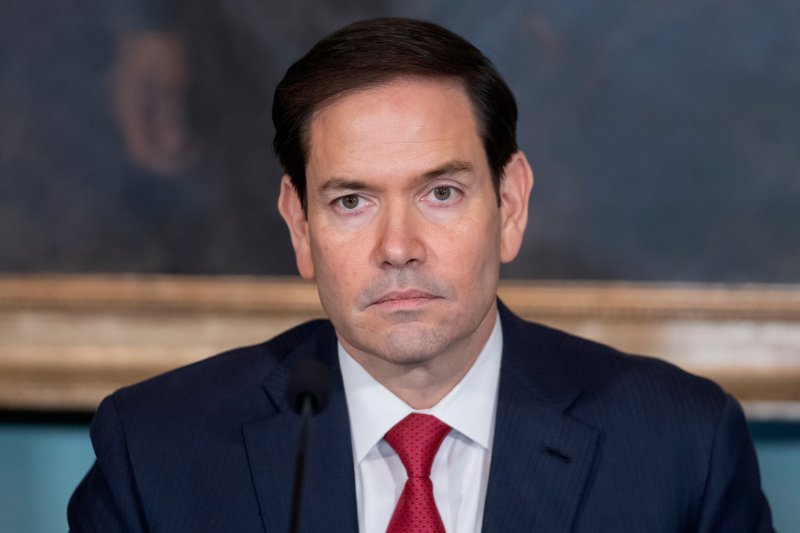
Panic is spreading across the European Union. Anxiety deepened following the unexplained absence of U.S. Secretary of State Marco Rubio from a recent NATO foreign ministers’ meeting — something that has happened only a handful of times in the alliance’s history.
According to Politico, EU leaders are now discussing deeper coordination within the UK-led Joint Expeditionary Force. Another idea gaining momentum is the creation of a stronger “European pillar” within NATO — a concept long championed by Paris and now supported by Berlin.
Under pressure from Trump’s threats, the EU launched work some time ago on new security guarantees. Europe must be prepared for a scenario in which NATO’s (read: America’s) guarantees prove unreliable.
After the Yugoslav war, the then leaders of France and the United Kingdom, Jacques Chirac and Tony Blair, called on Europe to take responsibility for its own defense. Such guarantees are reflected in Article 42.7 of the EU Treaty on mutual defense. Until now, Europe preferred to rely on U.S. guarantees. Today, everything is changing rapidly, and European intelligence warnings about a potential Russian offensive by 2028 no longer seem far-fetched.
It is reported that Berlin is currently in talks with Paris on how France’s nuclear capabilities could strengthen European security. No future scenario seems impossible anymore. The situation around Ukraine — Kyiv's potential forced capitulation and Trump’s openly favorable stance toward Moscow — leaves little doubt that the day may come when the two major powers begin dividing spheres of influence in Europe. When that moment arrives, Europeans may have no choice but to take their security into their own hands.
By Tural Heybatov


Similar news