What does the Saudi-led military operation in Yemen mean for the region?


.png)
Editor's note: Faig Mahmudov is a journalist based in Azerbaijan. The views expressed in this article are his own and do not necessarily reflect those of News.Az.
When a Saudi Arabia–led coalition launches military operations in Yemen, the impact extends far beyond the country’s borders. The intervention reshapes an already fragile regional security environment, deepens the humanitarian crisis facing millions of civilians, and raises fundamental questions about the limits of military force as a tool of foreign policy.
Any serious assessment of the campaign must address three interconnected dimensions: strategic intent, political legitimacy, and humanitarian impact. Only by weighing all three can it be determined whether the intervention promotes stability or further entrenches instability in a region already marked by chronic conflict.
From Riyadh’s perspective, the operation is framed as a security necessity. Saudi officials argue that Yemen’s internal conflict created power vacuums, strengthened militant groups, and opened the door to external actors whose ambitions extend beyond Yemen itself. In this view, a weak or hostile Yemen is not merely a troubled neighbour but a direct threat, with risks ranging from cross-border attacks to arms trafficking and the consolidation of non-state armed groups near Saudi territory. Under such conditions, intervention is presented as a form of self-defence.
Yet strategic intent does not guarantee strategic outcomes. Once external powers enter a conflict, the dynamics inevitably change. Local factions recalibrate their alliances, external funding alters the tempo of fighting, and original objectives can evolve into open-ended commitments. Over time, the coalition becomes embedded in the conflict rather than standing above it, blurring the line between defending national security and participating in a broader proxy war.

Source: Reuters
Legitimacy represents a second, critical dimension. Supporters of the intervention point out that it was launched at the request of Yemen’s internationally recognized authorities, an important distinction under international law. However, legal recognition does not shield the operation from political contestation. As governing capacity weakens and territorial control fragments, the authority of any government to invite large-scale foreign military action becomes increasingly disputed by many Yemenis. This fuels narratives of violated sovereignty and foreign domination — sentiments that often persist long after the fighting subsides.
The third dimension is the humanitarian cost, which cannot be ignored. Yemen has faced one of the world’s most severe humanitarian crises in recent years. Conflict disrupts basic services, destroys infrastructure, and fractures everyday economic activity. Food insecurity rises, healthcare systems collapse, and children miss years of schooling. Entire communities are uprooted from their homes and livelihoods. Even if a coalition claims it is targeting armed actors rather than civilians, the indirect consequences of war do not follow neat categories. Ports, roads, and supply chains become militarized. Sanctions and blockades hinder the delivery of aid. Disease spreads more easily in weakened and overcrowded environments. For ordinary Yemenis, the distinction between direct and indirect suffering is irrelevant — the result is the same: daily life becomes a struggle for survival.
Critics of the Saudi-led operation question whether military force can ever bring lasting political stability to Yemen. They argue that the country’s challenges are fundamentally political: fragmented power, historical grievances, economic underdevelopment, and competition among tribal, regional, and ideological actors. Bombs and airstrikes cannot resolve these underlying tensions. At best, they temporarily freeze the conflict; at worst, they strengthen armed groups, radicalize communities, and further fracture authority.
For these critics, the coalition’s intervention has too often reinforced zero-sum thinking instead of fostering a negotiated settlement that gives all major factions an incentive to compromise.

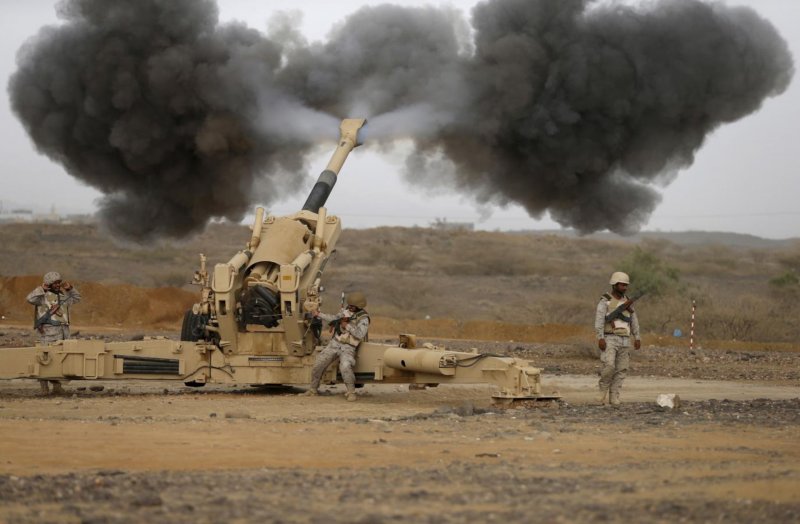
Source: Reuters
Supporters argue that diplomacy without leverage is often ineffective. They believe military pressure is sometimes necessary to bring armed groups to the negotiating table. From this perspective, the coalition’s operation is not an end in itself but a tool for shaping the political environment. In theory, credible force can push actors away from maximalist positions toward realism. The critical question, however, is whether the level and type of military pressure being applied actually serve that purpose. If force becomes punitive or disproportionate, it risks hardening positions rather than softening them.
Another dimension of this debate is regional geopolitics. The Middle East is a stage where rival states compete for influence through alliances and proxies rather than direct confrontation. Yemen has become one of the arenas for that competition. When Saudi Arabia leads a coalition, it is not acting in isolation. Its moves are closely watched in Tehran, Washington, Abu Dhabi, and beyond. The danger is that Yemen’s domestic conflict becomes overshadowed by broader regional rivalries. Local grievances are absorbed into global narratives about power blocs and ideological struggles, making compromise harder, as every concession can be framed as a strategic loss for one side or another.
So where should one stand? A responsible view acknowledges the legitimacy of state security concerns while insisting that the protection of civilians and the preservation of human dignity must come first. Military intervention may sometimes be unavoidable, but it should always be constrained, temporary, and closely tied to a credible political process. Without a strong political track, military operations lose both moral and strategic grounding. War without a roadmap almost always produces more instability than it resolves.

Source: Middleeast24
The coalition should therefore be judged not only by its battlefield achievements but also by its willingness to support inclusive negotiations, facilitate humanitarian access, and engage with all major Yemeni actors, not just those aligned with its interests. At the same time, external critics must acknowledge that calling for an immediate halt to all operations without addressing underlying security concerns will not produce lasting peace. Both sides carry responsibilities.
Ultimately, the world must resist treating Yemen solely as a security problem. It is also a society with deep historical traditions, complex internal dynamics, and millions of people who seek nothing more than safety, dignity, and opportunity. Any intervention that overlooks this human dimension risks losing its purpose. Military operations may influence the course of a conflict, but only politics, compromise, and long-term investment in reconstruction can bring it to a true resolution.
(If you possess specialized knowledge and wish to contribute, please reach out to us at opinions@news.az).


Similar news