Why 2025 marked Azerbaijan’s diplomatic breakthrough with the United States


Editor’s note: Yunis Gurbanov is a Senior Political Advisor at the Center of Analysis of International Relations (AIR Center). The views expressed in this article are his own and do not necessarily reflect those of News.Az.
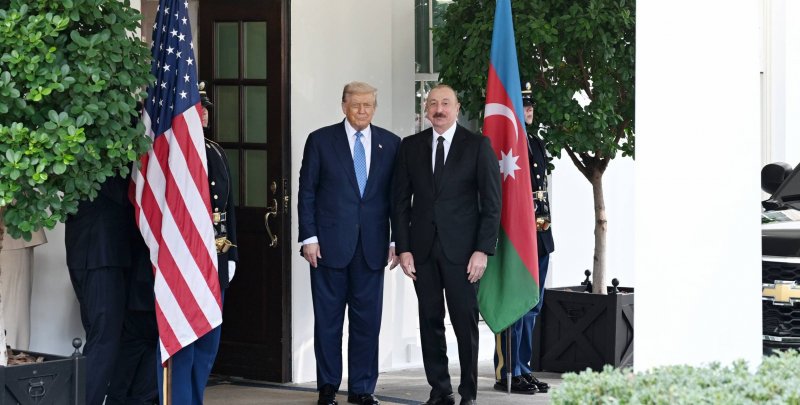
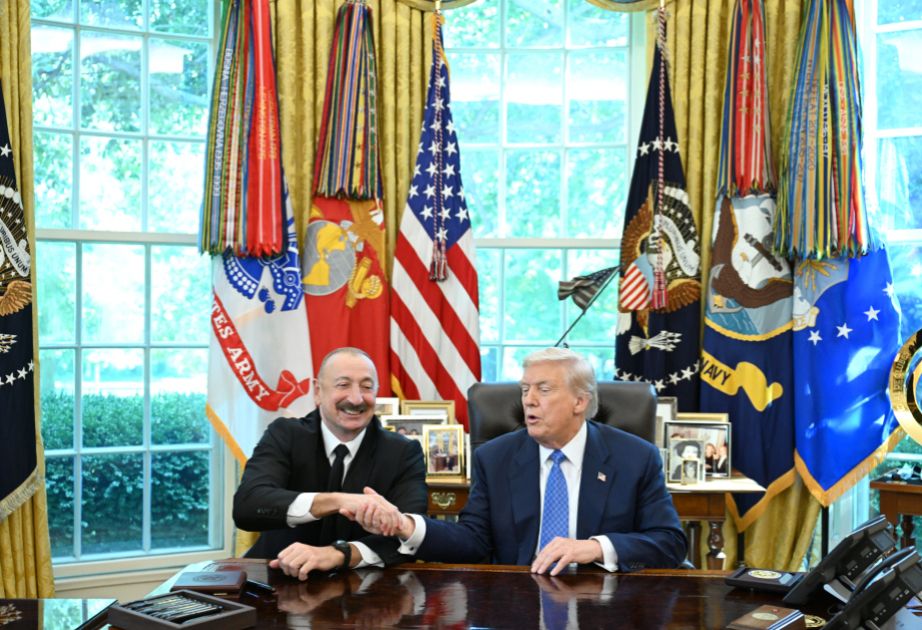
The year 2025 will go down in Azerbaijan’s history not only as a post-conflict period but also as the beginning of a qualitatively new stage in its foreign policy. In this context, Azerbaijani President Ilham Aliyev's official state visit to the United States on August 8, 2025, carries particular political and symbolic significance. Conducted during the country’s transition from war to peace, the visit can be regarded as a key event demonstrating that Azerbaijan–U.S. relations have moved beyond the framework of tactical cooperation and risen to the level of strategic partnership.
First and foremost, the visit is significant in terms of international acceptance and recognition of the new realities created by Azerbaijan in the region and of the military-political victory it has achieved, particularly by one of the world’s major centers of power, the United States. Relations that were once dominated by one-sided approaches shaped by the conflict are now transforming into a pragmatic, future-oriented model of cooperation based on mutual interests.

Source: AzerTAG
In the post-war period, one of the main priorities of Azerbaijani diplomacy has been the international legitimization of the new status quo in the region and the securing of support from leading global actors for the peace agenda. It is no coincidence that 2025 has emerged as a turning point in this regard.
The intensification observed in Azerbaijan–U.S. relations is not limited to expanded political dialogue. These ties have evolved into a multifaceted framework of cooperation encompassing security, energy, transport and logistics, regional communication routes, and economic integration. The U.S. side’s growing emphasis on a pragmatic approach grounded in real interests and stability, rather than ideological templates, creates additional opportunities for Azerbaijan.
Section 907: De facto neutralization and political reality
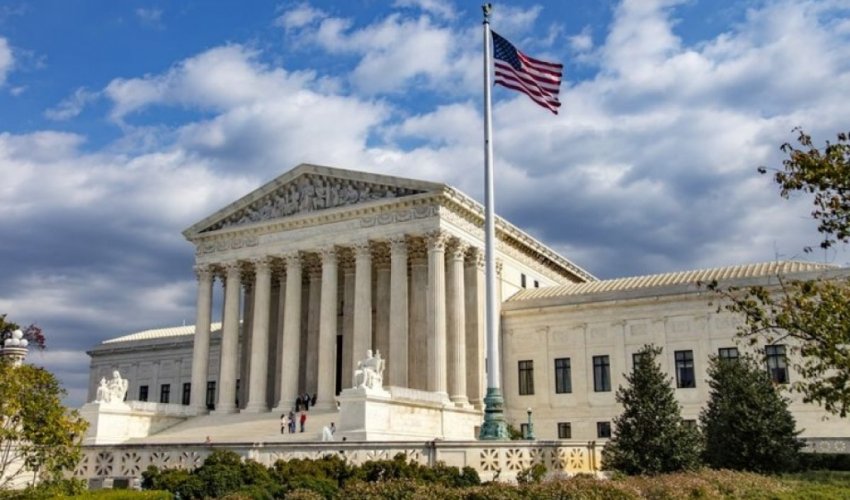
The issue of Section 907, long regarded as both a symbolic and practical obstacle to Azerbaijan–U.S. relations, has largely lost its significance at this new stage. Although the amendment has not yet been fully repealed from a legal standpoint, the effective elimination of its practical impact has become a reality. The U.S. administration’s long-standing suspension of this provision, along with the expansion of cooperation in security and defense, clearly demonstrates this shift.
At the same time, it is important to note that Section 907 is part of a federal law adopted by Congress, and its complete repeal cannot be achieved solely through the political will of the executive branch. Given that the U.S. legislative system is built on balance and consensus, this process is multi-stage, time-consuming, and closely linked to domestic political dynamics. Nevertheless, at the current stage, the key outcome from the perspective of Azerbaijan’s interests is that this amendment no longer poses a real obstacle to the development of bilateral relations.
Source: Reuters
That said, the full repeal of Section 907 would be an important step both in terms of political justice and the logic of bilateral relations. At a time when Azerbaijan has restored its territorial integrity in accordance with international law and has become a leading proponent of a peace and cooperation agenda in the region, the continued legal force of this amendment no longer aligns with present realities.
Its complete removal would free U.S.–Azerbaijan relations from historical burdens and elevate them to a qualitatively new, more transparent, and institutional level of partnership. This, in turn, would strengthen mutual trust and create a sound legal and political foundation for deeper cooperation in security, economic development, and regional integration.
The Strategic Working Group and the strengthening of Azerbaijan’s global position
The establishment of the Azerbaijan–U.S. Strategic Working Group is a key indicator of the institutional consolidation of bilateral relations. This mechanism moves dialogue between the two countries beyond episodic contacts and into a framework of systematic and sustained cooperation. Through the Strategic Working Group, a new platform is being formed for coordinated action on energy security, regional transport projects, the expansion of economic ties, and security issues.
This process also signifies that Azerbaijan’s military victory has been affirmed not only at the regional level but also in the global political arena. Recognition of Azerbaijan’s position by an influential actor such as the United States further strengthens the country’s diplomatic standing in the post-conflict period and creates a favorable international environment for advancing the peace agenda.

Source: AzerTAG
The foreign policy approach of President Donald Trump’s administration, grounded in national interests and characterized by pragmatism and a focus on results, opens new opportunities for Azerbaijan. This approach prioritizes economic efficiency, security balance, and regional stability over ideological confrontation.
At the same time, the activities of the Strategic Working Group contribute to the formation of a culture of long-term planning and results-oriented cooperation in Azerbaijan–U.S. relations. This mechanism enables both sides to respond promptly and in a coordinated manner to regional and global challenges, develop road maps in priority areas, and translate cooperation into concrete projects. Ultimately, the Strategic Working Group steers bilateral relations away from dependence on personalities or situational political conditions and toward a model of strategic partnership based on institutional resilience and mutual interests.
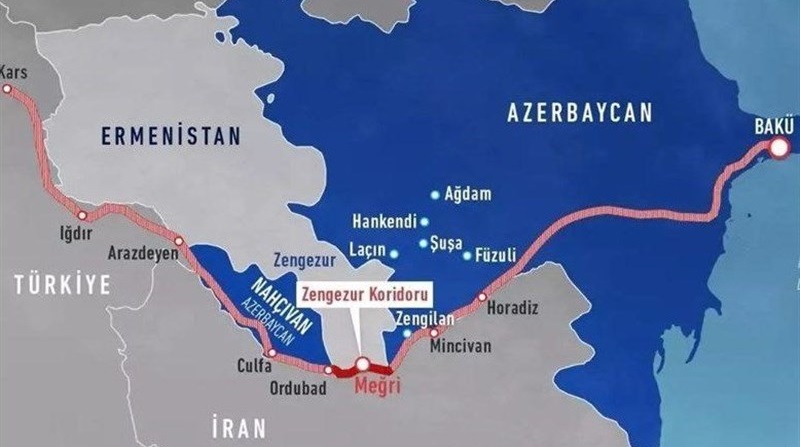
It is in this context that President Trump’s explicit support for the opening of the Zangezur corridor is of particular importance. This corridor is not only about ensuring a direct connection between mainland Azerbaijan and Nakhchivan, but also about reshaping the region’s transport and logistics landscape.
The Zangezur corridor: Economic and logistical advantages and regional integration
Source: News.Az
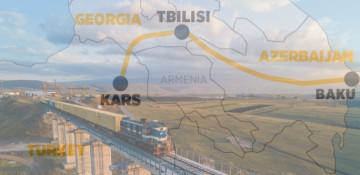
For the United States, the Zangezur corridor is attractive not purely from a geopolitical perspective but primarily in terms of economic and logistical interests. By creating an alternative and secure transport route along the Central Asia–South Caucasus–Europe axis, the corridor serves to diversify global trade flows. U.S. support for this project strengthens Azerbaijan’s prospects of becoming a key transit and logistics hub in the region.
At the same time, the Zangezur corridor carries strategic importance for the United States in terms of the security and resilience of global trade routes. The risks observed in international trade in recent years and the growing need for alternative routes have increased Washington’s interest in reliable transit corridors in the region. In this context, Azerbaijan acts not only as a transit country but also as a rules-based, stable, and predictable partner. The realization of the Zangezur corridor could link U.S.–Azerbaijan cooperation from regional initiatives to global logistics chains, further deepening relations in economic terms and strengthening them at the level of strategic partnership.
In this process, Azerbaijan leverages not only its geographical advantages but also political stability, modern infrastructure, and its image as a reliable partner. The Zangezur corridor further enhances the country’s role in regional economic integration and becomes an important element of its long-term development strategy.
Conclusion
Source: AzerTAG
President Aliyev’s official visit to the United States on August 8, 2025, demonstrates that Azerbaijan has succeeded in turning the transition from war to peace into not only a domestic and regional achievement but also a global diplomatic success. Azerbaijan–U.S. relations are no longer shaped by the limitations and conditional approaches of the past, but are instead based on mutual interests, pragmatism, and tangible opportunities for cooperation.
The de facto neutralization of Section 907, the establishment of the Strategic Working Group, international support for the Zangezur corridor, and the balanced position of the U.S. administration all underscore the effectiveness of Azerbaijan’s foreign policy course. In the next phase, the further deepening of these relations promises new political and economic opportunities for the country, positioning 2025 not merely as a year of transition but as a year of strategic consolidation.
(If you possess specialized knowledge and wish to contribute, please reach out to us at opinions@news.az).


Similar news